
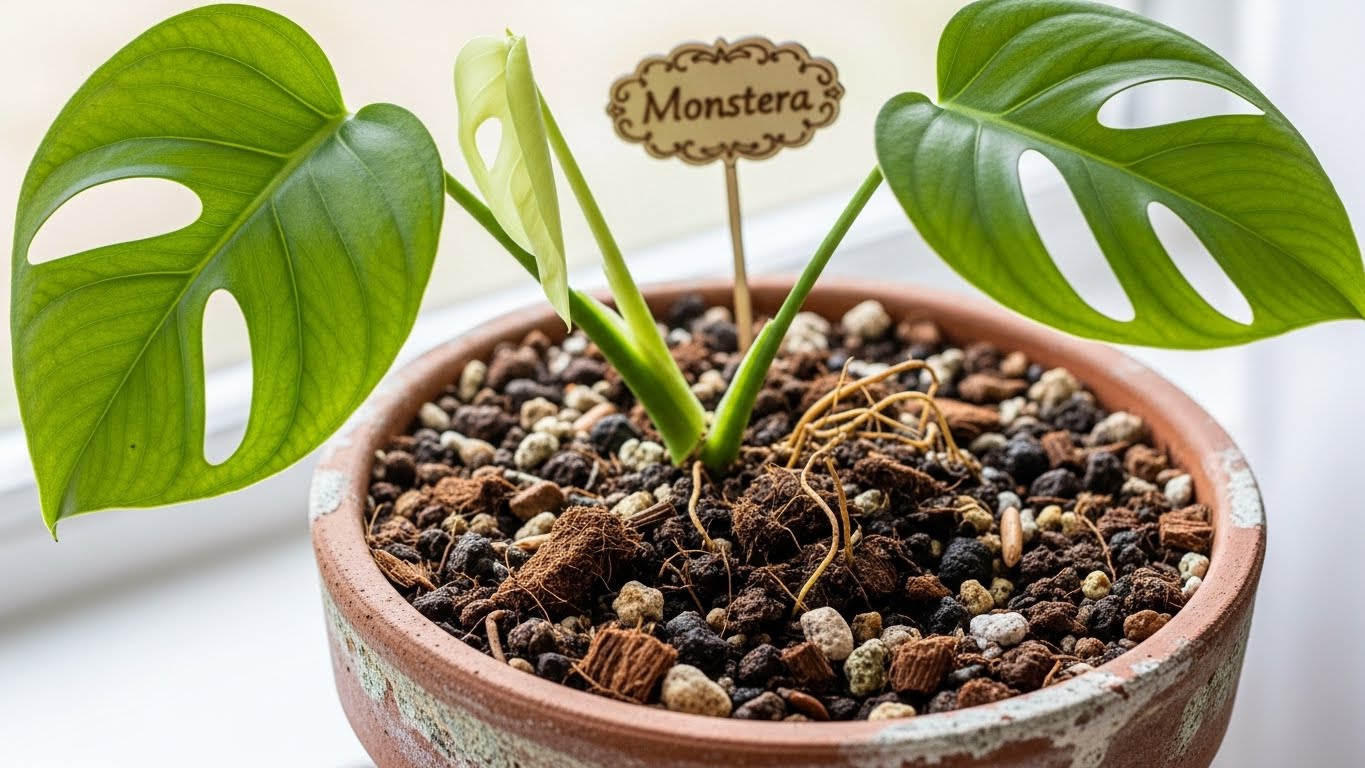
The best soil mix for your Monstera Deliciosa combines peat moss, perlite, orchid bark, worm castings, and activated charcoal. This mix guarantees excellent drainage, moisture retention, and nutrient supply, helping your plant thrive. Aim for a pH of 5.5 to 7, and check the soil regularly for moisture. If you notice yellowing leaves or stunted growth, it might be time to repot! Keep going to discover more tips for maintaining a healthy Monstera.
Key Takeaways
💡 To ensure your Monstera thrives, it’s crucial to understand its basic needs.
➜ Master the essentials of Monstera care
- A well-draining chunky aroid mix with peat moss, perlite, orchid bark, worm castings, and activated charcoal is ideal for Monstera Deliciosa.
- Maintain a soil pH between 5.5 to 7 for optimal growth and nutrient absorption.
- Ensure moisture retention while preventing root rot by allowing the soil to dry slightly between waterings.
- Repot in spring, choosing a pot 1-2 inches larger, and inspect roots for signs of rot or overcrowding.
- Regularly amend soil with compost and perlite to enhance aeration and nutrient availability.
Understanding the Monstera Deliciosa’s Soil Requirements
When you think about caring for your Monstera Deliciosa, understanding its soil requirements is key to keeping it happy and thriving. First off, you’ll want to aim for a soil pH between 5.5 and 7, which is just right for your plant’s roots. This slightly acidic to neutral range helps nutrients become available, ensuring your Monstera gets what it needs. Next, focus on moisture retention; your plant loves a well-draining mix that can hold a bit of water but won’t drown its roots. Too much moisture can lead to root rot, which is a big no-no! By keeping these factors in mind, you’re setting your Monstera up for success, and it’ll reward you with beautiful, lush leaves. Additionally, using a custom chunky aroid mix can significantly improve aeration and moisture retention for optimal growth.
Characteristics of Ideal Soil Mix for Monstera
To create the perfect soil mix for your Monstera Deliciosa, you should prioritize a blend that offers excellent drainage while retaining some moisture. This balance will support your plant’s growth and health. Here are some characteristics to look for in your ideal soil mix:
- Well-Draining: Confirm excess water can escape easily to prevent root rot.
- Moisture Retention: Choose components that hold moisture without becoming soggy.
- Balanced Soil Acidity: Aim for a slightly acidic pH, around 6 to 7, to keep your Monstera thriving.
- Nutrient-Rich: Incorporate organic matter to provide essential nutrients for your plant.
With these features in mind, your Monstera will flourish in a happy, healthy environment!
Components of a Good Soil Mix
Creating a great soil mix for your Monstera Deliciosa means choosing the right components that work together to provide the perfect environment for your plant. A well-balanced mix will have a light and airy soil texture, allowing for proper drainage while retaining moisture. Here are some essential components you should consider:
Component | Function | Suggested Ratio |
|---|---|---|
Peat Moss | Retains moisture | 40% |
Perlite | Improves drainage | 30% |
Orchid Bark | Adds structure & aeration | 20% |
Worm Castings | Provides organic matter | 5% |
Activated Charcoal | Prevents odors & toxins | 5% |
Pre-Made Soil Mix Options for Monstera
If you’re looking for a convenient way to provide the right environment for your Monstera Deliciosa, pre-made soil mixes can be a fantastic option. These mixes are designed to cater to your plant’s specific needs, saving you time and effort. Here are some great choices:
- Premium Potting Mix – Offers excellent drainage and aeration, perfect for healthy root growth.
- Organic Options – Free from synthetic additives, promoting a natural growing environment.
- Specialty Blends – Tailored for Monstera, often containing a mix of peat, bark, and perlite.
- Commercial Mixes – Readily available at garden centers, providing reliable quality for your plant.
Choosing any of these pre-made options will help your Monstera thrive beautifully!
DIY Soil Mix Recipes for Monstera Deliciosa
Creating your own soil mix for Monstera Deliciosa can be fun and rewarding! You’ll want to gather essential ingredients, learn some mixing techniques, and know how to adjust for the right drainage. Let’s explore these components so you can whip up the perfect blend for your plant!
Essential Ingredients for Mix
When it comes to crafting the perfect soil mix for your Monstera Deliciosa, understanding the essential ingredients is key to helping your plant thrive. A well-balanced mix will guarantee your plant gets the nutrients it needs while maintaining proper pH levels. Here are four essential ingredients to include:
- Coco Coir – It retains moisture and promotes aeration, essential for root health.
- Perlite – This lightweight material improves drainage and prevents compaction, enhancing nutrient balance.
- Orchid Bark – It adds structure and air pockets, allowing roots to breathe.
- Worm Castings – Rich in nutrients, these provide a natural boost to your Monstera, supporting growth and liveliness.
Mix these ingredients, and watch your plant flourish!
Mixing Techniques Explained
💡 The right pot size is essential for your Monstera’s health and growth.
➜ Discover how pot size impacts growth
Now that you know what ingredients make up a fantastic soil mix for your Monstera Deliciosa, it’s time to get your hands dirty and learn how to mix them together. Start by measuring your ingredients using mixing ratios that suit your plant’s needs; a good rule of thumb is one part potting soil, one part perlite, and one part orchid bark.
Next, consider layering techniques. You might want to add a layer of gravel at the bottom of your pot for extra drainage. Gently combine your ingredients in a large container, mixing thoroughly until they’re evenly distributed. This guarantees your Monstera gets the best of all worlds—nutrients, aeration, and moisture retention—all in one delightful blend!
💡 Proper fertilization can enhance the benefits of your chosen soil mix.
➜ Explore the best fertilization strategyes
Adjusting for Drainage Needs
To guarantee your Monstera Deliciosa thrives in its new home, you’ll want to fine-tune your soil mix for ideal drainage. A well-draining mix not only prevents root rot but also enhances soil aeration, allowing your plant to breathe. Here are some great drainage solutions to weigh:
- Perlite: This lightweight material improves drainage and aeration.
- Coconut Coir: It retains moisture while allowing excess water to escape.
- Pine Bark: This adds structure and helps with airflow around the roots.
- Sand: A bit of coarse sand can enhance drainage, especially when mixed with other components.
Mix these ingredients in the right proportions, and you’ll create a happy home for your Monstera!
Signs of Poor Soil Quality
When your Monstera Deliciosa starts showing signs like wilting or yellowing leaves, it’s time to take a closer look at the soil quality. Stunted growth and root rot can also indicate that the soil isn’t doing its job properly. Recognizing these signs early can help you keep your plant healthy and thriving!
Wilting or Yellowing Leaves
If your Monstera Deliciosa is showing signs of wilting or yellowing leaves, it’s time to take a closer look at its soil quality. Leaf discoloration can be a clear signal of underlying moisture retention issues. To help you diagnose the problem, consider these key factors:
- Soil Drainage: Confirm your soil mix drains well; soggy soil can suffocate roots.
- Nutrient Levels: Check if the soil has the right nutrients; a lack can lead to yellowing.
- pH Balance: Unbalanced pH can affect nutrient absorption, causing leaf issues.
- Compaction: Soil that’s too compacted holds too much water, leading to root stress.
Taking a moment to assess these can help your Monstera thrive again!
Stunted Growth or Root Rot
Stunted growth in your Monstera Deliciosa can be a frustrating experience, especially when you’re enthusiastic to see it thrive. If you notice your plant isn’t growing as expected, you might be facing some stunted growth causes, like poor soil quality or inadequate drainage. A heavy, compact soil can trap water, leading to root rot, which is detrimental to your plant’s health. To guarantee root rot prevention, it’s essential to use a well-draining mix that allows air to circulate around the roots. Consider a blend of potting soil, perlite, and orchid bark for the best results. Checking the roots regularly will also help you catch any issues early, allowing your Monstera to grow strong and beautiful!
Tips for Repotting Your Monstera
Repotting your Monstera can feel like a challenging task, but it’s a fantastic opportunity to give your plant a fresh start and promote healthy growth. To make the process smoother, keep these tips in mind:
- Choose the Right Time: Spring is ideal for repotting; this aligns with your Monstera’s growing season.
- Inspect the Roots: Before you replant, check for any signs of rot or overcrowding.
- Select the Right Pot: Use a pot that’s 1-2 inches larger in diameter to allow for growth.
- Water Wisely: After repotting, give your Monstera a thorough watering, but let the soil dry slightly before the next watering.
Maintaining Soil Health for Long-Term Growth
Maintaining healthy soil is key to keeping your Monstera Deliciosa thriving for years to come. Regularly adding soil amendments, like perlite or vermiculite, can enhance drainage and aeration. Compost benefits your plant by enriching the soil with nutrients, promoting strong roots and lush leaves. Here’s a quick guide to help you:
Soil Amendment | Benefits | Frequency |
|---|---|---|
Perlite | Improves drainage | Every 6 months |
Compost | Enriches nutrients | Every 3 months |
Worm Castings | Boosts microbial activity | Monthly |
Conclusion
Ultimately, giving your Monstera deliciosa the right soil mix is like finding the perfect pair of sneakers—it just makes everything better! By understanding its unique needs and using a mix of components that provide drainage, aeration, and nutrients, you’ll help your plant thrive. Remember to check for signs of poor soil and repot when necessary. With a little care and the right soil, your Monstera will grow into a stunning indoor jungle companion!
💡 Identifying and addressing problems early can save your Monstera from stress.
➜ Learn how to troubleshoot common issues


