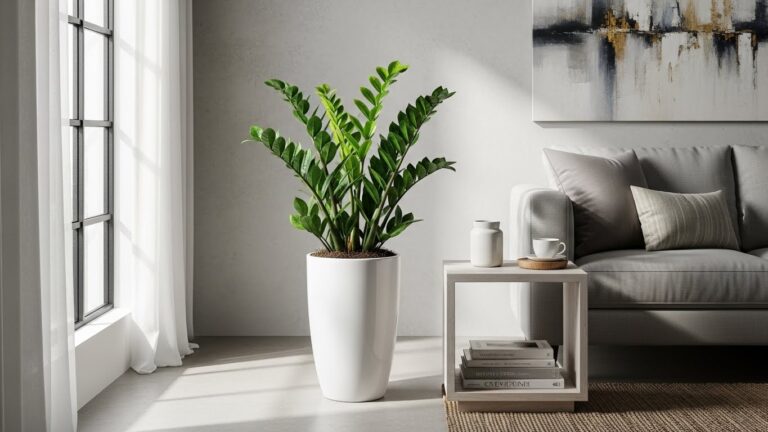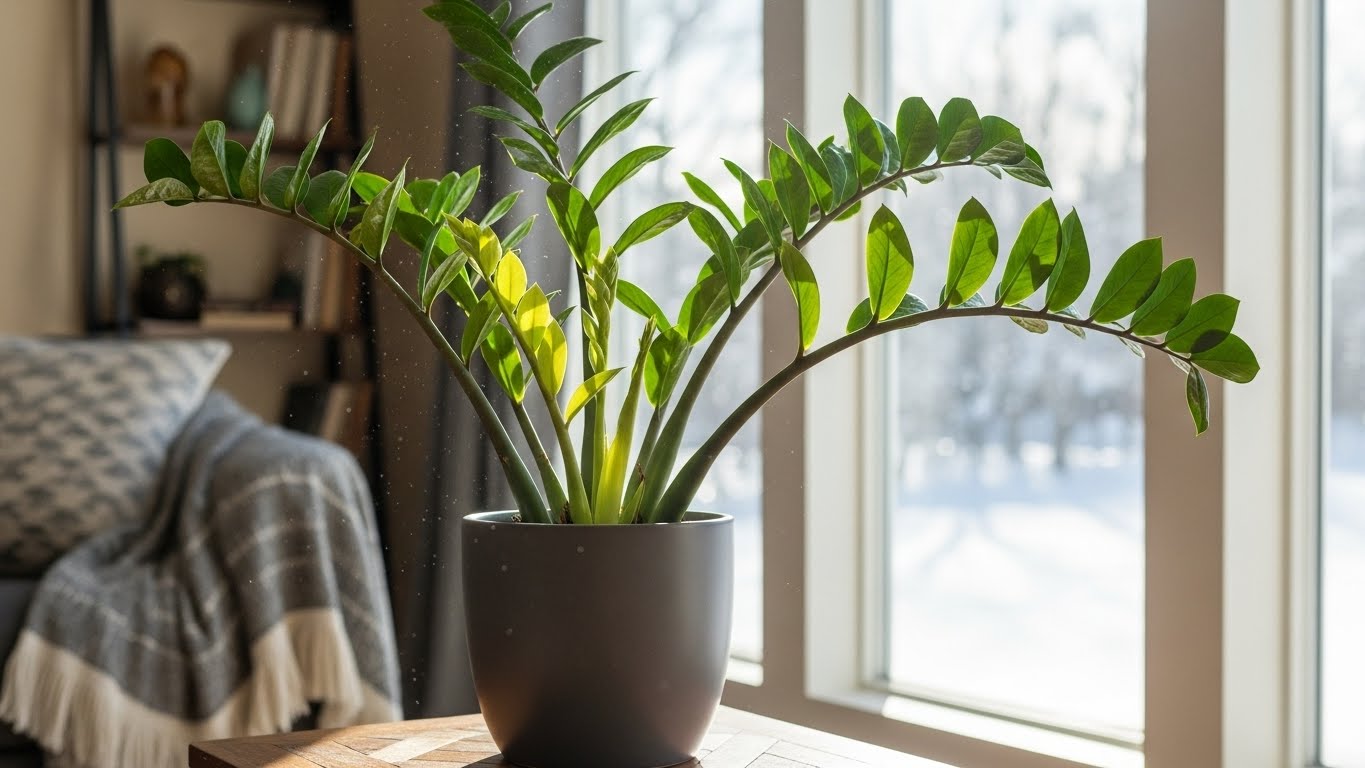
During winter, your ZZ plant slows down its growth because it’s entering a natural dormancy phase. This helps the plant conserve energy and store nutrients in its rhizomes for the growing season ahead. You might notice fewer new leaves and some yellowing foliage, but don’t worry—this is normal! To help your plant thrive, you should reduce watering and provide it with indirect light. Curious about how to care for your ZZ plant during dormancy? There’s more to discover!
Key Takeaways
- The ZZ plant enters dormancy in winter to conserve energy and store resources in its rhizomes for future growth.
- Reduced light and cooler temperatures during winter trigger the plant’s natural dormancy cycle, slowing growth significantly.
- During dormancy, the ZZ plant requires less water and has lower nutrient needs to prevent overwatering and root rot.
- Yellowing leaves and reduced leaf production indicate the plant is conserving energy, a normal part of its winter dormancy.
- Monitoring environmental conditions, like humidity and temperature, is essential to support the ZZ plant’s health during its dormant phase.
Understanding ZZ Plant Dormancy
When you think about plants, you might imagine them growing and blooming all year round, but did you know that the ZZ plant can actually go through periods of dormancy? This fascinating characteristic means that during certain times, particularly in winter, your ZZ plant slows down its growth and conserves energy. Embracing dormancy isn’t a sign of weakness; it offers several benefits, like saving resources and ensuring the plant thrives when conditions improve. While it might seem odd, this natural cycle allows the ZZ plant to store energy in its rhizomes, ensuring a healthy comeback when spring arrives. Understanding water reservoirs is essential to appreciate how this storage mechanism contributes to the plant’s resilience. So, understanding these dormancy benefits can help you appreciate and care for your ZZ plant even more!
Signs Your ZZ Plant Is Dormant
As you care for your ZZ plant, you might notice some signs that it’s entering dormancy. Look out for reduced leaf growth, yellowing leaves, and a lower need for water—these changes can clue you in that your plant is taking a break. Understanding these signals will help you provide the right care during this restful period!
Reduced Leaf Growth
Noticing a slowdown in leaf growth can be one of the first signs that your ZZ plant is entering dormancy. During this time, you might see reduced growth patterns, meaning new leaves aren’t sprouting as quickly as they usually do. You might even experience some leaf shedding, where older leaves drop off as the plant conserves energy. This natural process can feel concerning, but it’s just your ZZ plant’s way of adapting to the changing seasons. Embrace this quieter period, knowing that it’s normal and temporary. Keep your plant in a stable environment, and with a little patience, it’ll bounce back when conditions improve, showcasing vibrant growth once again!
Yellowing Leaves
Yellowing leaves can be a telltale sign that your ZZ plant is in dormancy mode, and while it might seem alarming at first, it’s often just a part of the plant’s natural cycle. Don’t worry too much! This change can be a way for your plant to conserve energy. Keeping an eye on the overall leaf health helps you understand its needs better.
Leaf Color | Possible Cause | Action |
|---|---|---|
Green | Healthy growth | Continue care |
Yellow | Dormancy | Reduce watering |
Brown | Overwatering | Check soil moisture |
Dropping Leaves | Stress | Assess environment |
Embrace this phase; your ZZ plant is simply resting, preparing for its next burst of growth!
Lower Water Needs
During dormancy, your ZZ plant’s water needs change considerably, making it important to recognize the signs that indicate this shift. As winter sets in and dormancy triggers come into play, you’ll notice that your plant conserves water retention. Here are some signs to watch for:
- Soil Drying Out: If the top inch of soil feels dry, it’s a good sign your ZZ plant needs less water.
- Slower Growth: You might see fewer new leaves or slower growth overall.
- Less Frequent Watering: You won’t need to water as often, perhaps every 3-4 weeks.
- Leaves Firmness: The leaves may feel firmer, indicating the plant’s energy is focused on survival, not growth.
Stay attuned to these signs, and your ZZ plant will thrive!
The Science Behind Dormancy
Understanding the science behind your ZZ plant’s dormancy can really enhance your gardening skills. Seasonal growth patterns, environmental influences, and energy conservation mechanisms all play key roles in how and why your plant takes a break. By recognizing these factors, you can better care for your ZZ plant and guarantee it thrives when it’s time to wake up!
Seasonal Growth Patterns
When you observe your ZZ plant slowing down in growth, it’s not just taking a break; it’s entering a fascinating phase known as dormancy. This natural cycle is triggered by seasonal changes, affecting how your plant conserves energy. Understanding these seasonal triggers can help you appreciate your ZZ plant even more. Here are some key points about its growth cycles:
- Temperature: Colder months signal the plant to slow down.
- Light: Reduced sunlight during winter prompts dormancy.
- Watering: Less frequent watering is needed as growth decreases.
- Nutrients: Fertilizer isn’t necessary during this restful time.
Environmental Influences on Dormancy
Environmental factors play a significant role in influencing your ZZ plant’s dormancy. When temperatures drop and sunlight fades during winter, these conditions act as dormancy triggers. Your plant senses these changes, responding to environmental stressors like reduced light and cooler temperatures. This response helps your ZZ plant conserve energy, allowing it to survive until growth conditions improve.
Humidity also plays a part; low moisture levels can further signal your plant to slow down. It’s fascinating how your ZZ plant adapts to its surroundings, ensuring it stays healthy through seasonal shifts. By understanding these environmental influences, you can better care for your ZZ plant, ensuring it thrives when it’s time to wake up from its cozy winter slumber.
Energy Conservation Mechanisms
The ZZ plant has some clever tricks up its sleeve to conserve energy during dormancy, which is an essential survival strategy. As winter approaches, it relies on specific mechanisms to manage its energy storage and cope with metabolic slowdown. Here are four key ways it does this:
- Reduced Photosynthesis: The plant cuts back on photosynthesis to save energy, focusing on survival rather than growth.
- Water Conservation: It slows down water usage, which helps maintain moisture levels in its thick, waxy leaves.
- Nutrient Recycling: The ZZ plant reuses stored nutrients, making sure it has what it needs even when growth is minimal.
- Dormant Roots: Its roots enter a dormant state, conserving energy until conditions improve.
These methods help it thrive through winter’s challenges!
Temperature and Its Impact on Growth
Temperature plays an essential role in the growth and health of your ZZ plant, as it directly influences how well the plant can thrive. Ideally, your ZZ plant loves temperatures between 65°F and 85°F. When the mercury drops or rises too much, you might notice temperature fluctuations that stress your plant, leading to slower growth. During winter, it’s vital to keep your ZZ plant away from cold drafts or heat sources that can disrupt its cozy environment. If you can maintain those ideal temperatures, your plant will be more resilient and active. Remember, a stable environment helps your ZZ plant conserve energy and stay healthy, even during its dormancy period. Keep it comfy, and watch it thrive!
Light Requirements During Winter
When winter rolls around, it’s crucial to pay attention to how much light your ZZ plant gets, since insufficient light can affect its health. During this dormant period, you can help your plant thrive by making sure it receives the right amount of light. Here are some tips to take into account:
As winter approaches, ensure your ZZ plant receives adequate light to thrive during its dormant period.
- Maximize natural light: Place your ZZ plant near a window that gets indirect sunlight.
- Rotate regularly: Keep your plant turning to make certain all sides receive light evenly.
- Use artificial lighting: If natural light is limited, think about using grow lights for a boost.
- Monitor light levels: Pay attention to how your plant responds, adjusting its position as needed.
Watering Practices for Dormant ZZ Plants
During the winter months, while your ZZ plant is taking a well-deserved break, it’s essential to adjust your watering habits to match its dormant state. Instead of the usual routine, you’ll want to focus on dormant watering. This means reducing how often you water your plant, as it needs less moisture during this time. Check the soil regularly; if the top two inches feel dry, it’s time to give a little drink. Aim for balanced moisture levels, avoiding soggy soil that can lead to root rot. Remember, your ZZ plant is resting, so less is more. By respecting its dormancy, you’ll help guarantee it springs back to life when warmer days arrive!
Nutrient Needs in the Cold Months
As your ZZ plant settles into its winter dormancy, it’s also a time to rethink how you nourish it. During these colder months, you’ll want to focus on specific nutrient types to guarantee your plant stays healthy. Here’s a quick guide for winter fertilization:
As winter approaches, adjust your ZZ plant’s nutrition to ensure its health during dormancy. Focus on key nutrients for optimal care.
- Low Nitrogen Fertilizers: Choose a balanced option with low nitrogen to avoid stimulating growth.
- Calcium: This helps strengthen cell walls and supports root health.
- Potassium: Essential for overall plant vigor, it aids in water regulation.
- Phosphorus: Promotes strong root development, even in dormancy.
Common Misconceptions About ZZ Plant Care
Many people think they know how to care for a ZZ plant, but there are several misconceptions that can lead to trouble. One common misunderstanding is about watering. People often believe these plants thrive on constant moisture, but too much water can actually harm them. You should let the soil dry out between waterings to keep your ZZ plant happy. Another misconception is neglecting light. While ZZ plants can tolerate low light, they still need some indirect sunlight to grow well. If you place your plant in a dark corner, it may struggle to thrive. Understanding these key points can help you give your ZZ plant the love it deserves, ensuring it stays healthy and vibrant all year round.
Adjusting Care Routines for Winter
When winter rolls around, it’s important to adjust your care routines for your ZZ plant, as the colder temperatures and reduced sunlight can affect its growth. Here’s how you can keep your plant happy during the chilly months:
- Reduce Watering: Cut back on watering since the plant needs less moisture in winter.
- Light Adjustment: Move your ZZ plant closer to a light source, as it craves a bit more brightness during this time.
- Monitor Winter Humidity: Keep an eye on humidity levels; consider using a humidifier if the air feels too dry.
- Temperature Check: Confirm your plant stays in a warm spot, away from drafts that might chill it too much.
Identifying Stress in Dormant Plants
When your ZZ plant goes dormant, it’s important to keep an eye out for signs of stress. You might notice yellowing leaves or wilting stems, which can indicate that something’s off in its environment, like too much water or not enough light. By identifying these stress signals early, you can adjust your care routine and help your plant thrive once it’s ready to wake up!
Signs of Plant Stress
Identifying stress in dormant ZZ plants can feel a bit like being a detective—you’re on the lookout for clues that indicate something’s not quite right. When your plant shows signs of stress, it can affect its resilience, so pay attention to these stress indicators:
- Yellowing Leaves: A change in color can signal trouble.
- Droopy Stems: If your plant starts to sag, it might be struggling.
- Brown Tips: This could mean it’s too dry or getting too much sun.
- Wilting: A wilting plant is a cry for help, so check its conditions.
Environmental Factors Impacting Growth
While ZZ plants are known for their toughness, they still face challenges during their dormancy that can impact their growth. Factors like humidity levels and soil temperature can really affect how your plant behaves in winter. If the humidity is too low, your ZZ plant might dry out, leading to stress and stunted growth. On the other hand, if the soil temperature drops too much, it can slow down the plant’s metabolism, causing it to enter a deeper dormancy. Keeping an eye on these elements helps you create a comfortable environment for your plant. Remember, a little extra care during dormancy can make all the difference when spring rolls around, bringing your ZZ plant back to life and thriving!
Preparing for Spring Growth
As spring approaches, you’ll want to prepare your ZZ plant for its upcoming growth spurt, which means getting a few things ready for your green friend. Follow these simple spring preparation techniques to stimulate new growth:
- Check the Soil: Make sure it’s still well-draining. If it’s compacted, consider repotting.
- Adjust Watering: Gradually increase watering as temperatures rise, allowing the soil to dry between sessions.
- Provide Bright Indirect Light: Position your plant where it can soak up more sunlight without getting burned.
- Fertilize: Use a balanced, water-soluble fertilizer to give your ZZ plant the nutrients it craves as it begins to wake up.
With these steps, you’ll help your ZZ plant thrive as it bursts into life this spring!
Reviving Your ZZ Plant After Dormancy
Reviving your ZZ plant after its dormancy can be an exciting process, especially when you see new growth emerging. To kick off this journey, start with gentle watering, ensuring the soil is slightly moist but not soggy—overwatering can be detrimental. You can also employ reviving techniques like increasing light exposure gradually; a bright, indirect spot works wonders. As spring approaches, consider using a balanced fertilizer to give your plant a nutrient boost. Don’t forget to monitor its temperature; a cozy spot between 65-75°F is ideal for post dormancy care. With a little patience and attention, your ZZ plant will thrive again, bringing joy and greenery back into your space. Enjoy watching it flourish!
Long-Term Care for Thriving ZZ Plants
When you want your ZZ plant to thrive long-term, it’s all about creating the right environment and developing good care habits. Here are four key tips to guarantee your plant flourishes:
- Long-term watering: Water your ZZ plant only when the soil is completely dry; they prefer to be on the drier side.
- Soil health: Use well-draining soil to prevent root rot, which can be deadly for your plant.
- Light conditions: Place your ZZ plant in bright, indirect light but be careful of direct sunlight that might scorch its leaves.
- Fertilizing: Feed your ZZ plant with a balanced fertilizer during the growing season to support healthy growth.
Following these steps will help keep your ZZ plant vibrant and happy for years to come!
Conclusion
In summary, understanding your ZZ plant during its winter dormancy is key to its health and growth. Did you know that ZZ plants can survive for up to six months without water? That’s impressive! By recognizing signs of dormancy, adjusting care, and preparing for spring, you can guarantee your ZZ plant thrives. Remember, patience is essential, as these resilient plants will bounce back when conditions improve. So, keep an eye on your plant—spring is just around the corner!