
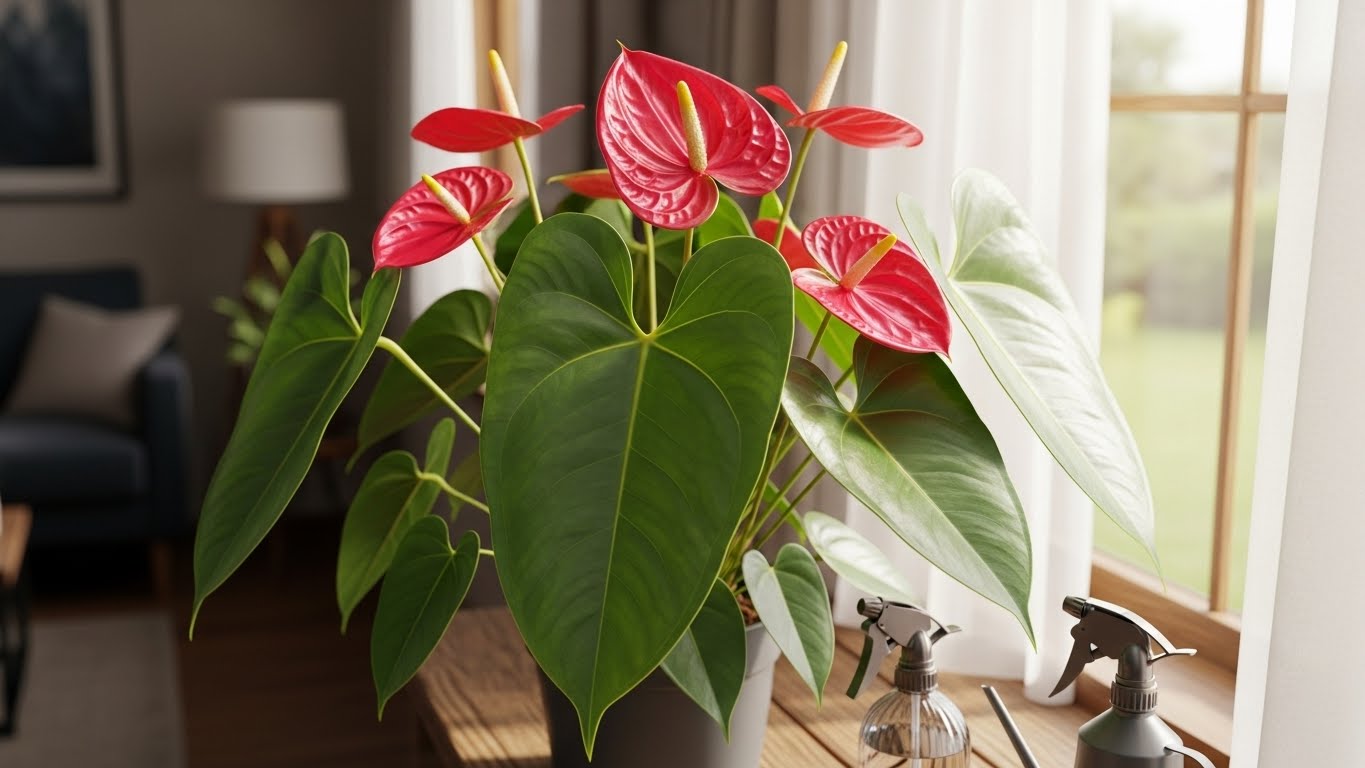
Taking care of your anthurium indoors is exciting and rewarding! Start by choosing a pot with drainage holes and using well-draining soil, like orchid mixes. They love bright, indirect sunlight—so place them near a window. Water when the top inch of soil feels dry, and keep humidity levels high, around 60-80%. Maintain a warm environment, ideally between 65-80°F. With proper care, your anthurium will thrive, bringing joy to your space. Learn about more care tips ahead!
Key Takeaways
- Choose a pot with drainage holes and use well-draining soil, like orchid or aroid mixes, to prevent root rot.
- Place your anthurium in bright, indirect sunlight for 12-16 hours daily, avoiding direct sun exposure.
- Maintain high humidity (60-80%) with misting or humidifiers and keep temperatures between 65-80°F (18-27°C).
- Water when the top inch of soil feels dry, using room temperature water and ensuring excess drains out.
- Repot every couple of years with fresh soil, monitoring for signs of stress or pests to adjust care accordingly.
Understanding Anthurium Plants
Anthurium plants, often called flamingo flowers, are fascinating houseplants that can brighten up any indoor space with their vibrant blooms and glossy leaves. With numerous anthurium varieties to choose from, you can find one that suits your style perfectly. These plants not only add beauty but also carry deep plant symbolism. They represent hospitality, abundance, and happiness, making them a lovely gift for loved ones or a special treat for yourself. When you care for your anthurium, you’re nurturing a living symbol of joy and warmth. The heart-shaped leaves and striking flowers draw attention, inviting admiration from anyone who enters your space. Embrace the charm of anthuriums, and let their beauty bring you closer to nature. Additionally, understanding their epiphytic nature is essential for providing the best care and conditions for your anthurium to thrive.
Choosing the Right Pot and Soil
When it comes to choosing the right pot and soil for your anthurium, there are a few important factors to take into account that can help your plant thrive. First, pick a pot size that allows for growth; a pot that’s too small can stunt its development. Second, verify the pot has drainage holes to prevent water from sitting at the bottom. Third, select a soil type that’s well-draining; a mix designed for orchids or aroid plants works best. Finally, consider repotting every couple of years to refresh the soil and give your anthurium more space. By focusing on these elements, you’ll create a cozy home for your beautiful plant!
Light Requirements for Your Anthurium
When it comes to light requirements for your anthurium, finding the right balance is key. These beautiful plants thrive in bright, indirect sunlight, so placing them near a window is perfect, but make sure to avoid direct sun, which can scorch their leaves. By giving your anthurium the ideal light conditions, you’ll help it flourish and show off its stunning blooms!
Ideal Light Conditions
Have you ever wondered what kind of light your Anthurium really craves? Providing the right light conditions is essential for its happiness and growth. Your Anthurium loves bright, indirect sunlight, so let’s break down what that means for you:
- Light Intensity: Aim for bright light, but avoid direct sun to prevent scorching.
- Light Duration: Ideally, your plant should bask in light for about 12-16 hours daily.
- Location: A spot near a window with filtered light works wonders.
- Rotation: Rotate your Anthurium every few weeks to guarantee even growth.
Avoiding Direct Sunlight
To keep your Anthurium thriving, understanding how to avoid direct sunlight is essential. Direct sunlight can scorch those beautiful leaves, turning them brown and crispy. Instead, opt for shade alternatives to give your plant the gentle care it needs. Indirect lighting is perfect for your Anthurium, allowing it to soak up bright, filtered light without harm.
Shade Alternatives | Indirect Lighting |
|---|---|
Sheer curtains | Near a north-facing window |
Under a tree | In a well-lit room |
Behind a screen | Using a grow light |
Watering Guidelines
Proper watering is essential for keeping your Anthurium healthy and thriving, especially since these tropical plants can be quite particular about their moisture needs. To guarantee you’re meeting the right water frequency and moisture levels, follow these guidelines:
Proper watering is key to a thriving Anthurium; these tropical plants require careful attention to their moisture needs.
- Water when the top inch of soil feels dry; don’t wait until the plant droops.
- Use room temperature water to avoid shocking the roots.
- Ensure your pot has drainage holes to prevent water from sitting at the bottom.
- During winter, reduce watering frequency, as your Anthurium needs less moisture in cooler temperatures.
Humidity and Temperature Needs
💡 Understanding common leaf problems is crucial for maintathisng a healthy Anthurium.
➜ Discover proven techniques
When it comes to keeping your Anthurium happy, humidity and temperature play an essential role in its overall health. These tropical beauties thrive in high humidity levels, ideally between 60-80%. If your home’s air is too dry, consider misting the leaves or using a humidifier to create a more welcoming environment.
As for temperature, your Anthurium loves warmth. Aim for a temperature range of 65-80°F (18-27°C) during the day, and keep it slightly cooler at night. Avoid placing it near drafts or heating vents, as sudden temperature changes can stress your plant. By maintaining the right humidity and temperature, you’ll guarantee your Anthurium flourishes, showcasing those stunning blooms you adore!
💡 Repotting is a key aspect of Anthurium care that can significantly impact growth.
➜ Get the step-by-step guide
Fertilizing Your Anthurium
Fertilizing your Anthurium is essential if you want it to thrive and produce those eye-catching flowers. Choosing the right fertilizer types and timing can make all the difference. Here’s how to get it right:
- Use a balanced liquid fertilizer every 4-6 weeks during the growing season.
- Opt for a fertilizer high in potassium for vibrant blooms.
- Dilute the fertilizer to half the recommended strength to avoid burning the roots.
- Skip fertilizing in winter when the plant’s growth slows down.
With these tips, you’ll provide your Anthurium the nutrients it craves, ensuring it stays healthy and beautiful. Remember, a little care goes a long way in creating a stunning indoor garden!
Pest Management Strategies
Have you ever noticed tiny pests buzzing around your plants and wondered how to keep your Anthurium safe from their pesky invasions? Don’t worry, you can manage these nuisances with some simple strategies. Start by inviting natural predators, like ladybugs or lacewings, to your indoor garden—they’ll feast on those unwanted pests. If the problem persists, consider using insecticidal soap; it’s effective and gentle on your Anthurium.
Here’s a quick table to help you identify common pests and solutions:
Pest | Description | Solution |
|---|---|---|
Spider Mites | Tiny, web-spinning | Natural predators |
Aphids | Small, soft-bodied | Insecticidal soap |
Mealybugs | White, cotton-like | Natural predators |
Thrips | Tiny, slender | Insecticidal soap |
Whiteflies | Small, white flies | Natural predators |
Pruning and Maintenance Tips
To keep your Anthurium thriving, regular pruning and maintenance are essential, so don’t skip this important step! Pruning not only helps your plant look great but also encourages healthy growth. Here are some key pruning techniques and a maintenance schedule you should follow:
Regular pruning and maintenance are vital for a thriving Anthurium, promoting healthy growth and a beautiful appearance.
- Remove dead or yellowing leaves to improve air circulation.
- Trim spent flowers at the base to promote new blooms.
- Check for pests during your maintenance routine, as early detection is vital.
- Clean leaves with a damp cloth to remove dust, allowing the plant to breathe.
Repotting Your Anthurium
Repotting your Anthurium can be a rewarding experience, especially when you see how much healthier your plant becomes after a little extra care. To keep your Anthurium thriving, consider repotting every 1-2 years, or whenever it starts to outgrow its pot. When you’re ready, choose a well-draining potting mix, ideally one that includes orchid bark or perlite.
Start by gently removing your plant from its old pot, taking care not to damage the roots. Use potting techniques like loosening the roots and placing them in the new pot at the same depth. Fill in with fresh soil, water thoroughly, and place your Anthurium in a warm, bright spot. You’ll love watching it flourish!
Conclusion
Now that you’re armed with all the essential tips for your Anthurium, you’re practically a plant whisperer! With the right care, your indoor garden will flourish like a tropical paradise, bursting with vibrant colors and glossy leaves. Remember, it’s not just a plant; it’s a living masterpiece that’ll impress anyone who lays eyes on it. So, get ready to enjoy the beauty of your Anthurium and watch it thrive like it’s on a vacation in the rainforest!
💡 Watering issues can lead to serious problems if not addressed promptly.
➜ Master this approach


