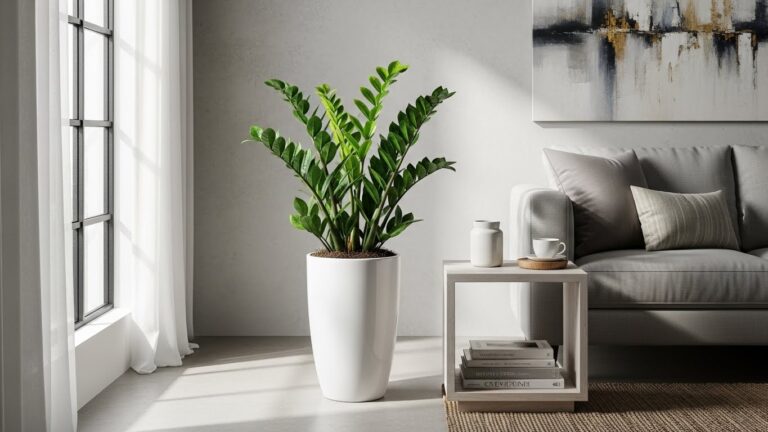
For the best potting mix to help your ZZ plant thrive, go for a blend that drains well and holds nutrients. Use a mix of potting soil, perlite or coarse sand for drainage, and some orchid bark for added texture. This combination mimics the ZZ plant’s natural African habitat and prevents water from sitting around the roots. Avoid regular potting soil as it can retain too much moisture. Keep exploring to discover more tips for keeping your ZZ plant happy!
Key Takeaways
- Use a well-draining potting mix that includes components like potting soil, perlite, and orchid bark to promote healthy ZZ plant growth.
- Ideal potting mixes should retain moisture while allowing excess water to drain, preventing root rot.
- Commercial succulent mixes from brands like Miracle-Gro or FoxFarm are suitable options for ZZ plants.
- DIY potting mixes combining peat, perlite, and compost can provide a balanced environment for optimal growth.
- Always choose pots with drainage holes to ensure proper water management and prevent water accumulation.
Understanding the ZZ Plant’s Natural Habitat
To truly understand how to care for your ZZ plant, you first need to know about its natural habitat. Native to Africa, the ZZ plant thrives in dry, rocky areas where water is scarce. This environment shapes its unique ZZ plant characteristics, like its thick, waxy leaves that store moisture. These adaptations help it endure long periods of drought, making this plant incredibly resilient. You’ll notice how its stems grow upright, reaching for sunlight while remaining sturdy and bold. Understanding this natural habitat allows you to create a nurturing home for your ZZ plant. By mimicking its environment with the right light and watering routine, you’ll help your plant flourish and bring a touch of the African desert into your space. The ZZ Plant’s ability to enter dormancy during drought ensures it can survive in less-than-ideal conditions.
Key Characteristics of Ideal Potting Mix
When you’re choosing the right potting mix for your ZZ plant, it’s essential to take into account a few key characteristics that will help it thrive. First, look for a potting mix that offers excellent nutrient balance; this means it should contain a mix of organic matter, like peat moss, and minerals, like perlite or vermiculite. These ingredients provide your plant with the nutrients it needs without risking over-fertilization. Second, make certain the mix is lightweight, allowing roots to grow freely. Finally, choose a mix that retains moisture while still allowing excess water to drain away. By keeping these characteristics in mind, you’ll create a happy home for your ZZ plant, setting it up for success!
Importance of Drainage for ZZ Plants
When it comes to ZZ plants, proper drainage is essential for their health. Good drainage prevents root rot, which can quickly turn your thriving plant into a sad, wilting mess. Plus, the right soil composition plays a big role in how well water moves through, so let’s explore what you need to keep your ZZ plant happy!
Role of Drainage
Proper drainage is essential for ZZ plants, as these resilient houseplants thrive best in conditions that prevent their roots from sitting in water. Understanding drainage importance can make all the difference in your plant’s health. When you choose a potting mix, look for ones that incorporate drainage techniques, like perlite or coarse sand, which allow excess water to escape. You’ll want to use pots with drainage holes to guarantee that water doesn’t accumulate at the bottom. If you notice water pooling in the pot, it’s time to adjust your watering habits or switch to a better mix. By prioritizing proper drainage, you help your ZZ plant flourish, keeping those vibrant leaves healthy and happy!
Preventing Root Rot
Root rot can be a real nightmare for ZZ plant owners, but with the right potting mix and attention to drainage, you can keep your plant thriving. Ensuring proper drainage is essential for maintaining root health and achieving a healthy moisture balance. Here’s a simple table to visualize what you need:
Drainage Tips | Benefits |
|---|---|
Use a well-draining mix | Prevents water buildup |
Choose pots with holes | Encourages airflow |
Elevate pots slightly | Promotes drainage |
Water only when dry | Maintains moisture balance |
Soil Composition Matters
Soil composition is vital for the health of your ZZ plant, especially since these resilient beauties thrive in well-draining environments. To keep your plant happy, focus on a potting mix that promotes good drainage and airflow. A blend of peat moss, perlite, and pine bark works wonders! You’ll want to maintain the right soil pH, ideally between 6.0 and 7.0, to guarantee your plant absorbs nutrients effectively. Additionally, a balanced nutrient mix is essential; it helps your ZZ plant grow strong and vibrant. Remember, too much water can lead to root rot, so always check that your soil dries slightly between waterings. With the right soil composition, your ZZ plant will flourish beautifully!
Recommended Soil Components for ZZ Plants
When you’re creating the perfect potting mix for your ZZ plant, it’s crucial to choose the right components that promote healthy growth and prevent issues like root rot. Start with a well-draining base like potting soil, which provides essential nutrients while maintaining soil acidity at a neutral level. Adding perlite or coarse sand improves drainage, helping roots breathe. Incorporate some orchid bark for texture, which also aids in aeration. To achieve a balanced nutrient environment, consider mixing in some worm castings or compost. This blend guarantees your ZZ plant gets what it needs to thrive without becoming waterlogged. By carefully selecting these components, you’re setting the stage for vibrant, healthy growth in your beloved plant.
Pre-Mixed Potting Mix Options for ZZ Plants
When it comes to choosing the best potting mix for your ZZ plant, you’ve got some great pre-mixed options to evaluate. You can find commercial potting mixes specifically designed for succulents and houseplants, or even organic options that support eco-friendly gardening. If you’re feeling adventurous, you might want to try out some DIY potting mix recipes, which let you customize the blend just how you like it!
Commercial Potting Mixes
Choosing the right commercial potting mix can make all the difference in helping your ZZ plant thrive, especially since these resilient plants prefer well-draining, nutrient-rich environments. When you’re exploring potting mix types, look for options labeled as cactus or succulent mixes, as they often provide the drainage ZZ plants crave. Popular potting mix brands like Miracle-Gro and FoxFarm offer pre-mixed solutions that are perfect for your green companion. These mixes typically contain a blend of peat moss, perlite, and other materials that help retain moisture while allowing excess water to escape. Remember, the right commercial potting mix not only supports healthy growth but also simplifies your plant care routine, letting you enjoy your ZZ plant even more!
Organic Options Available
For those looking to keep things eco-friendly while caring for their ZZ plants, organic potting mix options are a fantastic choice. These pre-mixed potting solutions often include natural materials like coconut coir, peat moss, and perlite, creating a well-draining environment your ZZ plants will love. Additionally, many organic mixes come enriched with natural fertilizers, offering nutrients without harmful chemicals. Brands like FoxFarm and Espoma provide excellent organic potting mixtures specifically designed for indoor plants. By choosing these organic blends, you’re not just nurturing your plants; you’re also supporting sustainable practices. So, when you grab that bag of organic potting mix, you’re giving your ZZ plant the best chance to thrive while being kind to the planet!
DIY Potting Mix Recipes
Creating your own potting mix for ZZ plants can be a fun and rewarding project, especially if you enjoy getting your hands dirty! A simple DIY mix can include organic ingredients like peat moss, perlite, and a bit of compost. Start with two parts peat moss for moisture retention, add one part perlite for drainage, and mix in one part compost to provide nutrients. You can also toss in some orchid bark for extra texture. This blend guarantees your ZZ plant thrives in a well-draining environment while getting the nourishment it needs. Experimenting with your own potting mix not only connects you to your plant but also allows you to customize it to meet your ZZ plant’s specific needs. Happy mixing!
DIY Potting Mix Recipes for ZZ Plants
When you’re enthusiastic to help your ZZ plant thrive, whipping up a DIY potting mix can be an exciting adventure! Creating your custom blend with the right ingredient ratios guarantees your plant gets what it needs. Here are a few simple recipes to try:
- Classic Blend: Mix 2 parts potting soil, 1 part perlite, and 1 part orchid bark.
- Cactus Mix: Combine 3 parts cactus mix, 1 part sand, and 1 part perlite for excellent drainage.
- Peat-Free Option: Use 2 parts coconut coir, 1 part perlite, and 1 part compost.
- Nutrient Boost: Blend 2 parts potting soil, 1 part worm castings, and 1 part perlite.
Experimenting with these ratios can help your ZZ plant flourish beautifully!
Commercial Potting Mix Brands to Consider
Finding the right commercial potting mix for your ZZ plant can make all the difference in its growth and health! When choosing among various commercial brands, look for organic mixes that promise excellent drainage and aeration. Some popular potting solutions include Miracle-Gro Indoor Potting Mix, which contains nutrients that help your plant thrive, and FoxFarm Ocean Forest, a rich soil blend that offers both fertility and moisture retention. If you prefer a lightweight option, consider Espoma Organic Potting Mix, known for its quality organic materials. Each of these options provides the right balance of nutrients and structure, so your ZZ plant can flourish in its environment. With the right mix, your plant will thank you!
Signs of Poor Potting Mix for ZZ Plants
If you notice your ZZ plant’s leaves turning yellow or see its growth slowing down, it might be time to reconsider the potting mix you’re using. These signs can indicate that the soil isn’t providing the right nutrients or drainage for your plant’s needs. Let’s explore what these symptoms mean and how to spot a poor potting mix before it’s too late!
Yellowing Leaves Indicators
Have you noticed your ZZ plant’s leaves turning yellow? This can be a sign that something’s off with its potting mix. Don’t worry; you can easily identify the issue! Here are some yellowing leaves indicators that might suggest a nutrient deficiency:
- Inconsistent Watering – Overwatering or underwatering can stress your plant.
- Poor Drainage – If the potting mix retains too much water, roots can rot, leading to yellowing.
- Lack of Nutrients – ZZ plants need a balanced mix; if it’s lacking essential nutrients, you’ll see those yellow leaves.
- Compacted Soil – Dense soil can suffocate roots, preventing nutrient absorption.
Stunted Growth Symptoms
Stunted growth in ZZ plants is often a sign that your potting mix isn’t doing its job. When you notice your plant struggling, it’s essential to identify stunted growth causes. Poor drainage, compacted soil, or a lack of nutrients can hinder your plant’s progress. You might see smaller leaves or slower growth, which can be frustrating!
To tackle these issues, consider stunted growth remedies like repotting your ZZ plant in a well-draining, nutrient-rich mix. Adding perlite or orchid bark can improve aeration and moisture retention. Also, make sure your pot has drainage holes. By giving your ZZ plant the right environment, you’ll help it thrive and grow beautifully again. Enjoy watching your green friend flourish!
How to Repot Your ZZ Plant Properly
Repotting your ZZ plant might seem like an intimidating task, but it’s actually a straightforward process that can help your plant thrive. Follow these simple repotting techniques to guarantee a successful change:
- Choose the Right Container: Select a pot that’s slightly larger than the current one, guaranteeing it has drainage holes.
- Prepare the New Mix: Use a well-draining potting mix, ideally designed for succulents or cacti.
- Gently Remove the Plant: Carefully take your ZZ plant out of its old container, loosening the roots if they’re bound.
- Position and Fill: Place the plant in the new container, fill it with soil, and lightly pat it down to eliminate air pockets.
Your ZZ plant will thank you!
Watering Considerations for ZZ Plants in Different Mixes
When it comes to watering your ZZ plant, the potting mix you choose plays a big role in how much moisture it retains and how well it drains. Different mixes can hold water differently, so understanding these variations is key to keeping your plant healthy. Let’s explore how these factors affect your watering routine and what you need to keep in mind for thriving ZZ plants!
Moisture Retention Differences
Choosing the right potting mix for your ZZ plant can make all the difference in how well it grows, especially when it comes to moisture retention. Different mixes can hold water differently, affecting how often you need to water. Here are some factors to evaluate:
- Peat-Based Mixes: Retain moisture well but can compact, reducing soil aeration.
- Cactus Mixes: Offer excellent drainage but might dry out too quickly.
- DIY Mixes: Combine peat, perlite, and compost for balanced moisture retention and aeration.
- Orchid Bark: Provides great airflow but requires more frequent watering to keep your plant happy.
Keep these in mind, and you’ll help your ZZ plant thrive with the right moisture balance!
Drainage Requirements Comparison
Understanding the drainage requirements of your ZZ plant is just as important as considering moisture retention when selecting the right potting mix. Good drainage materials, like perlite or coarse sand, help prevent root rot by allowing excess water to escape. When you try different mixes, you should perform drainage testing to see how quickly water flows through. If it drains too slowly, your plant might suffer. On the flip side, if it drains too quickly, you might need to adjust your watering schedule. Striking the right balance is vital for your ZZ plant’s happiness. Remember, a well-draining mix will keep your plant thriving and vibrant, so don’t hesitate to experiment a little!
Fertilization Tips for ZZ Plants in Potting Mix
To help your ZZ plants thrive, it’s crucial to know how and when to fertilize them, as this can make a significant difference in their growth. Here are some fertilization tips to keep in mind:
- Choose the Right Fertilizer Types: Opt for a balanced, water-soluble fertilizer or a slow-release formulation.
- Timing is Key: Fertilize during the growing season, typically spring and summer, when your plant is most active.
- Application Frequency: Apply fertilizer every 4-6 weeks to guarantee your ZZ plant gets the nutrients it needs.
- Dilute Properly: Always dilute the fertilizer to half-strength to avoid overwhelming your plant.
With these tips, you’ll be on your way to a flourishing ZZ plant!
Maintaining Proper Humidity Levels for ZZ Plants
Maintaining proper humidity levels for your ZZ plants is essential because it helps them thrive and stay healthy. These plants enjoy humidity levels around 40-60%, so humidity control is key. If your home is dry, consider using a humidifier or placing a pebble tray filled with water beneath your plant. This helps create a mini rainforest effect, giving your ZZ plant the moisture it craves. On the flip side, make sure not to let the humidity get too high, as this can lead to mold or pests. To achieve ideal humidity, check on your plants regularly and adjust as needed. With a little attention, you’ll keep your ZZ plants happy and growing strong!
Common Mistakes With Potting Mix for ZZ Plants
When it comes to potting mix for your ZZ plants, avoiding common mistakes can make all the difference in their growth and health. Here are four pitfalls to watch out for:
- Using Regular Potting Soil: It often retains too much moisture, which can lead to root rot.
- Neglecting Drainage: Confirm your mix has materials like perlite or sand to promote soil health.
- Ignoring pH Levels: ZZ plants prefer slightly acidic to neutral soil; check this before planting.
- Overfertilizing: Too many nutrients can harm your plant; stick to a balanced fertilizer during the growing season.
Seasonal Care Tips for ZZ Plants
Caring for your ZZ plant throughout the seasons can greatly enhance its growth and health. As seasonal changes occur, pay attention to how your plant responds. During warmer months, make sure it gets bright, indirect sunlight, but watch for temperature fluctuations; too much heat can stress it. In fall and winter, reduce watering, as your plant will need less moisture during its dormant phase. Keep it in a cozy spot, away from drafts, which can cause discomfort. Always check the soil moisture before watering, especially when the temperatures drop. By adjusting your care routine with the seasons, you’ll help your ZZ plant thrive and flourish, creating a beautiful green companion in your space.
Troubleshooting ZZ Plant Growth Issues
Even though ZZ plants are known for their resilience and low-maintenance nature, they might still face some growth issues that can leave you scratching your head. If your ZZ plant seems off, consider these factors:
- Overwatering: This can lead to root rot, a common issue with ZZ plant diseases.
- Insufficient light: While they tolerate low light, too little can stunt growth.
- Environmental stress: Changes in temperature or humidity can affect your plant’s health.
- Pest infestations: Check for unwanted guests like spider mites or mealybugs.
Conclusion
To sum up, choosing the right potting mix for your ZZ plant is like picking the perfect superhero costume—it’s crucial for their growth and vigor! With the right balance of drainage, nutrients, and humidity, your ZZ plant will thrive, becoming the envy of every other houseplant in the neighborhood. So, get ready to watch your ZZ plant soar to new heights and fill your space with lush greenery, all thanks to a potting mix that truly understands its superhero needs!