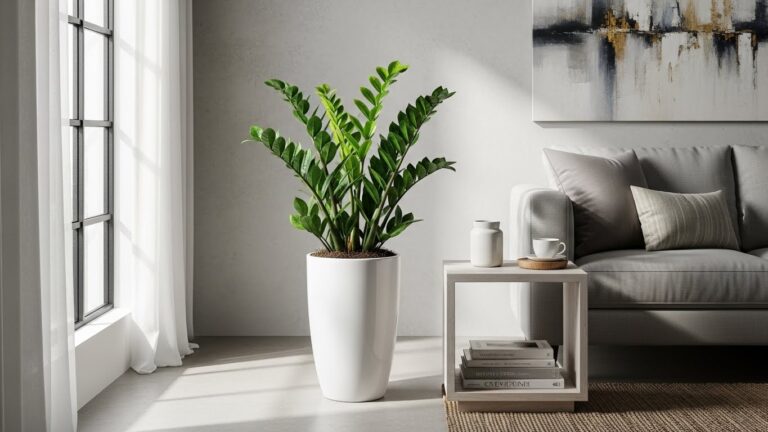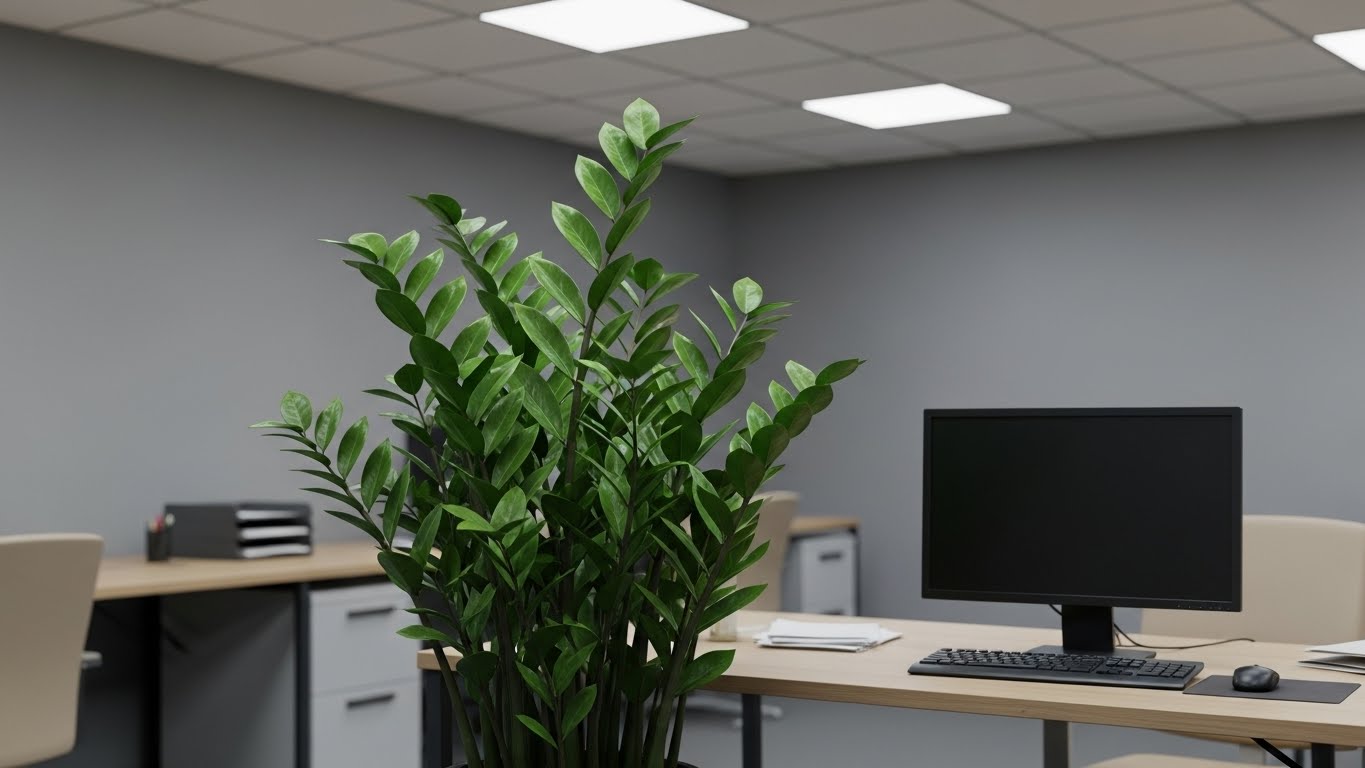
Yes, ZZ plants can thrive in offices with no windows! These amazing plants adapt well to low light, making them perfect for windowless spaces. They need at least 12-14 hours of artificial light each day, like fluorescent or LED lights, and require minimal care. ZZ plants also help purify the air, adding a fresh touch to your workspace. If you want to keep your ZZ plant healthy and green, there’s more you can find out about their care!
Key Takeaways
- ZZ plants thrive in low light, making them suitable for windowless offices.
- They can adapt to artificial lighting, requiring at least 12-14 hours daily.
- ZZ plants are low maintenance and tolerate neglect, ideal for busy environments.
- They help purify the air, improving overall office air quality.
- Proper soil drainage and occasional watering are essential for their health.
Understanding ZZ Plants
ZZ plants, which are officially known as Zamioculcas zamiifolia, are fascinating houseplants that thrive in various environments, including offices without windows. These unique plants have shiny, dark green leaves that grow from thick, waxy stems, making them both attractive and low maintenance. One of the standout ZZ plant characteristics is their ability to tolerate neglect; they don’t need frequent watering, which is perfect for busy folks. Plus, they can survive in low light, so you won’t have to worry about finding the perfect spot. The ZZ plant benefits extend beyond aesthetics; they can also help purify the air, improving your office environment. With their resilience and beauty, ZZ plants are a fantastic choice for any workspace. Additionally, their ability to store water in underground rhizomes allows them to survive periods of drought, making them ideal for office settings where attention to plant care may be limited.
The Need for Light in Plant Growth
Plants, including the hardy ZZ plant, have different light requirements that play a significant role in their growth and health. Light is essential for the photosynthesis process, where plants convert light energy into chemical energy, fueling their development. Each plant thrives under specific parts of the light spectrum, meaning some need bright light while others, like ZZ plants, can tolerate lower levels. When you provide adequate light, you help your plants absorb nutrients more effectively, leading to lush growth and vibrant foliage. Even in low-light situations, understanding these needs helps you create a nurturing environment. So, while ZZ plants might be tough, remember that a bit of light goes a long way in keeping them happy and healthy!
How ZZ Plants Adapt to Low Light Conditions
While many plants struggle in dim environments, the ZZ plant thrives, showcasing remarkable adaptations that allow it to flourish even in low light conditions. This plant’s light adaptation is a true marvel; it has glossy leaves that reflect what little light is available, maximizing photosynthesis. You’ll find that its thick stems store water, helping it maintain office resilience during those long, sunless days. ZZ plants also have a unique ability to grow slowly, conserving energy when light is scarce. This adaptability means you can enjoy a lush, green companion in your windowless office, bringing life to your space. By understanding how the ZZ plant thrives in low light, you can appreciate the beauty of nature, even indoors!
Ideal Care for ZZ Plants in Windowless Offices
Caring for your ZZ plant in a windowless office can be simple and rewarding! You’ll want to understand its light requirements, follow proper watering guidelines, and choose the right soil and potting options to keep it thriving. Let’s explore these key points together to guarantee your ZZ plant flourishes, even in the dimmest of spaces!
Light Requirements Explained
When it comes to growing ZZ plants in windowless offices, understanding their light requirements is essential to keeping them healthy and vibrant. These resilient plants thrive in low light, making them perfect for your workspace. While natural sunlight is absent, you can use artificial lighting to meet their needs. Position your ZZ plant near fluorescent or LED lights, ensuring it receives at least 12-14 hours of light per day. Plant placement is vital; avoid corners or areas far from light sources. Rotate your plant occasionally for even growth, and don’t worry if it’s not always perfectly placed. With the right light, your ZZ plant will flourish, adding a touch of green to your office, even without windows!
Watering Guidelines for Success
Watering your ZZ plant correctly is key to its success, especially in windowless offices where it relies on you for care. To keep your ZZ thriving, aim for a watering frequency of every two to three weeks. Remember, overwatering is one of the biggest mistakes you can make. Check the soil—if the top inch feels dry, it’s time to water. Use a pot with good drainage to help with moisture retention; this allows the roots to breathe and prevents rot. During cooler months, you might even stretch that frequency to once a month. By paying attention to these simple guidelines, you’ll create a nurturing environment for your ZZ plant, helping it flourish even without natural light.
Soil and Potting Tips
Choosing the right soil and pot for your ZZ plant is essential for its growth, especially in a windowless office where it needs a little extra help. Aim for a well-draining soil composition, like a mix of potting soil, perlite, and sand, which allows excess water to escape while retaining some moisture. When potting, use pots with drainage holes to prevent soggy roots.
For potting techniques, gently remove your ZZ plant from its current pot, loosening any tightly bound roots. Place it in the new pot, adding soil around the roots while ensuring it sits at the same depth. With proper soil and potting, your ZZ plant will thrive, bringing some green joy to your workspace!
Choosing the Right Potting Mix for ZZ Plants
Selecting the right potting mix for your ZZ plant is crucial, especially since these resilient beauties thrive in unique conditions. A well-balanced potting mix will help your ZZ plant flourish, even in low-light offices. Here’s what to take into account:
Choosing the ideal potting mix is essential for your ZZ plant’s success, especially in challenging environments.
- Well-draining material: Look for mixes that include perlite or sand.
- Organic matter: Incorporating peat moss can help retain moisture.
- pH balance: Aim for a slightly acidic to neutral pH for ideal growth.
- Drainage layer: Make sure you have a layer of stones or gravel at the bottom of the pot to prevent waterlogging.
- Ready-made options: Think about pre-mixed potting soils designed specifically for succulents and cacti.
With the right potting mix, your ZZ plant will thrive beautifully!
The Importance of Watering Practices
When it comes to ZZ plants, getting your watering practices right is key to keeping them healthy, especially in windowless offices. You’ll want to learn about the best watering frequency, how to spot the signs of overwatering, and the techniques that work best for these resilient plants. Let’s explore how these factors can make a big difference in your ZZ plant’s growth and overall well-being!
Optimal Watering Frequency
ZZ plants thrive in offices without windows, but they still need the right care to flourish, and that includes understanding their watering needs. To guarantee your ZZ plant stays healthy, it’s essential to follow ideal watering techniques and make seasonal watering adjustments. Here are some tips to help you:
- Water when the top inch of soil feels dry.
- Use well-draining soil to prevent waterlogging.
- Adjust watering frequency during different seasons.
- Make sure your pot has drainage holes.
- Keep an eye on your plant’s leaves for signs of stress.
Signs of Overwatering
Understanding the signs of overwatering is essential if you want your ZZ plant to thrive, especially in the unique environment of an office without windows. Look out for overwatering symptoms like yellowing leaves, which can signal trouble. If the leaves feel mushy or start dropping, you might be dealing with root rot. This pesky issue occurs when the roots sit in soggy soil for too long, suffocating them. A quick check of the soil can also help; if it’s consistently wet, it’s time to rethink your watering routine. Remember, your ZZ plant loves to dry out between waterings, so keeping an eye on these signs can make a world of difference in its health and happiness!
Best Watering Techniques
Finding the right watering techniques is crucial for keeping your office’s ZZ plant healthy, especially in a windowless environment. You want to guarantee it gets ideal moisture without overdoing it. Here are some tips to help you create the perfect watering schedule:
- Check the soil: Stick your finger about an inch deep; if it’s dry, it’s time to water.
- Water thoroughly: Make sure the water drains out of the bottom; this helps prevent root rot.
- Use room temperature water: Cold water can shock the plant.
- Adjust based on seasons: Plants need less water in winter when growth slows.
- Keep a consistent schedule: Regular watering helps your ZZ plant thrive and stay happy.
With these practices, your ZZ plant will flourish!
Fertilizing ZZ Plants: What You Need to Know
When it comes to keeping your ZZ plants thriving, fertilizing plays a crucial role in their health and growth. To achieve the best results, you’ll want to fertilize your plants every 4-6 weeks during the growing season, which is typically spring and summer. This fertilizing frequency helps provide essential nutrients that your plant craves.
Opt for a balanced, liquid fertilizer diluted to half strength, ensuring a nutrient balance that won’t overwhelm your plant. Remember, too much can be just as harmful as too little! During fall and winter, you can ease off, allowing your ZZ plants to rest. With these simple steps, you’ll keep your ZZ plants healthy and vibrant, even in a windowless office space.
Common Pests and Diseases in ZZ Plants
Even though ZZ plants are generally hardy and resilient, they’re not completely immune to pests and diseases that can sneak in and affect their health. To keep your ZZ plant thriving, it’s important to stay vigilant with pest control and disease prevention. Here are some common issues you might encounter:
- Spider mites: Tiny pests that suck the sap from leaves.
- Mealybugs: Cotton-like bugs that can weaken your plant.
- Root rot: Caused by overwatering, leading to mushy roots.
- Fungal infections: Can develop in overly humid conditions.
- Scale insects: Hard-shelled pests that attach to the stems.
Signs of Stress in ZZ Plants
When you notice your ZZ plant’s leaves turning yellow, it’s a sign that something might be off. This could indicate overwatering or not enough light, both of which can cause stress for your plant. Additionally, if you see your plant growing slower than usual, it’s another signal that it’s not happy in its environment and needs your attention.
Yellowing Leaves Indicator
ZZ plants, known for their shiny, waxy leaves, can sometimes show signs of stress, and yellowing leaves are a key indicator to watch for. When you notice those leaves turning yellow, it’s time to take a closer look at your plant’s health. Here are some common reasons for yellowing leaves:
- Overwatering: Too much water can lead to root rot.
- Underwatering: Lack of moisture can stress the plant.
- Poor light: ZZ plants thrive in indirect light; too little can cause issues.
- Pests: Check for any unwanted guests on your leaves.
- Nutrient deficiency: A lack of essential nutrients can affect growth.
Stunted Growth Signals
Stunted growth is another sign that your ZZ plant might be feeling stressed. If you notice your plant’s growth rate slowing down or even halting completely, it’s time to pay attention. These stunted growth indicators can include smaller leaves, fewer new shoots, and a general lack of vigor.
You might feel concerned, but don’t worry; it’s often fixable! Check the light, water, and soil conditions. ZZ plants thrive in bright, indirect light, so if they’re tucked away in a dark office, that could be the culprit. Make sure you’re not overwatering or underwatering, as both can lead to stress. Observing these signs helps you keep your ZZ happy and healthy!
Maintaining Humidity Levels
Maintaining the right humidity levels in an office without windows can be a bit of a challenge, but don’t worry! With a few simple strategies, you can guarantee your ZZ plants thrive. Here are some tips for effective humidity control and moisture retention:
Maintaining humidity in a windowless office is challenging, but with a few strategies, your ZZ plants will thrive!
- Use a humidifier: This can add moisture to the air, making it perfect for your plants.
- Group plants together: They create a mini ecosystem, boosting humidity naturally.
- Misting: Lightly misting your ZZ plants can help keep their leaves hydrated.
- Pebble trays: Place your pots on trays filled with water and pebbles to enhance humidity.
- Monitor humidity levels: Using a hygrometer can help you keep track and adjust as needed.
With these tips, your ZZ plants will feel right at home!
Benefits of ZZ Plants in the Workplace
Adding greenery to your workspace not only brightens up the environment but also brings a host of benefits that can enhance your day-to-day experience. ZZ plants are fantastic for your office, providing a productivity boost by creating a more inviting atmosphere. When you feel good around plants, your motivation often increases, helping you tackle tasks with greater enthusiasm.
Moreover, ZZ plants excel in air purification. They can filter out harmful toxins, making the air you breathe cleaner and fresher. This improvement in air quality can lead to better focus and reduced fatigue, allowing you to work more efficiently. So, bringing a ZZ plant into your workspace isn’t just about aesthetics; it’s about creating a healthier, more productive environment for you to thrive in!
Alternative Lighting Solutions for ZZ Plants
When it comes to keeping your ZZ plants happy in windowless offices, using the right lighting is key. You might want to contemplate LED grow lights, which are energy-efficient and mimic natural sunlight, or fluorescent lighting options that provide bright, even illumination. These alternatives can help your plants thrive, even in the absence of direct sunlight!
LED Grow Lights
LED grow lights serve as a fantastic solution for keeping ZZ plants thriving in offices without natural sunlight. By harnessing LED technology, these lights provide the perfect light spectrum that ZZ plants need to flourish. You’ll love how easy it is to set them up and watch your plants thrive!
- They mimic natural sunlight, promoting healthy growth.
- Energy-efficient, saving you money on electricity bills.
- Adjustable brightness lets you customize the light for your plants.
- They produce less heat, reducing the risk of overheating.
- Long-lasting lifespan means fewer replacements.
With LED grow lights, you can create a vibrant green oasis in your workspace, ensuring your ZZ plants stay happy and healthy, even without windows!
Fluorescent Lighting Options
Fluorescent lighting options can be a great alternative for keeping your ZZ plants healthy in windowless offices. These office lighting solutions are ideal because they mimic natural sunlight, providing the right spectrum of light for your plants. You’ll find various fluorescent light types available, including T5 and T8 bulbs, which are energy-efficient and easy to install.
When choosing lights, consider full-spectrum fluorescent bulbs, as they support growth and enhance your ZZ plant’s vibrant green color. Position the lights about 12-24 inches above your plants for best exposure. With a little planning, you can create a cozy environment that keeps your ZZ plants thriving, even in the dimmest corners of your office. Happy planting!
Other Low-Light Plants for Windowless Offices
If you’re looking to spruce up your windowless office with some greenery, you’re in luck! There are plenty of low-light plants that thrive without natural sunlight. Here are some great options to contemplate:
- Snake plants: Tough and forgiving, they only need occasional watering.
- Pothos vines: These trailing beauties can grow in low light and add a touch of elegance.
- Peace lilies: Their lovely white blooms can brighten up any space while improving air quality.
- Spider plants: Known for their air-purifying abilities, they’re super easy to care for.
- Dracaena varieties: These unique plants come in various shapes and sizes, fitting perfectly into any corner.
With these plants, you can create a revitalizing atmosphere in your office.
Tips for Creating a Green Workspace Without Windows
Creating a green workspace without windows can be a fun and rewarding challenge, as it allows you to bring life into a typically dull environment. Start by choosing low-light plants like ZZ plants or pothos; they thrive even in limited light. To enhance your workspace aesthetics, group your plants together to create a vibrant display. Use colorful pots that reflect your personality, making your space more inviting.
Don’t forget about plant health—rotate your plants weekly to guarantee even light exposure and dust off their leaves to maximize photosynthesis. Consider using grow lights if natural light is scarce; they can greatly improve your plants’ growth. With a bit of creativity, you can transform your office into a lush, green sanctuary!
Conclusion
To sum up, ZZ plants are perfect for your windowless office, thriving in low light while adding a splash of green. You might be surprised to learn that these resilient beauties can even boost your mood and productivity! With the right care, potting mix, and perhaps a little extra light, your workspace can feel lively and vibrant. So, why not bring a ZZ plant into your office? You could discover that even without windows, your space can flourish beautifully!