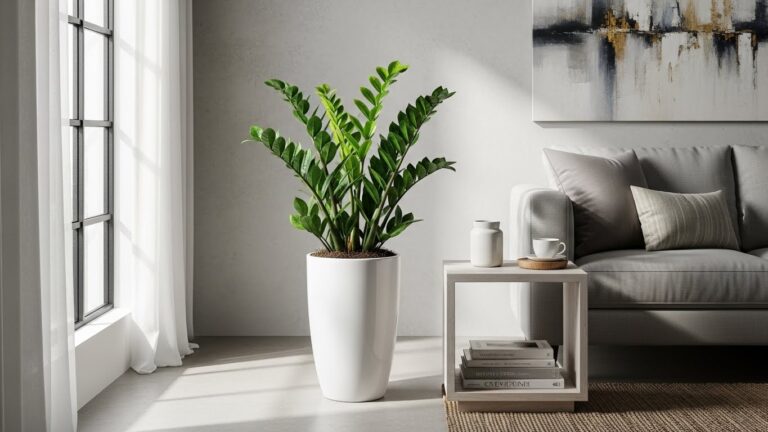
If your ZZ plant’s drooping, it might need your attention. First, check for overwatering; yellowing leaves or soggy soil are clear signs. If the leaves are dry and crispy, under-watering could be the issue. Make sure it’s getting bright, indirect light, and inspect for pests like spider mites or mealybugs. Regular pruning can help, too. You might need to re-pot it in well-draining soil. Stick around to discover even more tips for bringing your plant back to life!
Key Takeaways
- Check the soil moisture; water only when the top inch feels dry to avoid overwatering issues.
- Assess light conditions; ensure your ZZ plant receives bright, indirect light to prevent drooping leaves.
- Look for signs of pests like spider mites or mealybugs, which can cause droopiness and decline.
- Use well-draining soil and a pot with drainage holes to prevent root rot and soggy conditions.
- Fertilize monthly during the growing season with a balanced, diluted fertilizer to support healthy growth.
Understanding the ZZ Plant’s Needs
When you’re caring for a ZZ plant, understanding its unique needs is key to keeping it healthy and thriving. First off, let’s talk about ZZ plant care. These plants love bright, indirect light, but they can also tolerate low-light conditions. When it comes to water, less is more; let the soil dry out between waterings, as they’re sensitive to overwatering. Now, let’s explore their nutrient requirements. During the growing season, feed your ZZ plant with a balanced, diluted fertilizer every month. This gives it the essential nutrients it craves without overwhelming it. Additionally, keep in mind that regular monitoring for pests is essential to maintain the health of your ZZ plant. Remember, a little attention goes a long way, and soon you’ll have a vibrant, happy ZZ plant brightening your space!
Signs of Overwatering
Recognizing the signs of overwatering is just as important as understanding how to care for your ZZ plant. If you notice yellowing leaves, that’s one of the key overwatering symptoms. It’s a cry for help! When leaves start to droop or mushy spots appear, it could mean your plant’s roots are drowning, leading to root rot. Check the soil; if it’s soggy, your plant is likely getting too much water. Another sign is a musty smell, which is a telltale indicator of trouble below the surface. To keep your ZZ plant happy, guarantee proper drainage and water only when the top inch of soil feels dry. Remember, a little care goes a long way!
Signs of Underwatering
If you’ve been wondering why your ZZ plant’s leaves are drooping or curling, it might be due to underwatering. When your plant lacks moisture, its leaves can take on a sad look, often becoming dry and crispy. You might notice that the stems feel weak or spindly too, which isn’t a good sign. To keep your ZZ plant happy, pay attention to the plant moisture level in the soil. If it feels dry an inch below the surface, it’s time to water! Adjust your watering frequency based on the season; plants need more water during warmer months. By monitoring these signs, you’ll help your ZZ plant thrive and maintain its vibrant charm!
Assessing Light Conditions
When it comes to your ZZ plant, light conditions are super important for its health and happiness. You’ll want to find the ideal light levels to keep it thriving, and recognizing signs of inadequate light can help you make adjustments. Let’s explore how much light your ZZ plant really needs and what to look out for if it’s not getting enough!
Ideal Light Levels
To guarantee your ZZ plant thrives, understanding its ideal light levels is essential, as the right conditions can make all the difference in its health and appearance. ZZ plants flourish in bright, indirect natural light but can also adapt to lower light levels. If you’re relying on artificial light, aim for fluorescent or LED bulbs, ensuring they’re not too close to avoid burning the leaves.
Light Type | Ideal Conditions | Notes |
|---|---|---|
Natural Light | Bright, indirect light | Avoid direct sunlight to prevent burns. |
Low Light | Shady areas | Will survive but may grow slower. |
Artificial Light | Fluorescent/LED bulbs | Maintain distance from leaves. |
With the right light, your ZZ plant will shine!
Signs of Inadequate Light
Recognizing the signs of inadequate light for your ZZ plant is essential, especially since these signals can help you make timely adjustments for your plant’s health. If you notice your ZZ plant’s leaves turning yellow or becoming leggy, it’s likely a sign that light intensity is too low. Additionally, if the stems seem to stretch toward the light source, your plant is craving more brightness. Don’t worry! You can easily supplement natural light with artificial lighting. Consider placing your plant near a window or using grow lights to create the right atmosphere. Your ZZ plant thrives in bright, indirect light, so making these changes will help it flourish and regain its vibrant energy!
Checking for Pests
Now that you’ve assessed the light conditions for your drooping ZZ plant, it’s time to check for pests that might be causing trouble. Look closely at the leaves for any signs of common pests like spider mites or mealybugs, which can sneak in and cause damage. By keeping an eye out for these unwanted visitors, you can help your plant bounce back to its healthy self!
Identify Common Pests
When you notice your ZZ plant’s leaves drooping, it’s vital to check for common pests that might be causing trouble. Identifying pests like spider mites, mealybugs, and aphids should be your first step. These little critters can sap your plant’s energy, leading to droopy leaves. Look closely at the stems and undersides of leaves. If you spot any white fluff or tiny webs, you’ve likely found a pest problem. Don’t worry, though; pest control is possible! You can wipe the leaves with a damp cloth or use insecticidal soap to eliminate these intruders. Regularly checking for pests guarantees your ZZ plant stays healthy and happy, so keep an eye out and take action when needed!
Examine Plant Leaves
To keep your ZZ plant thriving, you should regularly examine its leaves for any signs of trouble. Checking for pests is essential, as they can cause leaf discoloration and texture changes. Here’s what to look for:
- Discoloration: Yellowing or browning leaves may indicate pest damage or other issues.
- Texture Changes: If the leaves feel sticky or have a web-like appearance, pests like spider mites could be to blame.
- Visible Bugs: Check for tiny insects hiding on the underside of leaves or along stems.
Soil Quality and Drainage
Soil quality and drainage play essential roles in keeping your drooping ZZ plant healthy and vibrant. You want to guarantee the right soil composition, which should be a mix of potting soil, perlite, and sand. This combination provides the nutrients your plant craves while allowing excess water to escape.
When it comes to drainage techniques, using a pot with drainage holes is a must. It helps prevent water from pooling at the bottom, keeping your plant’s roots from rotting. If you notice your ZZ plant drooping, check the soil for moisture; it should be slightly dry before you water again. By paying attention to these details, you’ll create a thriving environment that brings your ZZ plant back to life!
Temperature and Humidity Factors
Temperature and humidity are just as important for your drooping ZZ plant as soil quality and drainage. These factors greatly influence your plant’s health, so keep an eye on them. Here’s what you should know:
- Temperature Fluctuations: ZZ plants thrive in temperatures between 65°F and 75°F. Rapid changes can stress your plant, leading to drooping leaves.
- Humidity Levels: ZZ plants prefer moderate humidity. If your home is too dry, consider using a humidifier or placing the plant on a tray with water and pebbles to boost moisture.
- Avoid Drafts: Keep your ZZ plant away from cold drafts or heat sources, like heating vents, which can cause extreme temperature shifts.
Pruning and Maintenance Tips
When you notice your ZZ plant drooping, it’s time to roll up your sleeves and get to work with some pruning and maintenance. Start by using proper pruning techniques to remove any yellowing or damaged leaves, which will help the plant focus its energy on new growth. Don’t be shy—trimming back a bit can invigorate your plant! Next, establish a simple maintenance schedule. Water your ZZ plant only when the top few inches of soil feel dry, and be sure to wipe the leaves occasionally to keep them dust-free. Remember, a little care goes a long way in reviving your plant’s health. With these tips, you’ll have your ZZ plant standing tall again in no time!
Re-potting Your ZZ Plant
When it’s time to re-pot your ZZ plant, you’ll want to reflect on a few important factors to guarantee its continued health. Choosing the right pot is essential, as it needs to be slightly larger than the current one, and selecting the right soil type can make all the difference in helping your plant thrive. Finally, timing is key—spring is usually the best season for re-potting, so keep an eye on your plant’s growth!
Choosing the Right Pot
Choosing the right pot for your ZZ plant is essential, since it can greatly affect its growth and health. A well-chosen pot lets your plant thrive, so keep these tips in mind:
- Pot Size: Choose a pot that’s just a bit larger than the root ball. Too big, and it can hold excess moisture, which isn’t good for your plant.
- Drainage Holes: Make sure your pot has drainage holes at the bottom. This feature prevents water from pooling, reducing the risk of root rot.
- Material Matters: Consider materials like terracotta or ceramic, as they offer breathability, helping to regulate moisture levels.
Soil Type Matters
The right soil can make all the difference for your ZZ plant, ensuring it gets the nutrients it needs while also preventing water from lingering around the roots. When re-potting, focus on the soil composition; a mix of potting soil, perlite, and sand works wonders. This combo promotes excellent drainage, which is super important since ZZ plants can easily suffer if their roots sit in soggy soil. You want to create an environment that allows air to circulate, keeping those roots happy and healthy. Remember, a well-draining soil not only nourishes your plant but also helps you notice any issues before they escalate. So, give your ZZ plant the best chance to thrive by choosing the right soil!
Timing for Re-potting
Knowing when to re-pot your ZZ plant can greatly influence its growth and health. Ideal timing is key, so keep an eye on your plant’s size and condition. Here are some seasonal considerations to guide you:
- Spring Awakening: Re-potting during spring encourages new growth, as your plant naturally comes out of dormancy.
- Pot Size: If you notice roots growing out of the drainage holes or the plant looks cramped, it’s time to upgrade to a larger pot.
- Health Check: If your ZZ plant’s leaves are yellowing or drooping despite proper care, re-potting can refresh the soil and provide new nutrients.
Adjusting Your Watering Schedule
If you notice that your ZZ plant is drooping, adjusting your watering schedule can make a big difference in its health. Finding the right watering frequency is essential; too much or too little water can hurt your plant. ZZ plants thrive on moisture retention, so let the soil dry out before you water again.
Here’s a helpful guide:
Watering Frequency | Soil Moisture Level |
|---|---|
Every 2-3 weeks | Dry to slightly moist |
Weekly | Moist but not soggy |
Bi-weekly | Dry |
Monthly | Very dry |
Every 4-6 weeks | Extremely dry |
Restoring Your Plant’s Health
Restoring your ZZ plant’s health can be a satisfying journey, especially when you see it perk back up. To get your plant thriving again, focus on these key areas:
- Improve Plant Nutrition: Use a balanced, water-soluble fertilizer during the growing season to give your ZZ plant the nutrients it craves.
- Reduce Environmental Stress: Confirm it’s in a spot with indirect light and stable temperatures. Avoid drafts and sudden changes in humidity, as these can stress your plant.
- Check Soil Drainage: Make sure your pot has drainage holes and use well-draining soil to prevent waterlogging, which can lead to root rot.
Conclusion
In the grand adventure of ZZ plant care, remember: it’s not a drama queen—just a little misunderstood! By adjusting your watering, checking for pests, and giving it the right light, you can turn that drooping plant into a proud, upright green companion. With a bit of TLC, your ZZ plant can strut its stuff like it’s on a catwalk, showing off those glossy leaves. So, roll up your sleeves and bring your plant back to its fabulous self!