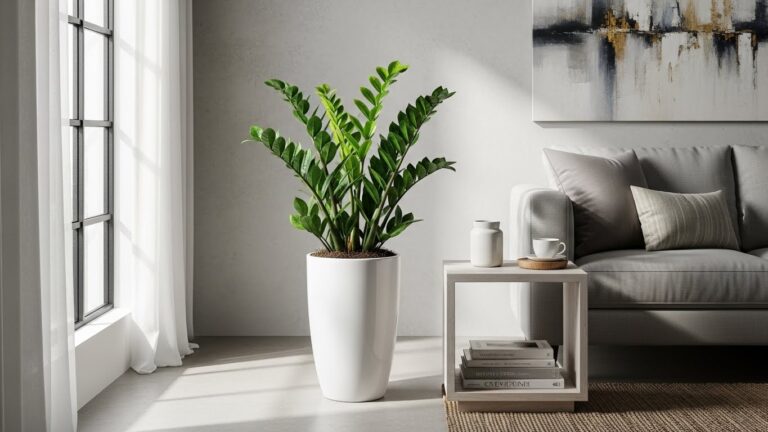
Water your ZZ plant when the top inch of its soil is dry, which usually means every two to three weeks. However, it depends on factors like light and humidity. This hardy plant likes infrequent watering, so be careful not to overwater it, as that can lead to root rot. Remember, it’s better to let it dry out a bit than to soak it. Want to know more about keeping your plant happy and healthy?
Key Takeaways
- Water ZZ plants infrequently; check soil moisture before watering to avoid overwatering.
- Only water when the top inch of soil is dry to the touch.
- Use room temperature water for best absorption and to prevent shock.
- Adjust watering frequency based on seasonal changes; less in winter, more in summer.
- Ensure good drainage in pots to prevent root rot and promote healthy growth.
Understanding the ZZ Plant’s Natural Habitat
To truly appreciate the ZZ plant, also known as Zamioculcas zamiifolia, it helps to understand its natural habitat. Native to the dry, rocky regions of East Africa, the ZZ plant thrives in conditions where many other plants would struggle. Its remarkable ZZ plant adaptations, like thick, waxy leaves, allow it to store water and withstand droughts, making it a resilient choice for your home. Picture it nestled in the shadow of larger plants, soaking up indirect sunlight while drawing moisture from the air. This unique ZZ plant habitat teaches you the importance of mimicking these conditions when caring for it. By understanding where it comes from, you can better nurture this beautiful plant and watch it flourish in your space. Additionally, the ZZ Plant’s ability to store water in rhizomes ensures it can survive long periods without watering.
The Role of Soil and Potting Mix
When it comes to keeping your ZZ plant healthy, the type of soil and potting mix you choose plays a key role. You need a mix that allows for good drainage while still retaining some moisture to keep those roots happy. Finding the right balance will help guarantee your plant thrives, so let’s explore what makes the ideal soil for your ZZ plant!
Soil Drainage Importance
Soil drainage plays an essential role in keeping your ZZ plant healthy and thriving, as it helps prevent overwatering, which can lead to root rot. Understanding soil composition and using proper drainage solutions can make all the difference. Here are four key reasons to focus on drainage:
- Prevents Root Rot: Good drainage stops water from pooling, protecting roots from decay.
- Fosters Healthy Growth: A well-draining mix promotes vibrant, lush foliage.
- Reduces Pests: Excess moisture can attract pests; proper drainage keeps them at bay.
- Encourages Air Flow: Adequate drainage allows roots to breathe, crucial for their health.
Ideal Potting Mix
Choosing the right potting mix is essential for your ZZ plant’s health and growth. You’ll want to explore various potting mix types that provide good drainage and aeration. A blend of peat, perlite, and orchid bark works wonders, ensuring your plant doesn’t sit in soggy soil. Remember, the ZZ plant thrives in well-draining environments!
When it comes to repotting frequency, aim for every two to three years or when you notice roots poking through the drainage holes. This refreshes the nutrients in the soil and gives your ZZ plant a cozy new home to grow. With the right potting mix, you’ll set your ZZ plant up for success, allowing it to flourish for years to come!
Soil Moisture Retention
The right potting mix plays a crucial role in how well your ZZ plant retains moisture. Choosing the right soil not only helps with soil moisture but also enhances the plant’s drought tolerance. Here’s what to keep in mind:
- Drainage: Confirm your potting mix allows excess water to escape, preventing root rot.
- Aeration: A well-aerated mix helps roots breathe, promoting healthy growth.
- Organic Matter: Incorporating materials like peat or coconut coir retains moisture without suffocating the roots.
- pH Balance: A slightly acidic to neutral pH helps your ZZ plant absorb nutrients effectively.
When you give your plant the right environment, it’ll thrive, keeping your space vibrant and lively. Remember, happy soil equals a happy ZZ!
Factors That Affect Watering Frequency
When it comes to watering your ZZ plant, several factors can influence how often you need to give it a drink. Understanding these elements can help you keep your plant thriving.
Factor | Description | Impact on Watering Frequency |
|---|---|---|
Humidity Levels | High humidity can reduce water needs, while low humidity increases them. | Lower in high humidity, higher in low humidity. |
Light Exposure | Bright, indirect light speeds up evaporation, while low light slows it down. | More frequent in bright light, less in low light. |
Pot Size | Larger pots hold more soil and moisture. | Less frequent in larger pots. |
Season | Plants need less water in winter compared to summer. | Less in winter, more in summer. |
Being mindful of these factors can help you tailor your watering routine perfectly!
Signs of Underwatering
Recognizing the signs of underwatering can make a big difference in keeping your ZZ plant healthy and vibrant. If you notice your plant showing any of these underwatering symptoms, it’s time to take action to prevent plant stress:
- Yellowing Leaves: The leaves may start to yellow or become dull.
- Droopy Stems: Stems might look limp, losing their usual perkiness.
- Brown Leaf Tips: The tips of the leaves can turn brown and crispy.
- Slow Growth: You’ll notice your ZZ plant isn’t growing as it should.
If you observe any of these signs, don’t panic! With a little extra love and attention, you can help your plant bounce back to its healthy self. Remember, a happy ZZ plant is a thriving ZZ plant!
Signs of Overwatering
While it might seem surprising, overwatering a ZZ plant can be just as harmful as underwatering it. You’ll want to keep an eye out for overwatering symptoms, which can include yellowing leaves, mushy stems, and a general droopy appearance. If you notice these signs, it’s essential to act quickly, as they could indicate root rot, a serious condition that can kill your plant. Another telltale sign is a foul smell coming from the soil, signaling that the roots are struggling to breathe. To keep your ZZ healthy, always check the soil moisture before watering. Remember, it’s better to let the soil dry out a bit than to risk drowning your beloved plant!
Seasonal Watering Adjustments
Adjusting how often you water your ZZ plant based on the seasons is key to keeping it healthy and thriving. The seasonal effects and climate considerations play a crucial role in your plant’s needs. Here’s a quick guide to help you make those adjustments:
- Spring: Increase watering as the plant wakes up and grows.
- Summer: Keep the soil slightly moist, but don’t overdo it; it’s hot!
- Fall: Gradually reduce watering as growth slows down.
- Winter: Cut back considerably; the plant’s in rest mode and needs less water.
Tips for Proper Watering Techniques
When it comes to watering your ZZ plant, knowing the right techniques can make all the difference. First, you should check the soil moisture before adding any water; this helps prevent overwatering. Also, using well-draining pots will guarantee your plant’s roots stay healthy and avoid sitting in water, which can lead to root rot.
Check Soil Moisture
How can you tell if your ZZ plant needs a drink? It’s essential to check the soil moisture before you water. Here are some simple ways to assess if your plant is thirsty:
- Stick your finger in the soil – If it feels dry up to your knuckle, it’s time for a drink.
- Use a moisture meter – This handy tool can give you an accurate reading of the soil’s moisture level.
- Lift the pot – If it feels light, the soil is likely dry.
- Observe the leaves – If they start to droop or lose their shine, your plant is signaling for water.
Regular soil testing keeps your ZZ plant happy and thriving!
Use Well-Draining Pots
Using well-draining pots is vital for keeping your ZZ plant healthy and happy. When you choose your pot, opt for ones made from well-draining materials like terracotta or ceramic. These materials allow excess water to escape, preventing root rot. For pot selection, make sure your chosen pot has drainage holes at the bottom. This feature is important because it helps prevent water from pooling at the bottom, which can suffocate your plant’s roots. Remember, ZZ plants thrive on a little neglect when it comes to watering, so a pot that drains well will help you avoid overwatering. By making these thoughtful choices, you’re giving your ZZ plant the best chance to flourish and grow beautifully in your home!
Conclusion
To sum up, watering your ZZ plant is all about balance—too little and it wilts, too much and it rots. Remember, pay attention to the soil, adjust for the seasons, and look for signs of distress. By understanding its needs, you’ll keep your plant healthy and thriving. So, water wisely, check regularly, and enjoy the beauty of your ZZ plant as it flourishes in your care! Happy gardening!