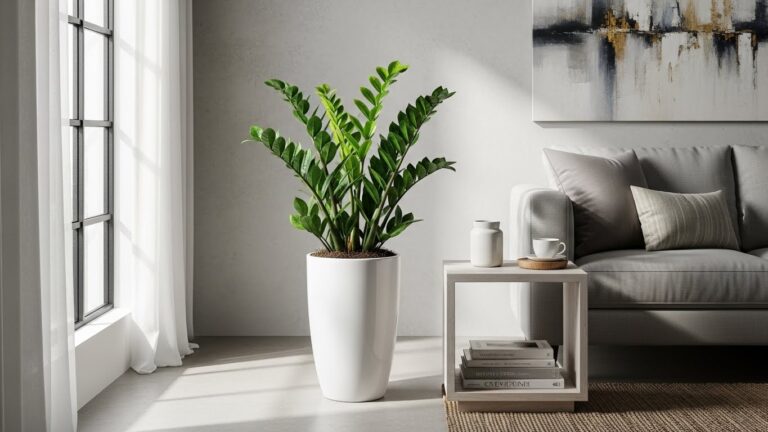
To divide an overgrown ZZ plant, start by evaluating its growth and checking for root-bound signs, like roots poking out of the pot. It’s best to divide in spring or early summer. Gather your tools—a sharp knife, well-draining pots, and potting mix. Remove the plant gently, inspect the roots, then identify thick clusters for division. After repotting, water every 2-3 weeks and provide moderate light. This way, your ZZ plants will thrive better than ever, and there’s even more to explore!
Key Takeaways
- Divide your ZZ plant in spring or early summer when you see new shoots or vibrant leaves indicating growth readiness.
- Gather necessary tools like a sharp knife, potting mix, and clean pots to ensure a smooth division process.
- Gently remove the plant from its pot by tipping it on its side and wiggling it free without harming the leaves.
- Analyze the root structure to find natural division points, ensuring roots are firm and healthy before separating.
- Water the divided plants every 2-3 weeks, adjusting frequency based on soil moisture and providing indirect light for optimal recovery.
Understanding the ZZ Plant’s Growth Habit
When you think about the ZZ plant, or Zamioculcas zamiifolia, you might picture a tough, resilient houseplant that thrives in various conditions. Its ZZ plant characteristics are remarkable; it has glossy, dark green leaves that grow in a unique, upright pattern. This plant typically grows in clumps, sending out new stems from the base, which creates a lush, full appearance. You’ll notice that its growth patterns are slow yet steady, making it perfect for beginner gardeners. ZZ plants can tolerate low light and infrequent watering, embodying the essence of resilience. Regular assessment of conditions is essential for successful plant health, so when you care for your ZZ plant, remember its adaptability, and enjoy watching it flourish over time, bringing a vibrant touch to your home.
When to Divide Your ZZ Plant
Determining the right time to divide your ZZ plant can greatly impact its health and growth. The best timing for division is in spring or early summer, as this aligns with the plant’s natural growth cycle. Pay attention to seasonal cues like new shoots or vibrant, lush leaves appearing. These signs indicate your ZZ plant is ready to thrive in new spaces. If you notice it becoming root-bound, with roots peeking out of the pot, that’s another good moment to act. Don’t stress! By choosing the right time, you’ll help your ZZ plant flourish in its new home. Remember, a little care goes a long way in ensuring your plant’s continued happiness and well-being!
Preparing Your Tools and Workspace
Preparing your tools and workspace is an essential step in successfully dividing your ZZ plant. Start by gathering the right tool types: a sharp, clean knife or scissors, a sturdy potting mix, and fresh pots for the new plants. You’ll also want gloves to protect your hands while working.
Next, organize your workspace. Choose a clean, flat surface where you can spread out your tools and plant materials. Lay down some newspaper or a tarp to catch any mess, making cleanup a breeze. Having everything within reach will keep you focused and make the process smoother. With your tools ready and workspace organized, you’re all set to plunge into the exciting journey of dividing your ZZ plant!
Removing the Plant From Its Pot
Removing your ZZ plant from its pot is an essential step in the division process, and it’s easier than you might think. Start by gently tipping the pot on its side, allowing gravity to help you. Carefully wiggle the plant free, being cautious not to damage the leaves. Once it’s out, it’s time for a root inspection. Look for any signs of rot or damage.
Here’s a quick overview of what to do:
Step | Action |
|---|---|
Plant Removal | Gently tip pot and pull out |
Root Inspection | Check for rot and damage |
Ready for Division | Prepare for the next steps |
With your plant safely out, you’re one step closer to giving it new life!
Identifying Natural Division Points
Once your ZZ plant is out of its pot and you’ve inspected the roots, it’s time to look for natural division points where the plant can be separated. By conducting a root structure analysis, you can spot areas where the roots cluster together, indicating natural growth patterns. Here’s what to look for:
- Thick, Dense Clusters: These are often strong candidates for division.
- Multiple Growths: If you see several stems growing from one root, it’s a good point to separate.
- Healthy Roots: Verify the roots are firm and white; avoid mushy areas.
- Space Between Clusters: Gaps in the roots can show where you can divide easily.
Identifying these points helps guarantee your ZZ plant thrives after division!
Dividing the Root System
Dividing the root system of your ZZ plant is an exciting step that can lead to healthier growth and new plants. To start, gently remove the plant from its pot, taking care not to damage the roots. Inspect the root system and identify the sections you want to separate, focusing on maintaining root health. Using a clean, sharp knife, cut through the roots between the natural division points you found earlier. Remember, each section should have some healthy roots attached to guarantee successful propagation. After dividing, you’ll have multiple plants ready to thrive. This is a rewarding process that not only rejuvenates your ZZ plant but also gives you the chance to share the joy of gardening with friends!
Repotting the Divided Sections
Once you’ve divided your ZZ plant, it’s time to repot those sections so they can thrive in their new homes. First, you need to choose the right soil that drains well, then pick containers that give your plants enough room to grow. Finally, remember to water them after repotting to help them settle in and establish their roots!
Choosing the Right Soil
When you’re ready to repot the divided sections of your ZZ plant, choosing the right soil is essential for their health and growth. You want to select soil types that provide good drainage, as ZZ plants prefer not to sit in soggy conditions. Here’s what to look for:
- Cactus mix – This offers excellent drainage and prevents root rot.
- Succulent soil – Similar to cactus mix, it drains well and supports healthy roots.
- Perlite or pumice – Mixing these with regular potting soil enhances aeration and drainage.
- Orchid bark – This chunky medium helps retain some moisture while allowing excess water to flow away.
With the right soil, your ZZ plant divisions will thrive beautifully!
Selecting Appropriate Containers
Choosing the right container for your newly divided ZZ plant sections can make a big difference in their growth and overall health. Start by considering pot size; you want something spacious enough to allow roots to spread but not too large that it holds excess moisture. A pot that’s about one size up from the previous container usually works best.
As for container materials, you’ve got options! Terracotta is great for drainage, while plastic is lightweight and retains moisture well. If you’re going for a more decorative touch, ceramic pots can add style too. Just make sure your choice has drainage holes at the bottom! With the right container, your ZZ plants will thrive and look beautiful.
Watering After Repotting
After you’ve successfully repotted your divided ZZ plant sections, it’s time to tackle the important task of watering. Proper watering guarantees your new plant sections thrive. Here’s how to get it right:
- Water thoroughly: Give each section a good soak until water drains out of the bottom.
- Check moisture levels: Stick your finger into the soil about an inch deep; if it feels dry, it’s time to water again.
- Adjust watering frequency: In the first few weeks, check every few days, but after that, weekly is usually enough.
- Avoid overwatering: ZZ plants prefer slightly dry soil, so don’t drown them!
With this approach, your ZZ plant will settle in nicely and grow strong!
Caring for Your Newly Divided ZZ Plants
Now that you’ve successfully divided your ZZ plant, it’s time to focus on how to care for those new sections. You’ll need to adjust your watering schedule, consider their light requirements, and think about fertilizing after division to help them thrive. Let’s explore these important tips to guarantee your newly divided plants grow strong and healthy!
Watering Schedule Adjustments
Once you’ve successfully divided your ZZ plants, it’s crucial to adjust your watering schedule to help them thrive in their new pots. Since these beauties prefer a balanced approach, here’s how to manage your water frequency for ideal moisture retention:
- Water less frequently: Give your plants a break, watering every 2-3 weeks initially.
- Check soil moisture: Stick your finger into the soil; if it’s dry an inch down, it’s time to water.
- Use well-draining pots: Make sure excess water escapes to prevent root rot.
- Observe your plants: Watch for yellowing leaves; that’s a sign they need less water.
With these adjustments, your newly divided ZZ plants will feel right at home and flourish beautifully!
Light Requirements Consideration
How bright does your space need to be for your newly divided ZZ plants to thrive? ZZ plants love moderate to bright, indirect light. You’ll want to place them where they can soak up that light intensity, but avoid harsh sunlight that can scorch their beautiful leaves. Aim for around 12-14 hours of light duration each day, especially in the early stages after division. If natural light is limited, consider using grow lights to give them that extra boost. Remember, these plants are pretty forgiving, but a little extra care with their lighting can help them adjust and grow strong. Keep an eye on them, and soon you’ll see those new shoots popping up!
Fertilizing After Division
After ensuring your ZZ plants are basking in the right lighting, it’s time to think about how to support their growth through fertilization. After division, they’ll need a little extra help to thrive. Here’s how to cater to their nutrient needs:
- Choose the Right Fertilizer Types: Opt for a balanced, water-soluble fertilizer that’s easy to apply.
- Dilute Appropriately: Mix it at half strength to avoid overwhelming your newly divided plants.
- Frequency Matters: Fertilize every 4-6 weeks during the growing season to provide consistent nourishment.
- Monitor Growth: Keep an eye on their progress; if they’re thriving, you’re doing it right!
With these steps, your ZZ plants will flourish beautifully, creating a vibrant addition to your space.
Conclusion
You’ve just tackled the art of dividing your ZZ plant, and now you’ve got multiple plants instead of one overgrown monster. Who knew that what looked like a jungle could turn into a mini oasis? As you care for your newly divided sections, remember that even plants can have a fresh start. So, next time your ZZ plant seems to outgrow its space, don’t just ignore it—give it the split it deserves! Happy planting!