
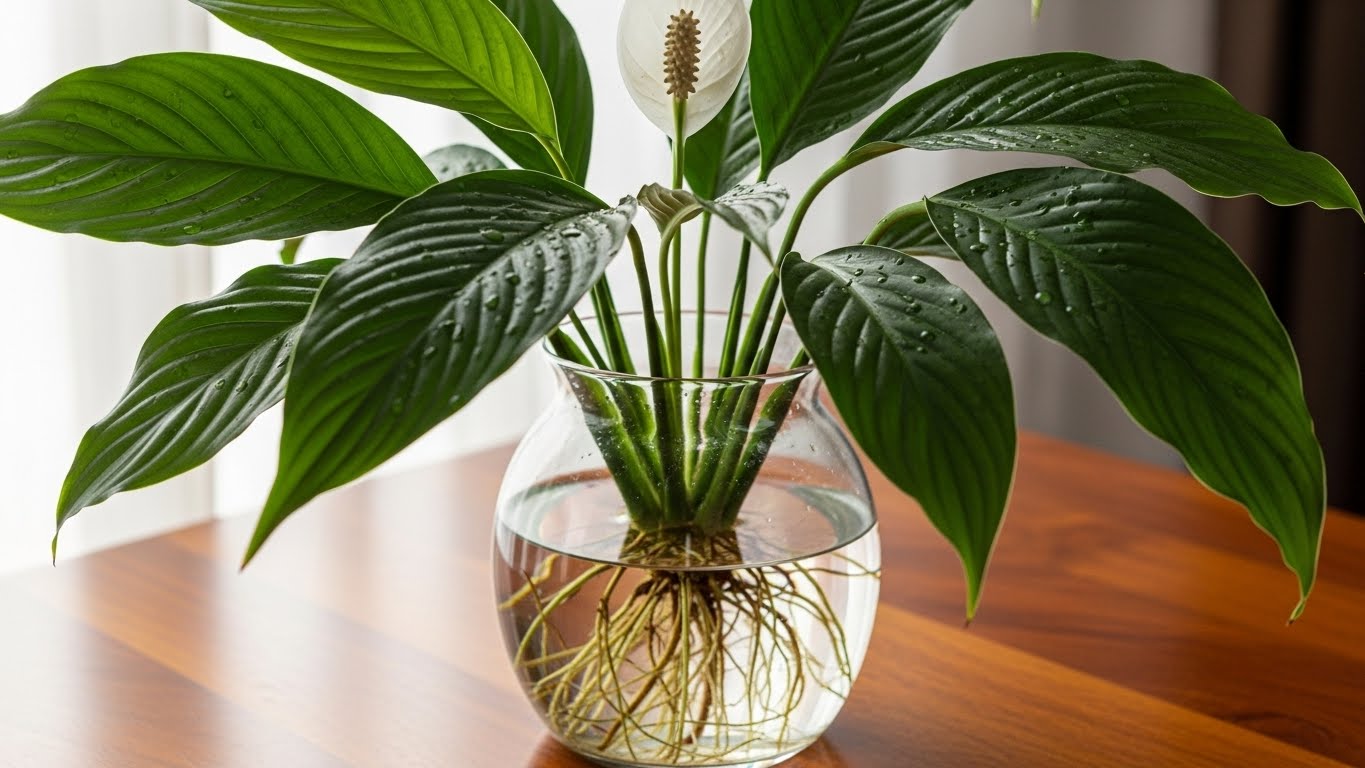
To grow a Peace Lily in water, start by choosing a clear container that shows off its roots. Select a healthy cutting with vibrant leaves, and clean the roots to remove dirt. Fill the container with distilled water, keeping it around 2 to 4 inches deep. Place your plant in indirect light and change the water weekly to keep it fresh. With the right care, your Peace Lily will thrive beautifully—stick around to discover more about keeping it happy!
Key Takeaways
- Select a container that is 6 to 8 inches in diameter, using glass or ceramic for visibility and elegance.
- Clean the Peace Lily roots thoroughly, ensuring they are white and firm, and trim any dead or mushy roots.
- Use distilled or filtered water and maintain a pH level between 5.5 and 7.5 for optimal nutrient absorption.
- Place the plant in indirect light, rotating it regularly to ensure even exposure and avoiding direct sunlight to prevent leaf damage.
- Change the water regularly to keep it fresh and clean, preventing bacteria growth and promoting healthy root development.
Understanding the Peace Lily Plant
The Peace Lily, known scientifically as *Spathiphyllum*, is a popular houseplant celebrated for its striking appearance and air-purifying qualities. Understanding its plant care and growth habits is vital to keeping your Peace Lily thriving. These plants prefer indirect light and can tolerate low-light conditions, making them perfect for cozy corners in your home. Watering is essential; you’ll want to keep the soil moist but not soggy. When the leaves start to droop, it’s a sign your plant needs a drink. During the growing season, a balanced fertilizer can boost its health and encourage beautiful blooms. With a little attention and love, you’ll enjoy the lush greenery and elegant white flowers that make the Peace Lily so special. Additionally, proper light conditions are crucial for photosynthesis and flower production.
Benefits of Growing Peace Lily in Water
Growing your Peace Lily in water can offer several exciting benefits, making it a popular choice for plant lovers. One major advantage is water purity; since you’re using just water, you minimize exposure to soil-borne pests and diseases. This can lead to a healthier plant overall. Additionally, growing in water can enhance growth speed. Peace Lilies thrive when their roots are submerged, drawing nutrients directly from the water. You’ll notice quicker root development and vibrant leaves, bringing joy to your space. Plus, it’s fun and easy to maintain! All you need is to change the water regularly, ensuring it remains clean. With these benefits, it’s no wonder more people are choosing to grow their Peace Lilies in water!
Choosing the Right Container
When it comes to growing your peace lily in water, picking the right container is essential. You’ll want to take into account the material, like glass or plastic, as well as the size and depth to guarantee your plant has enough space to thrive. A well-chosen container not only supports healthy growth but also adds a touch of style to your home!
Container Material Options
Choosing the right container for your peace lily can make all the difference in its growth and health, especially since these plants thrive in water. You’ve got a variety of materials to choose from, each with its own charm:
- Glass containers: These offer a beautiful view of the roots and water level.
- Ceramic pots: With their sturdy design, they add a touch of elegance.
- Repurposed jars: They’re eco-friendly and can be a fun DIY project.
You can also consider plastic containers for their lightweight nature, acrylic vases for a modern touch, metal buckets for a rustic vibe, bamboo planters for a natural look, or decorative bowls to showcase your peace lily. Choose one that resonates with you!
Size and Depth Considerations
Selecting the right size and depth for your peace lily container is essential for helping your plant thrive in water. You want to choose a container size that gives your peace lily enough room to grow without feeling cramped. A pot around 6 to 8 inches in diameter should work well. When it comes to water depth, aim for about 2 to 4 inches. This depth allows the roots to soak up moisture while keeping them safe from rot. Remember, your peace lily needs both space and stability to flourish. With the right container size and water depth, you’ll create a cozy, inviting environment that helps your peace lily shine bright and stay healthy!
Preparing the Peace Lily for Water Growth
Before you jump into growing your Peace Lily in water, you’ll want to prepare it properly. Start by selecting healthy cuttings from the plant; look for vibrant green leaves and strong stems. Once you’ve got your cuttings, make sure to clean the roots thoroughly, removing any dirt or dead material to set the stage for healthy growth.
Selecting Healthy Cuttings
When you’re ready to grow a peace lily in water, it’s essential to pick cuttings that are healthy and strong, ensuring your plant thrives in its new environment. Here are some tips for effective cutting selection:
- Choose mature stems: Look for cuttings with vibrant green leaves that aren’t wilting or yellowing.
- Inspect the roots: Opt for cuttings that have healthy roots; they should be white and firm, not mushy or brown.
- Check for pests: Make sure there are no signs of pests or disease on the leaves or stems.
Cleaning the Roots
Cleaning the roots of your peace lily is an essential step in preparing it for a water-growing adventure! Start by gently removing the plant from its pot, being careful not to damage the roots. Rinse them under lukewarm water to wash away any old soil. This is important for good root care. As you clean, look for any brown or mushy roots, which may indicate root rot. Trim these away with clean scissors to guarantee your plant stays healthy. Once the roots are clean and free of decay, you’re ready to place your peace lily into its new hydroponic home. With proper root care, your peace lily will thrive in water, bringing beauty and serenity to your space!
Water Quality and Maintenance
To guarantee your peace lily thrives in water, you need to pay attention to the quality of the water you use, as it can greatly impact the health of your plant. Regular water testing is key to ensuring your peace lily gets the best environment. Here are three important aspects to keep in mind:
- pH Balance: Aim for a pH level between 5.5 and 7.5, as this range supports nutrient absorption.
- Chlorine Content: Use distilled or filtered water to avoid harmful chlorine that might be present in tap water.
- Temperature: Keep the water at room temperature to provide a comfortable environment for your peace lily’s roots.
Light Requirements for Optimal Growth
To keep your peace lily thriving, it’s essential to understand its light needs. This plant loves bright, indirect sunlight, so make sure to place it near a window but not in direct rays, which can scorch its leaves. Luckily, if you have a dimmer spot, peace lilies can still adapt and grow well, making them a perfect choice for various light conditions.
Ideal Light Conditions
When you’re growing a peace lily in water, understanding its light requirements is essential to its health and vibrant growth. These beautiful plants thrive when you get their light conditions just right. Here’s what you need to know:
- Light Intensity: Peace lilies prefer bright, indirect light. Too much direct sunlight can harm their leaves.
- Light Duration: Aim for about 12 hours of light each day. This helps your plant flourish and bloom beautifully.
- Observation: Keep an eye on your plant. If the leaves start to droop or lose color, it might need a light adjustment.
Avoid Direct Sunlight
While peace lilies are known for their stunning white blooms and lush green leaves, they can quickly suffer if exposed to direct sunlight. You’ll want to keep your plant in a spot where the light intensity is just right. Bright, indirect light is ideal, so consider placing your peace lily near a window covered with sheer curtains. This way, it’ll receive the warmth and brightness it craves without burning its delicate leaves. If you notice the leaves turning yellow or brown, it’s a sign they’re getting too much sun. Remember, finding the perfect plant placement can make all the difference in how vibrant your peace lily grows, allowing it to thrive beautifully in your home.
Low Light Tolerance
Peace lilies are fantastic houseplants because they thrive even in low light conditions, making them perfect for spots in your home that don’t get much sunlight. Their shade adaptation allows them to flourish under various indoor lighting situations, guaranteeing you can enjoy their beauty without worrying too much about brightness. To help your peace lily thrive, consider these tips:
- Choose the Right Location: Place your peace lily in a spot with indirect light, like a north-facing window or a few feet away from a bright window.
- Monitor Water Levels: Guarantee the water level in your hydroponic setup is consistent, as it helps the plant adapt to lower light.
- Regularly Rotate: Rotate your plant occasionally so all sides receive equal light exposure.
With these steps, you’ll keep your peace lily happy and healthy!
Nutrient Considerations for Hydroponic Peace Lilies
To successfully grow hydroponic peace lilies, it’s essential to understand their nutrient needs, as these lovely plants thrive in a balanced environment. You’ll want to choose high-quality hydroponic fertilizers that provide the right mix of nutrients. Common nutrient sources include nitrogen, phosphorus, and potassium, which are crucial for healthy growth.
Here’s a quick reference table to help you:
Nutrient | Purpose | Source |
|---|---|---|
Nitrogen | Promotes leaf growth | Hydroponic fertilizers |
Phosphorus | Supports root development | Hydroponic fertilizers |
Potassium | Enhances overall health | Hydroponic fertilizers |
Monitoring and Managing Plant Health
Keeping your hydroponic peace lilies healthy involves more than just providing the right nutrients; regular monitoring and management are key to ensuring they thrive. You’ll want to keep an eye on some important plant symptoms and engage in consistent growth monitoring. Here are three things to watch for:
- Leaf Color: Yellowing leaves might indicate overwatering, while browning tips can suggest underwatering.
- Growth Rate: If you notice slow growth, it may be a sign your plants need more nutrients or light.
- Root Health: Inspect roots for any signs of rot or disease. Healthy roots should be firm and white.
Troubleshooting Common Issues
When you notice your peace lily struggling, don’t panic; troubleshooting common issues can help bring your plant back to health. If you see yellow leaves or leaf drooping, check for root rot caused by overwatering. Slow growth might indicate a nutrient deficiency, so consider adding a hydroponic fertilizer. Keep an eye out for water discoloration, which can signal algae growth, making it essential to change the water regularly. Pest infestations can also occur, leading to further stress on your plant. Watch for tiny bugs on the leaves, and treat them promptly. By addressing these issues, you’ll foster a thriving peace lily that brings beauty to your home!
Tips for Propagating Peace Lilies in Water
Propagating peace lilies in water can be a rewarding experience, and it’s easier than you might think! Here are some tips to help you succeed with water propagation:
- Choose Healthy Cuttings: Select strong stems with at least two leaves. This’ll give your new plant a solid start.
- Use Proper Cutting Techniques: Cut just below a node, where a leaf meets the stem. This encourages root growth, making your propagation even more effective.
- Change the Water Regularly: Keep the water fresh and clean. This prevents bacteria from harming your cuttings, promoting healthy root development.
Conclusion
Growing peace lilies in water can be a rewarding experience, blending the beauty of nature with the simplicity of hydroponics. Just like a fish swimming freely in a clear pond, your plant thrives without soil, soaking up the nutrients it needs. With the right container, quality water, and a little care, you can watch your peace lily flourish. So, immerse yourself and enjoy the journey of nurturing this stunning plant, making your space greener and more vibrant!


