
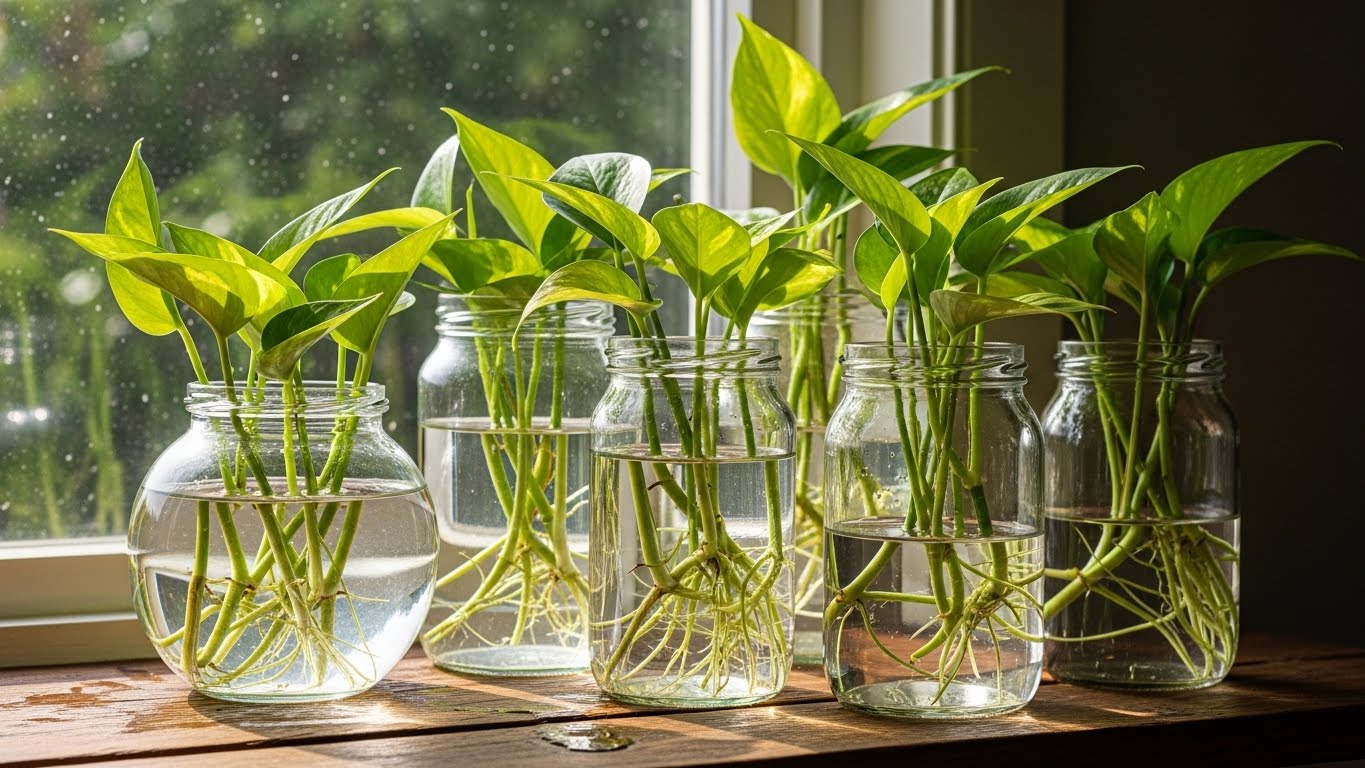
To propagate pothos in water or soil, start by selecting a healthy cutting with at least one node. For water propagation, place the cutting in a clear container filled with fresh water and change the water weekly. If you prefer soil, use well-draining potting mix and lightly water the cutting. Keep it in a warm, bright spot to encourage growth. Watch for roots and new leaves, and discover more ways to guarantee your pothos thrives!
Key Takeaways
- Take healthy cuttings of at least 4-6 inches long with one node for successful propagation in either water or soil.
- For water propagation, place cuttings in fresh water and change it weekly while keeping them in indirect sunlight.
- For soil propagation, use well-draining potting mix, water lightly, and keep cuttings in a warm, bright location.
- Monitor cuttings for new growth and vibrant color, indicating successful rooting and energy absorption.
- Be patient and maintain consistent moisture; propagation results can take 1-3 weeks to appear.
Understanding Pothos and Its Propagation
Pothos, often called Devil’s Ivy, is a popular houseplant known for its heart-shaped leaves and resilience, making it a favorite among plant lovers. With various pothos varieties, like the classic Golden Pothos or the striking Marble Queen, you’ll find something that suits your style. These plants can thrive in different environments, making them perfect for any home. When it comes to propagation techniques, you’ve got options! One of the simplest ways is to take cuttings from the vine, ensuring you include a node, then place them in water or soil. Watching your pothos grow roots is an exciting journey, and before you know it, you’ll have new plants to cherish and share with friends!
Tools and Materials Needed for Propagation
Before you start propagating your Pothos, you’ll need to gather some essential tools and materials to make the process smooth and successful. From sharp scissors for taking cuttings to the right planting materials, having everything on hand will set you up for success. Plus, deciding whether you want to root your cuttings in water or soil is key, so let’s explore what you’ll need!
Essential Propagation Tools
When diving into the exciting world of propagating pothos, having the right tools and materials is key to your success. To master those propagation methods and cutting techniques, you’ll need a few essentials. First, grab a sharp pair of scissors or pruning shears; clean cuts promote healthy growth. You’ll also want a glass jar or vase for water propagation, letting you watch those roots develop. For soil propagation, a good pot with drainage holes is a must. Don’t forget high-quality potting mix, as it provides the nutrients your cuttings need. Finally, a measuring cup or ruler can help you verify your cuttings are the right length. With these tools, you’re ready to grow!
Recommended Planting Materials
Getting started with pothos propagation requires some essential planting materials that can make the process smoother and more successful. First, grab a quality potting mix designed for houseplants; it’ll provide the perfect environment for your cuttings. Look for one that’s light, airy, and drains well. Next, consider using a rooting hormone. This magical powder encourages faster root development, giving your cuttings the best chance at thriving. Simply dip the cut end of your pothos cutting into the hormone before placing it in the potting mix. Having these materials ready will set you up for success in growing beautiful, healthy pothos plants. With just a little preparation, you’ll be well on your way to enjoying your new green friends!
Water vs. Soil Supplies
Whether you prefer the ease of water propagation or the traditional method of soil propagation, both options can lead to successful pothos growth. For water propagation, all you need is clean, fresh water—make sure the water quality is good! A glass jar or vase works perfectly to showcase those beautiful roots as they develop.
If soil’s your choice, pick a well-draining potting mix. There are various soil types, but a mix with perlite or coconut coir is ideal for pothos. You’ll also need pots with drainage holes to prevent water from sitting at the bottom. By gathering these simple supplies, you’re on your way to nurturing beautiful pothos plants, whether in water or soil!
Choosing the Right Cutting for Propagation
When you’re ready to propagate your pothos, picking the right cutting is key to your success. You’ll want to select healthy vines that look vibrant and lively, as these will give you the best chance for growth. Additionally, make sure to identify the nodes, those little bumps on the stems, since they’re where new roots will form, helping your cutting thrive in its new home.
Selecting Healthy Vines
To successfully propagate pothos, it’s essential to select healthy vines, as the right cutting can make all the difference in your plant’s growth. When you’re choosing your cuttings, look for those that’re vibrant and full of life. Healthy cuttings will set you up for success, allowing your new plants to thrive.
Consider these key factors in your vine selection:
- Color: Opt for rich green leaves without any browning or yellowing.
- Texture: Select firm leaves that feel sturdy and not limp or shriveled.
- Length: Choose longer vines, as they have more nodes, giving you better chances for growth.
With these tips, you’re on your way to nurturing beautiful pothos plants!
Identifying Node Locations
Identifying the right node locations on your pothos vine is vital for successful propagation, as these tiny bumps along the stem are where new roots will sprout. When you look closely, you’ll see different node types, like healthy, plump nodes that promise robust growth. You want to choose cuttings with at least one healthy node, as this guarantees the best chance for thriving new plants. Avoid any nodes that look shriveled or discolored, as node health is essential for successful propagation. Remember, the more healthy nodes you include in your cutting, the better your chances for a lush, vibrant pothos in the future. So, keep an eye out for those perfect nodes, and get ready to propagate!
Propagating Pothos in Water
Propagating pothos in water is a simple and rewarding way to expand your collection of this popular houseplant. To get started, choose healthy cuttings with nodes, and place them in a clear vase or jar filled with fresh water. Ensuring water clarity is essential for root development, so change the water every week to keep it clean. Watch as those beautiful roots begin to sprout!
Here are a few tips to help you succeed:
- Use cuttings that are at least 4-6 inches long, with multiple nodes.
- Keep the cuttings in indirect sunlight for the best results.
- Be patient; roots usually take 1-3 weeks to develop fully.
Soon, you’ll have vibrant new plants to admire!
Propagating Pothos in Soil
While propagating pothos in water is a fun way to watch roots grow, many plant enthusiasts enjoy the challenge and satisfaction of propagating in soil. To get started, you’ll need healthy cuttings and the right soil mix. Verify the soil moisture is just right—too wet or too dry can hinder root formation.
Here’s a simple table to guide you:
Step | Action | Tips |
|---|---|---|
1 | Choose cuttings | At least 4-6 inches long |
2 | Plant in soil | Use well-draining mix |
3 | Water lightly | Keep soil moist, not soggy |
4 | Place in bright, indirect light | Avoid direct sunlight |
Caring for Your Propagated Cuttings
Caring for your propagated cuttings is essential to confirm they thrive and grow into healthy plants. With the right propagation care, you can confirm your cuttings flourish. Focus on these key aspects for effective cutting maintenance:
- Light: Place your cuttings in bright, indirect light, avoiding harsh sunlight that can scorch their delicate leaves.
- Watering: Keep the soil or water consistently moist, but not soggy. Overwatering can lead to root rot, while underwatering can hinder growth.
- Temperature: Maintain a warm environment, ideally between 65°F and 85°F, to encourage healthy root development.
Signs of Successful Rooting
Knowing what to look for can make the difference between a successful propagation and a disappointing one, so let’s explore the signs that your pothos cuttings are rooting well. First, look for small white or light brown roots emerging from the cuttings; these are strong rooting indicators. You might also notice the leaves becoming more vibrant as the cutting draws energy from its new roots, signaling propagation success. If you see new growth, like tiny leaves or stems, that’s a great sign too! Finally, check the water or soil—if it feels heavier or retains moisture better, your roots are likely developing well. Keep an eye out for these signs, and you’ll be well on your way to thriving pothos plants!
Troubleshooting Common Propagation Issues
Sometimes, despite your best efforts, pothos cuttings don’t take root as expected, leaving you scratching your head in confusion. Don’t worry, though! You can troubleshoot those common propagation mistakes with a little guidance. Here are some tips to help you succeed:
- Check the water: Make sure you’re using clean, fresh water. Old water can harbor bacteria that harm roots.
- Inspect the cuttings: If they’re too short or not healthy, they might struggle to root.
- Adjust the light: Too much or too little light can affect growth; find that sweet spot for your cuttings.
With these troubleshooting tips, you can turn your propagation journey around and enjoy thriving pothos plants in no time!
Conclusion
In the end, whether you choose water or soil for your pothos cuttings, you’re just one snip away from a mini jungle in your home! Isn’t it ironic how what starts as a simple cutting can turn into a lush plant? With a little patience and care, you’ll soon be surrounded by thriving greenery, proving that even the tiniest piece of nature can grow into something magnificent. So grab those scissors and get growing; your future plants are waiting!


