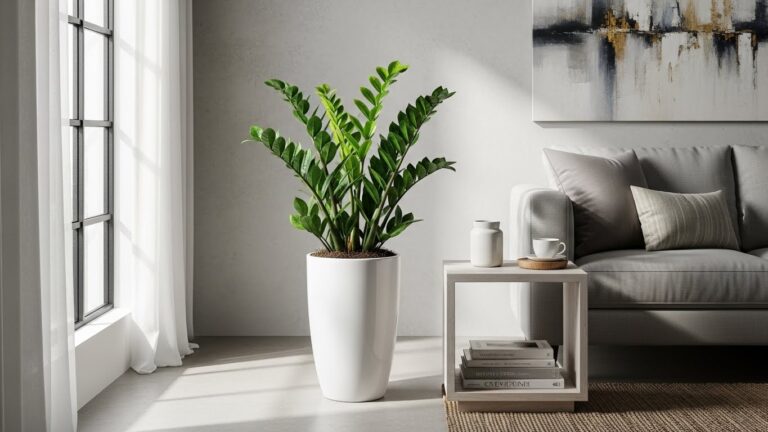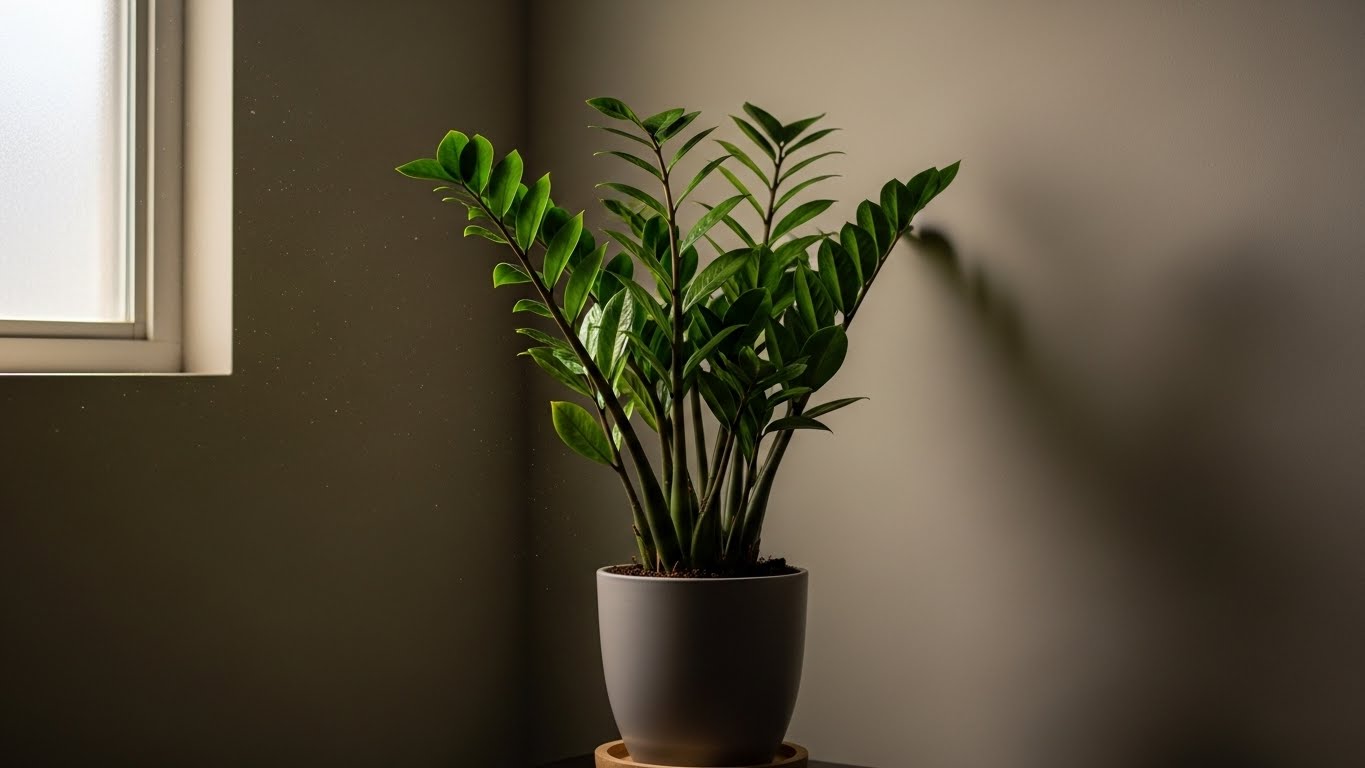
Even in low light, your ZZ plant can thrive with the right care! These hardy plants love indirect sunlight, so keep them in dim spaces without worry. Water every two to three weeks, allowing the top inch of soil to dry out. Use well-draining soil for healthy roots, and don’t forget to mist the leaves to boost humidity. With these tips, you’ll have a lush, vibrant ZZ plant! Want to discover more about caring for your ZZ?
Key Takeaways
- ZZ plants thrive in low light, making them ideal for dim spaces while still promoting growth with indirect sunlight exposure.
- Use a well-draining soil mix to prevent root rot, ensuring the roots can breathe and access moisture effectively.
- Water every two to three weeks, allowing the top inch of soil to dry out, prioritizing underwatering over overwatering.
- Increase humidity by misting leaves or using humidity trays to create a more favorable environment for growth.
- Regularly monitor for pests and signs of stress, such as yellowing leaves or drooping stems, to maintain plant health.
Understanding the ZZ Plant’s Natural Habitat
The ZZ plant, with its glossy green leaves and sturdy stems, thrives in some of the harshest conditions on Earth. Native to Africa, this remarkable plant showcases incredible plant resilience in its natural ecosystem, where it endures drought and poor soil. You’ll find ZZ plants growing in rocky areas, where their thick roots store water, allowing them to survive long dry spells. This unique adaptation makes them perfect for your home, as they can handle neglect and low light. Understanding their natural habitat helps you appreciate how tough they truly are. By mimicking their environment, like providing well-draining soil and occasional watering, you’ll foster a thriving ZZ plant that’s not only beautiful but also a symbol of nature’s resilience. Additionally, ZZ plants can enter dormancy during drought by shedding leaves, ensuring their survival until conditions improve.
Ideal Light Conditions for ZZ Plants
When it comes to light conditions for your ZZ plant, you’re in luck—these hardy beauties thrive in low light! They prefer indirect sunlight, making them perfect for spots where other plants might struggle. Plus, they can even adapt to artificial light, so you can keep them happy in your home or office with ease!
Tolerant of Low Light
If you’re looking for a plant that thrives in low light, the ZZ plant is your go-to choice! Its unique low light adaptation makes it perfect for spaces that don’t get much sunlight. You’ll find that ZZ plant care is a breeze; it can survive in spots where other plants struggle. This resilient beauty doesn’t demand bright light to flourish, making it ideal for offices, corners of rooms, or even your cozy study. Just remember, while it tolerates low light, it’ll still appreciate a bit of indirect sunlight now and then. So, give your ZZ plant a home in those dim areas, and watch it grow strong and healthy, bringing life to your space with minimal effort!
Indirect Sunlight Preference
Although ZZ plants can thrive in low light, they truly prefer indirect sunlight for ideal growth. Placing your ZZ plant near a window that filters light is the sweet spot. This way, your plant gets the gentle glow it loves without facing the harsh rays that can cause light sensitivity. Think about how sunlight dances through sheer curtains—it’s perfect for creating a cozy environment for your ZZ. You’ll notice that indirect sunlight helps the plant grow strong and vibrant, with lush green leaves that bring life to your space. So, keep your ZZ plant away from direct sun but close enough to soak up that lovely indirect light, and you’ll both be happier for it!
Artificial Light Adaptability
ZZ plants don’t just thrive in natural light; they’ve also got a fantastic ability to adapt to artificial light conditions. If you’re using artificial lighting options, you’ll be pleased to know that these resilient plants can flourish under various supplemental light sources. They prefer bright, indirect light, so consider using fluorescent or LED lights, which are energy-efficient and effective.
Here’s a quick guide to help you choose the right lighting for your ZZ plant:
Light Type | Ideal Distance | Duration |
|---|---|---|
LED Lights | 12-24 inches | 10-12 hours/day |
Fluorescent Bulbs | 12-24 inches | 10-14 hours/day |
Incandescent Bulbs | 12-18 inches | 8-10 hours/day |
Grow Lights | 12-24 inches | 12-16 hours/day |
Natural Light (Indirect) | Varies | As needed |
With the right setup, your ZZ plant will thrive beautifully!
Watering Guidelines for Low Light Environments
When you’re caring for a ZZ plant in low light, understanding its watering needs is vital to keep it thriving. Since these plants store water in their thick stems, you don’t need to water them as often as other houseplants. A good frequency schedule is to check your plant every two to three weeks. Before you water, always verify your pot has proper drainage; this is important to prevent root rot. If the top inch of soil feels dry, give your ZZ a drink. Remember, it’s better to underwater than overwater. Consistent attention to these watering guidelines will help your ZZ plant flourish, even in those cozy, low-light corners of your home.
Soil Preferences for Thriving ZZ Plants
Choosing the right soil is just as important as watering when it comes to helping your ZZ plant thrive. Your plant craves a well-draining mix, so look for soil types that allow excess water to escape. A blend of potting soil, perlite, and sand works wonders. This combination provides the perfect balance of nutrients while meeting your ZZ plant’s drainage needs. Avoid heavy, compact soils that hold onto moisture, as they can lead to root rot. Remember, your ZZ plant loves its roots to breathe, so always prioritize drainage. With the right soil, you’ll set your ZZ plant up for success, ensuring it grows strong and vibrant, even in low light. Happy planting!
Fertilizing Your ZZ Plant: Best Practices
Fertilizing your ZZ plant is a key ingredient in its recipe for growth and energy. To keep your plant happy, choose a balanced fertilizer, like a 20-20-20 liquid blend or a slow-release granule. These fertilizer types provide all the essential nutrients your ZZ needs. During the growing season, which typically runs from spring to early fall, aim to fertilize every four to six weeks. This application frequency helps your plant thrive without overwhelming it. Just remember to dilute liquid fertilizers to avoid burning the roots. By giving your ZZ plant the right nutrients at the right time, you’ll encourage it to flourish, showcasing its beautiful, glossy leaves and making your indoor space even more inviting.
Pruning and Maintenance Tips
Pruning your ZZ plant isn’t just about keeping it neat; it’s also essential for its health and growth. By using proper pruning techniques, you can encourage new growth and keep your plant looking vibrant. Start by removing any yellow or brown leaves, as they can drain your plant’s energy. Aim to prune every few months as part of your maintenance schedule, ensuring you keep an eye on its overall shape and health. Don’t hesitate to trim back overgrown stems to allow sunlight to reach the inner leaves. Remember, a little snipping goes a long way! With regular attention, your ZZ plant will thrive, and you’ll enjoy watching it flourish in your home.
Common Pests and How to Manage Them
When caring for your ZZ plant, it’s essential to keep an eye out for common pests that might try to invade your green space. Identifying these pesky intruders early can save your plant from stress and damage. Let’s explore some effective management strategies to keep your ZZ plant thriving and pest-free!
Identifying Common Pests
Have you ever noticed tiny, unwelcome visitors on your ZZ plant? Identifying common pests is the first step to keeping your plant healthy and thriving. Look out for spider mites, mealybugs, and aphids—each can sneak in and cause trouble. Pest identification starts with careful observation; check the leaves for sticky residues or tiny webs. Regularly inspecting your plant helps catch these pests early.
To prevent infestations, maintain good air circulation and avoid overwatering, as damp conditions can attract them. Keeping your ZZ plant clean by gently wiping the leaves can also deter pests. With these simple prevention methods, you can create a thriving environment, ensuring your ZZ plant remains as beautiful as ever.
Effective Management Strategies
To effectively manage common pests like spider mites, mealybugs, and aphids on your ZZ plant, it’s essential to start with a few practical strategies. Remember, effective communication and team collaboration with fellow plant lovers can make a difference!
- Inspect your plant regularly for early signs of pests.
- Spray a gentle solution of soap and water on affected areas.
- Wipe down leaves with a damp cloth to remove pests.
- Introduce beneficial insects like ladybugs to help control pests naturally.
- Keep your ZZ plant healthy with proper watering and light conditions.
Signs of Stress in Low Light Conditions
Even though ZZ plants are known for their resilience, they can still show signs of stress when placed in low light conditions. Keep an eye out for leaf discoloration, which often appears as yellowing foliage. You might also notice stunted growth or slow growth altogether, leaving your plant looking a bit sad. Drooping leaves and wilting stems are clear signals that your ZZ needs more light. Additionally, be cautious of root rot, a common issue in low light, and check for pest infestation, which can also hinder your plant’s health. If you spot these signs, don’t worry! With a little attention, you can help your ZZ thrive once again.
Repotting: When and How to Do It
Repotting your ZZ plant can be a game-changer for its health and growth, and knowing when and how to do it makes all the difference. Typically, you should consider repotting every 2-3 years or when you notice roots coming out of the drainage holes. Choosing the right pot size is essential; go for one that’s just a few inches larger than the current pot to avoid overwatering issues.
Here are some tips to help you along:
- Use well-draining soil to prevent root rot.
- Water the plant a day before repotting for easier removal.
- Gently loosen the roots to encourage growth.
- Place the plant in a bright spot (but not direct sunlight).
- Monitor the moisture level after repotting.
Happy repotting!
Propagating Your ZZ Plant Successfully
When it comes to propagating your ZZ plant, there are a couple of methods you can try that work really well. Once you’ve chosen your method, caring for the new plants is essential for their success. Let’s explore how to make propagation easy and effective so you can expand your ZZ plant collection!
Ideal Propagation Methods
Propagation can be one of the most exciting parts of caring for your ZZ plant, especially since it allows you to create new plants that can thrive just like the original. To successfully propagate your ZZ plant, consider these ideal methods:
- Cutting Techniques: Use clean, sharp scissors to take healthy cuttings.
- Water Propagation: Place cuttings in water, ensuring the leaves stay dry.
- Use a Container: Opt for a clear glass to monitor root growth.
- Sunny Spot: Position your cuttings in indirect sunlight to encourage growth.
- Patience is Key: Allow a few weeks for roots to develop before transferring to soil.
With these techniques, you’ll nurture your green thumb and enjoy the joy of new ZZ plants sprouting right at home!
Care After Propagation
After you’ve successfully taken cuttings and started the rooting process, the next phase is all about caring for your new ZZ plants. To guarantee propagation success, place your cuttings in a warm spot with indirect light. Keep the soil slightly moist but never soggy; overwatering can lead to root rot. It’s essential to maintain humidity, so consider misting them occasionally or using a plastic bag to create a mini greenhouse effect. As your plants grow, gradually introduce them to brighter light conditions. Don’t forget to be patient—new roots take time to develop! Regularly check for pests and treat them promptly. With attentive post propagation care, your ZZ plants will thrive and fill your space with lush greenery.
Enhancing Humidity for Optimal Growth
To thrive and grow, ZZ plants appreciate a little extra humidity in their environment, especially since they’re native to tropical regions. Keeping the humidity levels ideal can promote moisture retention and enhance overall health. Here are some ways you can boost humidity for your ZZ plant:
- Misting: Lightly mist the leaves to increase humidity.
- Humidity trays: Place your plant on a tray filled with water and pebbles.
- Grouping: Cluster your plants together to create a micro-humid environment.
- Room humidifiers: Use a humidifier to maintain consistent humidity levels.
- Humidity monitoring: Regularly check humidity levels to verify they meet your plant’s preferences.
These humidity benefits can greatly impact humidity and growth, making your ZZ plant flourish!
Companion Plants for ZZ Plants
Choosing the right companion plants for your ZZ plant can really enhance its growth and overall health. You’ll find that certain plants not only look great together but also support each other’s growth by sharing the same care requirements. Let’s explore some ideal companions that thrive alongside your ZZ plant and discover how they can benefit one another!
Ideal Companion Plants
When you’re looking to create a vibrant indoor garden, pairing ZZ plants with the right companion plants can make all the difference. Your companion plant selection should include compatible species that thrive in similar conditions, enhancing the beauty and health of your space. Consider these great options:
- Snake Plant: Tough and low-maintenance, it adds height.
- Pothos: Its trailing vines soften any corner.
- Spider Plant: A fun plant that produces “babies” for propagation.
- Peace Lily: Adds lovely white blooms and filters air.
- Cast Iron Plant: Hardy and forgiving, perfect for low-light conditions.
These plants not only coexist well with your ZZ but also create a lush, inviting atmosphere you’ll adore.
Growth Benefits Together
Companion plants not only enhance the visual appeal of your indoor garden, but they also offer significant growth benefits when paired with ZZ plants. When you choose plants like snake plants or pothos, you’re taking advantage of their low light adaptability, which complements your ZZ plant’s needs beautifully. These companions can create a microenvironment that encourages growth stimulation, helping both plants thrive even in dim lighting. By sharing nutrients and moisture, they can bolster each other’s health, making your indoor space feel lush and vibrant. Plus, the combination of textures and colors can create a stunning visual display. So, go ahead—experiment with different pairings and watch your garden flourish together with your ZZ plant!
Care Requirements Comparison
To guarantee your ZZ plant and its companion thrive, it’s essential to understand their care requirements. Both of these plants have unique needs, but they can harmonize beautifully together. Keep an eye on their soil moisture and light intensity to make sure they flourish.
Here are some care tips for you:
- Soil: Use well-draining potting mix to prevent root rot.
- Watering: Allow the top 2 inches of soil to dry out before watering.
- Light: They prefer low to moderate light, so avoid direct sunlight.
- Humidity: Average household humidity is usually just fine.
- Companions: Consider pairing ZZ plants with snake plants or pothos for a lovely display.
Seasonal Care Tips for Your ZZ Plant
Caring for your ZZ plant throughout the seasons can make a big difference in its health and growth. You’ll want to make seasonal adjustments, especially as temperatures change. During winter, keep your plant in a warmer spot, avoiding drafts. In spring and summer, it’ll thrive with a bit more light and humidity. Here’s a helpful guide:
Season | Care Tips |
|---|---|
Spring | Increase watering slightly |
Summer | Provide bright, indirect light |
Fall | Reduce watering frequency |
Winter | Keep in a warm area, limit water |
The Benefits of ZZ Plants in Your Home
ZZ plants are more than just attractive houseplants; they bring a host of benefits that can enhance your living space. You’ll love how these resilient plants fit seamlessly into your home decor while providing numerous advantages:
- Air purification: ZZ plants help filter toxins, improving air quality.
- Low maintenance: They thrive on neglect, perfect for busy lifestyles.
- Aesthetic appeal: Their glossy leaves add a touch of elegance to any room.
- Adaptable: ZZ plants flourish in low light, making them ideal for dim spaces.
- Positive energy: They’re believed to promote a calming atmosphere, lifting your mood.
With these ZZ plant benefits, you’re not just decorating; you’re creating a healthier, more inviting home!
Conclusion
To summarize, your ZZ plant can thrive even in low light, like a star shining brightly in the night sky. By understanding its needs for light, water, soil, and humidity, you can create an ideal environment for growth. Remember to fertilize and consider companion plants to enhance its beauty. With a little care, your ZZ plant will not only survive but flourish, bringing a touch of green to your home that brightens your day!