
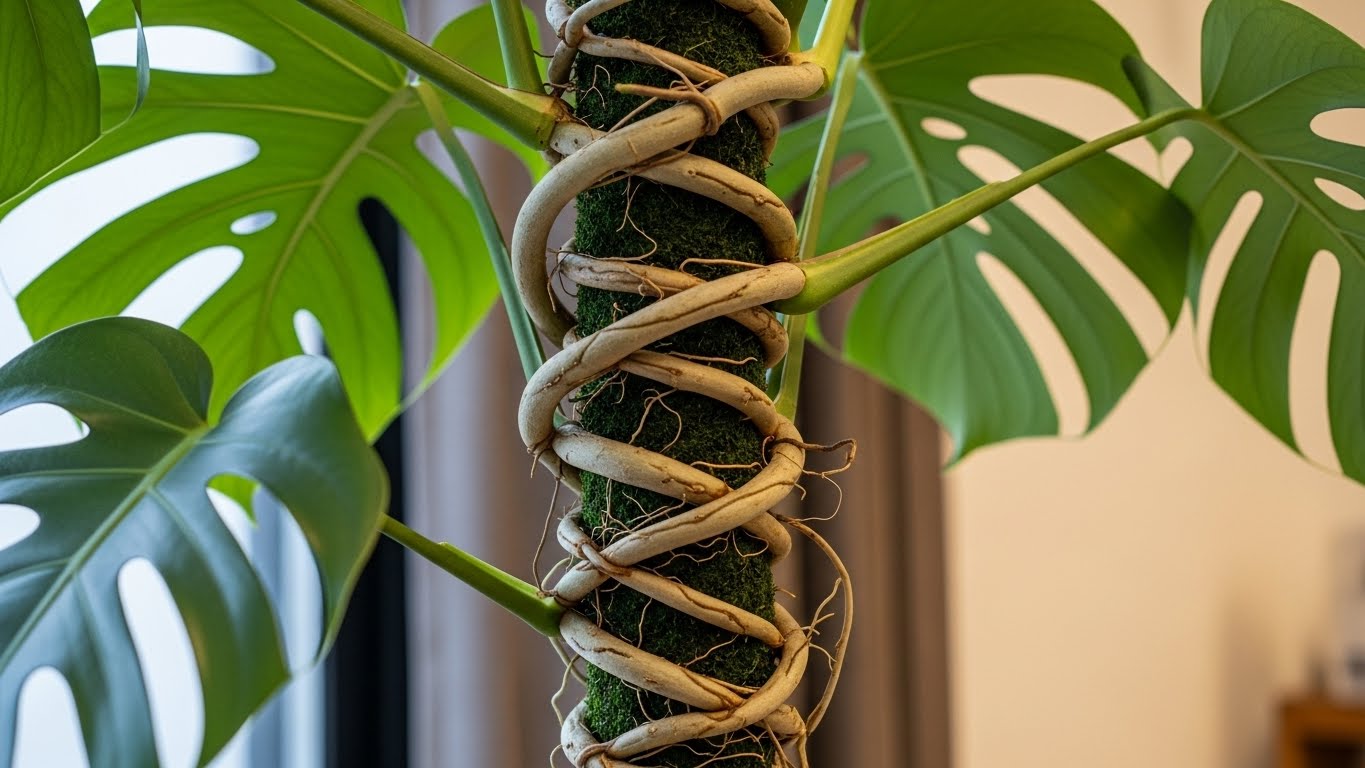
When it comes to your Monstera’s aerial roots, both trimming and training can be super helpful! Trimming helps tidy up tangled or unhealthy roots, while training helps guide them for better support as they climb. Aerial roots absorb moisture and nutrients, which boosts growth, but they can also look messy if left unchecked. By managing them well, you can keep your plant looking great and thriving. Keep on exploring to discover even more tips for your Monstera!
Key Takeaways
💡 If you’re considering whether to trim or train your Monstera’s aerial roots, understanding how to train them effectively is crucial.
➜ Master the art of trathisng your Monstera
- Trim brown or mushy aerial roots to promote plant health and maintain a tidy appearance.
- Train aerial roots by guiding their growth direction for stability and securing them to support structures.
- Regularly inspect roots and trim overly long or tangled roots to prevent damage and improve aesthetics.
- Ensure proper humidity levels and moisture to enhance the function of aerial roots during growth.
- Both trimming and training are beneficial, depending on the plant’s health and desired aesthetics.
Understanding Aerial Roots in Monstera
When you think of a Monstera plant, its large, vibrant leaves often steal the show, but don’t overlook those fascinating aerial roots! These roots are unique; they grow above the soil, reaching out for support and moisture. Aerial root characteristics include their ability to cling to nearby structures, which helps your Monstera thrive in its natural habitat. As you watch your plant develop, you’ll notice how these roots contribute to monstera growth, allowing it to climb and spread beautifully. They add an exotic touch to your plant, making it even more enchanting. Embracing these roots can enhance your connection with your Monstera, deepening your appreciation for its intriguing nature. Providing a support structure encourages the growth of these aerial roots, fulfilling a biological need for stability. So, let’s dive deeper into this wonderful world together!
The Purpose of Aerial Roots
Aerial roots in your Monstera aren’t just for show; they serve important purposes that help your plant thrive. These roots can absorb nutrients and moisture from the air, giving your plant a little extra boost in its environment. Plus, they provide structural support, helping your Monstera climb and stay stable as it grows.
Nutrient Absorption Benefits
Roots are often thought of as the hidden heroes of the plant world, and for monstera plants, aerial roots play an important role in nutrient absorption. These roots reach out into the air, seeking moisture and nutrients, which helps your plant thrive. By tapping into the surrounding environment, they enhance nutrient uptake, giving your monstera a boost that soil alone might not provide. This unique ability supports soil health, as the aerial roots reduce the competition for nutrients within the pot. So, when you see those adventurous roots climbing and exploring, remember they’re not just for show; they’re actively working to keep your monstera healthy and happy. Embrace those roots and let them do their crucial job!
Structural Support Role
The fascinating world of monstera plants reveals that those adventurous aerial roots aren’t just for seeking nutrients; they also play an important role in providing structural support. These roots help your monstera climb and stabilize itself, allowing it to reach for sunlight in its natural habitat. Think of them as nature’s built-in trellis! By anchoring into nearby surfaces, they enhance the plant’s climbing adaptations, making it stronger and more resilient. As you care for your monstera, remember that these aerial root functions are crucial. They not only contribute to the plant’s beauty but also guarantee its health and stability. So, when you see those roots, appreciate their hard work in keeping your plant upright and thriving!
Benefits of Allowing Aerial Roots to Grow
When you let your Monstera’s aerial roots grow freely, you’re opening the door to a world of benefits that can enhance both the plant’s health and your gardening experience. These roots not only provide structural support but also help your plant absorb moisture and nutrients from the air, which encourages overall growth and liveliness.
Here’s a quick look at some aerial root benefits:
Benefit | Description | Impact on Plant |
|---|---|---|
Increased Nutrient Uptake | Aerial roots absorb moisture and nutrients | Promotes growth |
Enhanced Stability | Roots attach to surfaces for support | Reduces risk of damage |
Improved Air Quality | Aerial roots help filter indoor air | Healthier environment |
Drawbacks of Aerial Roots
While many plant lovers appreciate the striking appearance of Monstera’s aerial roots, there are some drawbacks that you should consider. One major concern is the potential issues with aesthetics; those long, tangled roots can make your plant look messy and less polished. Additionally, if left unchecked, aerial roots might grow into places you don’t want them, like your walls or furniture. Another of the aerial root drawbacks is that they can sometimes absorb too much moisture, leading to mold or mildew, which isn’t great for your plant’s health. Finally, if you’re not careful, these roots can cause your Monstera to become top-heavy and unbalanced, making it harder to care for. So, keep these factors in mind!
💡 Pruning is a vital aspect of Monstera care that can impact the health of your plant, especially when dealing with aerial roots.
➜ Discover proven pruning techniques
When to Trim Aerial Roots
Aerial roots can be a bit of a mixed bag, adding both character and challenges to your Monstera plant. Knowing when to trim them is key to maintaining aerial root health and keeping your plant happy. Here are some trimming guidelines to take into account:
- If roots turn brown or mushy, it’s time to trim.
- Trim roots that are overly long or tangled to promote growth.
- Do it during the growing season for the best results.
- Always use clean, sharp scissors to prevent infection.
How to Train Aerial Roots for Climbing
Training your Monstera’s aerial roots to climb can be a fun and rewarding experience, especially since these roots help the plant absorb moisture and nutrients from the air. To start with aerial root training, gently guide the roots toward a trellis or moss pole. Secure them in place using soft ties or twine, being careful not to damage the roots. As your Monstera grows, encourage it to reach higher by using climbing techniques, like positioning the pole at an angle to create a natural upward path. Regularly check the roots and adjust their placement as needed, ensuring they stay anchored. With patience and attention, you’ll see your Monstera flourishing and climbing, creating a stunning display of greenery.
Best Practices for Aerial Root Management
When it comes to managing your Monstera’s aerial roots, knowing the right pruning techniques and training methods is key to keeping your plant healthy and happy. You’ll want to learn how to snip those roots at the right time and how to guide them effectively toward supports. With a little practice, you’ll have your plant climbing and thriving in no time!
Pruning Techniques Explained
Pruning your Monstera’s aerial roots can feel intimidating, but it’s easier than you might think! Using the right pruning techniques and cutting methods can help keep your plant healthy and thriving. Here’s how to get started:
- Choose the right time: Spring or early summer is best for pruning.
- Use clean tools: Always sterilize scissors or shears to prevent infections.
- Make precise cuts: Trim the aerial roots just above the node, ensuring you don’t damage the main stem.
- Monitor growth: Observe how your Monstera reacts and adjust your pruning routine as needed.
With these simple tips, you’ll feel more confident in managing those aerial roots, and your Monstera will thank you for it!
Training Methods Overview
To successfully manage your Monstera’s aerial roots, it’s essential to understand a few effective training methods that can enhance their growth and overall health. By recognizing the different aerial root types and their growth patterns, you can apply the best practices suited for your plant.
Method | Description | Benefits |
|---|---|---|
Trellis Support | Attach roots to a trellis | Encourages upward growth |
Moss Poles | Wrap roots around a moss pole | Provides moisture |
String Ties | Use soft ties to guide roots | Prevents damage |
Soil Anchoring | Bury roots to encourage rooting | Strengthens stability |
Regular Monitoring | Observe root health | Early issue detection |
These methods will help your Monstera thrive, creating a beautiful, lush display!
Conclusion
To sum up, whether you choose to trim or train your Monstera’s aerial roots, remember that these quirky little extensions are more than just plant decorations; they’re essential lifelines! Embrace their adventurous spirit, letting them climb and explore, or snip them back if they get unruly. It’s all about finding that perfect balance. So go ahead, make your Monstera flourish, and enjoy the wild beauty of those aerial roots; they’re waiting to take your plant game to new heights!
💡 Choosing the right support for your Monstera can enhance its growth and stability, especially if you’re trathisng those aerial roots.
➜ Explore advanced support options


