
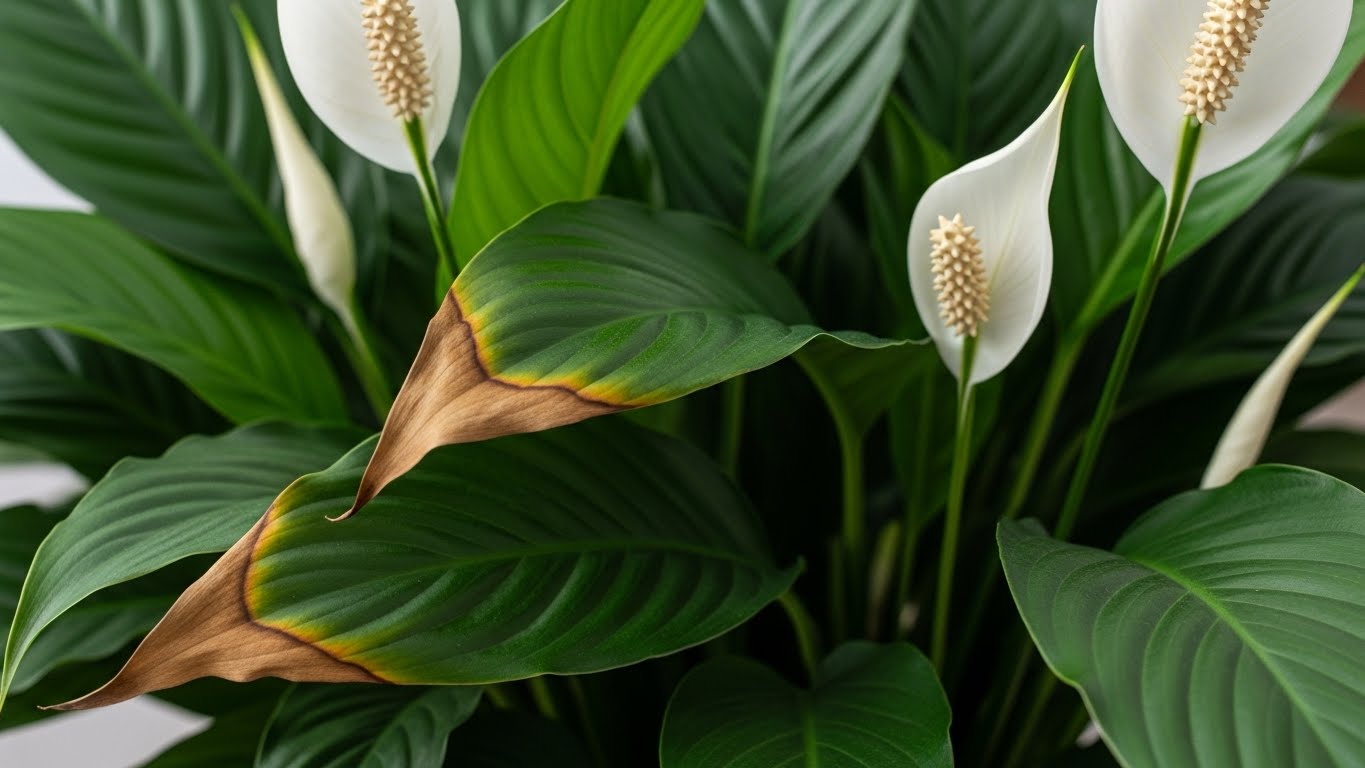
If your peace lily has brown leaf tips, it might be due to overwatering, underwatering, or low humidity. Overwatering causes mushy leaves and yellowing, while underwatering leads to dry, droopy leaves. Low humidity can also dry out tips, so try checking your plant’s water needs and increasing humidity. Nutrient deficiencies and pests might be culprits too! By adjusting these factors, you can help restore your peace lily’s health and beauty. There’s even more to explore on this topic!
Key Takeaways
- Brown leaf tips often indicate overwatering; ensure soil is moist but not soggy to prevent root rot.
- Underwatering can also cause brown tips; check soil moisture and hydrate if it feels dry several inches down.
- Low humidity levels can lead to brown tips; increase humidity by misting leaves or using a humidifier.
- Excessive direct sunlight can scorch leaves; provide bright, indirect light for optimal growth.
- Nutrient deficiencies, especially potassium, may cause browning; use a balanced fertilizer every 6-8 weeks during the growing season.
Understanding Peace Lily Care
When you bring a peace lily into your home, you’re inviting a beautiful plant that not only brightens up your space but also helps purify the air. To keep your peace lily thriving, focus on proper peace lily maintenance. This means providing the right amount of water—enough to keep the soil moist but not soggy. Don’t forget about proper fertilization, which is crucial for growth; use a balanced fertilizer every 6-8 weeks during the growing season. Pay attention to its light needs, too; peace lilies prefer bright, indirect light. Additionally, ensure that the soil is well-aerated and rich, as this mimics their natural habitat and supports healthy growth. By following these simple steps, you’ll create a nurturing environment where your peace lily can flourish, filling your home with energy and beauty.
Common Symptoms of Peace Lily Stress
When your peace lily starts showing signs of stress, it’s important to pay attention to what’s happening. You might notice leaf discoloration patterns, wilting or drooping leaves, or even stunted growth issues. Recognizing these symptoms early can help you take action and keep your plant healthy and thriving!
Leaf Discoloration Patterns
Peace lilies are stunning houseplants, but they can be sensitive to changes in their environment. When you notice leaf discoloration, it’s essential to perform leaf pattern identification to understand what might be going wrong. For instance, yellowing leaves often signal overwatering, while browning edges may hint at underwatering or low humidity. Environmental factors like light exposure also play an important role; too much direct sun can scorch their beautiful leaves, while too little light can cause them to fade. By observing these patterns, you can quickly identify the stressors affecting your peace lily. Remember, catching these signs early allows you to adjust care, helping your plant thrive in your home.
Wilting and Drooping Leaves
If you’ve noticed your peace lily’s leaves wilting or drooping, don’t panic; these signs often indicate that your plant is experiencing some form of stress. This stress can stem from issues related to leaf care or inadequate plant hydration. To help you identify the problem, here’s a quick guide:
Cause | Symptoms | Solution |
|---|---|---|
Underwatering | Wilting leaves | Water your plant thoroughly |
Overwatering | Drooping leaves | Allow soil to dry out |
Poor light conditions | Both symptoms | Move to a brighter location |
Stunted Growth Issues
Stunted growth in your peace lily can be a frustrating experience, especially when you’re enthusiastic to see it thrive. You might notice your plant isn’t growing as it should, which can stem from various stunted growth factors. Recognizing these signs is essential for finding effective stunted growth solutions.
Here are some common symptoms to watch for:
- Small leaves: New leaves may appear tiny and underdeveloped.
- Slow growth: Your plant seems to be stuck in time, with minimal growth over weeks.
- Pale foliage: Leaves may lose their vibrant green color, signaling stress.
Overwatering: The Main Culprit
Overwatering is often the sneaky villain behind those brown leaf tips on your peace lily. If you notice your plant’s leaves turning brown or drooping, it might be a sign that you’re giving it too much water. Let’s explore the signs of overwatering and some correct watering techniques to keep your peace lily happy and healthy!
Signs of Overwatering
When you notice the tips of your Peace Lily’s leaves turning brown, it might just be a sign that you’re giving it too much water. Overwatering leads to water retention in the soil, which suffocates the roots and prevents them from absorbing nutrients. Here are a few signs to look out for:
- Leaves become mushy or droopy
- Soil feels constantly wet and doesn’t dry out
- Foul smell coming from the pot, indicating root rot
If you see these symptoms, it’s time to contemplate drainage solutions. Adjusting your watering routine can make a huge difference, keeping your Peace Lily happy and healthy. Remember, a little less water can go a long way in reviving those brown tips!
Correct Watering Techniques
To keep your Peace Lily thriving, it’s essential to master the art of correct watering techniques, especially since overwatering is often the main culprit behind those pesky brown leaf tips. Start by checking the soil moisture; it should feel slightly damp, not soggy. Establish a consistent watering schedule, typically once a week, adjusting as needed based on your plant’s environment. If the top inch of soil feels dry, it’s time to water. Always guarantee excess water can drain away, preventing root rot. Remember, your Peace Lily prefers a bit of neglect over being drenched. With these simple tips, you’ll help your leafy friend flourish and show off those beautiful blooms without the worry of browning leaves.
Underwatering: A Hidden Problem
Underwatering can sneak up on even the most diligent plant parents, leaving your Peace Lily with brown leaf tips that signal distress. It’s vital to keep an eye on soil moisture, as this can change quickly. If you notice your plant drooping, it might be time to adjust your watering frequency. Here are some signs of underwatering:
- Soil feels dry to the touch, pulling away from the pot’s edges.
- Leaves appear limp and slightly droopy.
- Brown tips develop on the leaves, indicating dehydration.
To revive your Peace Lily, give it a thorough drink, ensuring the water reaches the roots. Remember, keeping a consistent watering schedule will help maintain that lush, green beauty you love!
Humidity Levels and Leaf Health
Humidity plays an essential role in keeping your Peace Lily healthy and vibrant, as these plants thrive in environments with higher moisture levels. When the humidity is too low, you might notice the leaf tips turning brown, signaling a lack of leaf moisture. To guarantee your Peace Lily flourishes, aim for humidity control between 40-60%. You can increase humidity by misting the leaves, placing a humidifier nearby, or grouping your plants together. Remember, a happy Peace Lily means lush, green leaves instead of browning tips. By maintaining the right humidity, you not only protect your plant but also create a more inviting atmosphere in your home. Your Peace Lily will thank you with beautiful, thriving foliage!
Nutrient Deficiency and Its Impact
When caring for your peace lily, it’s vital to understand how essential nutrients affect its growth and health. If your plant shows signs of nutrient deficiency, like yellowing or browning leaf tips, it’s a clear signal that something’s off. By recognizing these symptoms early, you can take action to guarantee your peace lily thrives!
Essential Nutrients for Growth
While your Peace Lily may look lush and vibrant, it can quickly lose its charm if it’s not getting the essential nutrients it needs to thrive. Nutrient uptake is vital for keeping your plant healthy, and without proper soil amendments, it may struggle. Here are three key nutrients your Peace Lily needs:
- Nitrogen: Essential for lush leaves and overall growth.
- Phosphorus: Supports strong roots and beautiful blooms.
- Potassium: Enhances disease resistance and overall vigor.
Symptoms of Deficiency
If your Peace Lily isn’t getting the nutrients it needs, you might start to notice some signs that something’s off. A common indicator of nutrient imbalance is yellowing leaves, especially when the tips turn brown. You may also see stunted growth or a lack of blooms, which really can dampen your plant’s spirit! Symptom identification is essential; if the leaves feel crispy, it could mean a potassium deficiency. On the other hand, if they’re dropping, it might signal a lack of nitrogen. Paying attention to these symptoms can help you understand your Peace Lily’s needs better, allowing you to provide the right care it craves. Remember, a happy Peace Lily is a thriving companion!
Water Quality: Tap Water vs. Distilled Water
Water quality plays a crucial role in keeping your Peace Lily healthy and vibrant, so choosing the right type of water is essential. You might wonder whether to use tap water or distilled water. Here’s a quick breakdown:
- Tap Water: Often contains chlorine and minerals, which can harm delicate roots over time.
- Distilled Water: Free of impurities and minerals, promoting healthier growth and preventing brown leaf tips.
- Rainwater: A natural option, rich in nutrients, but can be harder to collect consistently.
Temperature Fluctuations and Stress
When it comes to keeping your peace lily happy, temperature plays a huge role. Ideally, these plants thrive in a cozy range of 65 to 85 degrees Fahrenheit, but sudden changes can really stress them out. If you notice brown tips on the leaves, it might be a sign that your plant’s feeling the heat—or the chill!
Ideal Temperature Range
Maintaining the right temperature for your Peace Lily is essential to keeping its vibrant leaves healthy and green. These plants thrive in a cozy environment, so try to keep them in the ideal temperature range of 65°F to 85°F (18°C to 29°C). Avoid temperature extremes, as they can stress your plant and lead to brown leaf tips.
To create a loving atmosphere for your Peace Lily, consider these tips:
- Keep it away from drafts that might cause sudden temperature changes.
- Provide ideal humidity by misting the leaves regularly or placing a humidifier nearby.
- Avoid placing it near heat sources, like radiators or heaters, that can dry it out.
With a little care, your Peace Lily will flourish!
Signs of Temperature Stress
Even in the cozy environment you create for your Peace Lily, it can still face challenges from temperature stress. When exposed to temperature extremes, your plant might show signs of distress. Look out for brown tips on the leaves, which signal it’s struggling to maintain leaf resilience. If the leaves droop or curl, it’s a clear message from your Lily that the temperatures are either too hot or too cold. Sudden changes in temperature can also cause issues, so keep a steady environment. To help your plant thrive, aim for a consistent temperature range, avoiding drafts or direct heat sources. By being attentive to these signs, you’ll guarantee your Peace Lily stays happy and healthy!
Pests and Diseases Affecting Leaves
Pests and diseases can sneak up on your Peace Lily, causing those lovely green leaves to develop brown tips and spots. To keep your plant thriving, focus on pest identification and disease prevention. Here are some common culprits:
- Spider mites: Tiny pests that create webbing on leaves, sucking out the plant’s life.
- Scale insects: Small, sticky bugs that cause yellowing and browning as they feed on sap.
- Leaf spot diseases: Fungal infections that leave unsightly brown patches on the foliage.
Regularly inspect your Peace Lily for these issues, and act quickly if you spot anything unusual. With a little attention and care, you can help your plant bounce back and keep those leaves lush and vibrant!
Improper Lighting Conditions
After addressing pesky pests and diseases, it’s time to look at another factor that can lead to brown tips on your Peace Lily: improper lighting conditions. Your plant craves the right balance of light intensity and light duration. Too much bright light can scorch its leaves, while too little can stunt its growth.
Here’s a quick guide to help you find that sweet spot:
Light Intensity | Light Duration |
|---|---|
Direct sunlight | 2-4 hours daily |
Bright, indirect light | 6-8 hours daily |
Low light | 8-12 hours daily |
Too much shade | Less than 4 hours daily |
Keep adjusting until your Peace Lily thrives, and you’ll notice a difference in those leaf tips!
Soil Quality and Root Health
When you think about keeping your Peace Lily healthy, don’t overlook the importance of soil quality and root health. A happy plant starts with the right environment, and good soil plays a huge role in that. Here are some key points to remember:
- Soil pH: Aim for a slightly acidic range (5.8 to 6.5) for ideal growth.
- Drainage: Make sure your soil drains well to prevent root rot, which can cause those dreaded brown leaf tips.
- Nutrient-Rich Mix: Use a quality potting mix loaded with organic matter for healthy roots.
Transplant Shock and Its Effects
Transplanting your Peace Lily can be exciting, but it often leads to something called transplant shock, which can affect your plant’s health if you’re not careful. When you move your Peace Lily to a new pot or soil, it may experience transplant stress, causing its leaves to droop or develop brown tips. Don’t worry; with the right recovery techniques, you can help your plant bounce back. First, make sure you provide consistent moisture, but avoid overwatering. Placing your plant in a warm, well-lit spot without direct sunlight can also promote healing. Finally, consider using a diluted fertilizer to give your Peace Lily the nutrients it needs to recover. With a little patience, your plant will thrive again!
Seasonal Changes and Leaf Browning
As the seasons change, your Peace Lily might show signs of stress, particularly through browning leaf tips. This can happen due to temperature extremes or seasonal shedding, which can leave your plant feeling a bit off. It’s important to pay attention to these changes, as they can indicate your lily’s need for some TLC. Here’s what to look out for:
Watch for browning leaf tips on your Peace Lily as seasonal changes may cause stress; it’s a call for care!
- Droopy leaves: This can signal that your plant isn’t happy with the cooler or warmer temperatures.
- Browning edges: Keep an eye on the leaf tips; they might start to brown as your Peace Lily adapts.
- Leaf loss: Seasonal shedding is normal, but excessive leaf drop can be a sign of stress.
Give your plant the right environment, and it’ll flourish!
Preventive Measures for Healthy Leaves
To keep your Peace Lily thriving and prevent those pesky brown leaf tips, it’s essential to establish a solid care routine. Focus on consistent leaf maintenance to create a healthy environment. Here are some tips to guarantee your plant stays vibrant:
Care Task | Frequency |
|---|---|
Watering | Once a week |
Fertilizing | Every 4-6 weeks |
Humidity Check | Weekly |
Dusting Leaves | Monthly |
Reviving a Peace Lily With Brown Tips
Even with the best care routine, you might still encounter brown tips on your Peace Lily’s leaves. Don’t worry; you can bring your plant back to life with some simple revival techniques. Start by evaluating its environment and making necessary adjustments. Here are three effective steps to help you revive your Peace Lily:
- Adjust Watering: Make sure you’re not over or under-watering; aim for consistently moist soil.
- Improve Humidity: Peace Lilies love humidity, so mist the leaves or place a humidifier nearby.
- Prune Damaged Leaves: Trim off the brown tips with clean scissors to encourage new growth.
With attentive leaf care and these revival techniques, your Peace Lily can flourish once again!
Conclusion
In summary, keeping your peace lily healthy involves paying attention to its watering, humidity, and environment. If you notice those pesky brown tips, don’t fret—there’s always a way to turn things around. By addressing the issues and making small adjustments, you can help your plant bounce back. Remember, a little care goes a long way, and with the right attention, your peace lily will thrive, proving that it’s worth its weight in gold!


