
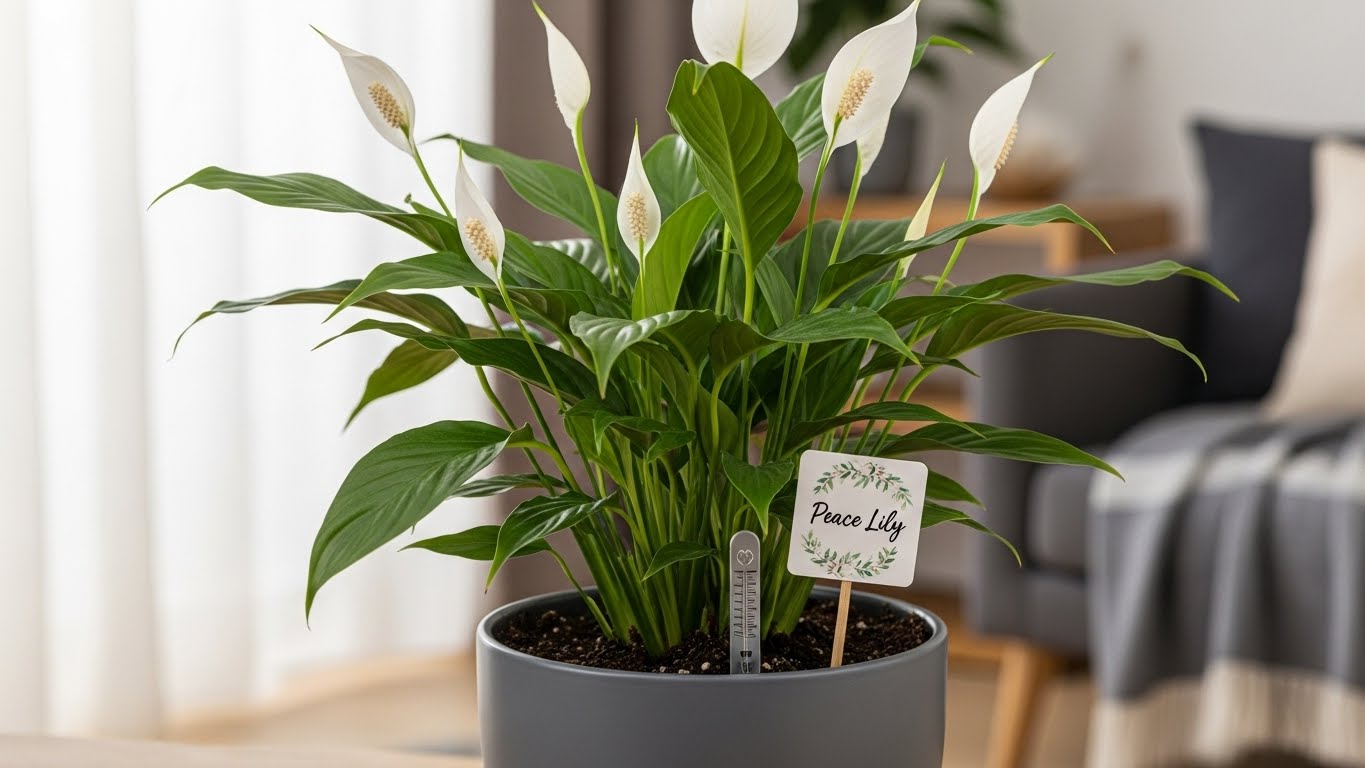
To care for your peace lily, place it in bright, indirect light—too much sun can scorch its leaves! Water when the top inch of soil feels dry, usually every 1-2 weeks, and make sure excess water drains. For ideal growth, use a mix of potting soil, peat moss, and perlite. Regularly check for yellowing leaves, which might mean it’s getting too much or too little water. Keep going, and you’ll discover even more helpful tips!
Key Takeaways
- Place your peace lily in bright, indirect sunlight to promote healthy growth and blooming; avoid direct sunlight to prevent leaf scorching.
- Water the plant when the top inch of soil feels dry, typically every 1-2 weeks, ensuring good drainage to prevent root rot.
- Use a soil mix of 50% potting soil, 30% peat moss, and 20% perlite for optimal growth and drainage.
- Fertilize every 6-8 weeks during the growing season with diluted liquid or slow-release fertilizer for healthy blooms.
- Regularly monitor for signs of overwatering or underwatering, such as wilting or yellowing leaves, to maintain plant health.
Understanding Peace Lily Characteristics
When you think about houseplants, the peace lily often stands out because of its stunning white flowers and lush green leaves. This beautiful plant has fascinating peace lily origins, tracing back to the tropical rainforests of Central and South America. It thrives in warm, humid environments, which is why it can adapt so well to our homes. The peace lily isn’t just pretty; it holds deep peace lily symbolism, representing purity, tranquility, and harmony. When you care for this plant, you’re not just nurturing a living thing; you’re inviting a symbol of peace into your space. With its air-purifying qualities, the peace lily can also create a calming atmosphere, making it the perfect companion for any room. Additionally, peace lilies belong to the Araceae family, which includes about 60 species that thrive in shady, moist environments.
Ideal Light Conditions for Peace Lilies
Understanding the right light conditions is key to keeping your peace lily flourishing. These lovely plants thrive best in bright, indirect sunlight. Place them near a window, but avoid direct rays, as too much light intensity can scorch those beautiful leaves. Instead, think of a cozy corner where soft light filters through, creating a warm atmosphere.
If your peace lily isn’t blooming, it might be a sign it needs a little more light. On the flip side, if the leaves start to yellow, it could be getting too much sun. Remember, a happy peace lily is all about finding that perfect balance of light. Keep experimenting with different spots until you find the ideal home for your green friend!
Watering Your Peace Lily: Frequency and Techniques
Watering your peace lily is essential for its health and happiness, and doing it right can make all the difference. To keep your peace lily thriving, you should water it when the top inch of soil feels dry. This usually happens every 1-2 weeks, but it can vary depending on your home’s humidity and temperature. Always use good water quality, like distilled or rainwater, as tap water can contain chemicals that harm your plant. When you water, make sure that excess water drains out, promoting moisture retention in the soil without leaving it soggy. Remember, a happy peace lily is a hydrated peace lily, so be attentive, and your plant will reward you with beautiful blooms!
Signs of Overwatering and Underwatering
When caring for your Peace Lily, it’s essential to recognize the signs of overwatering and underwatering, as both can lead to problems for your plant. You’ll want to keep an eye on wilting leaves, assess soil moisture, and check the health of the roots to guarantee your Peace Lily stays vibrant and happy. By learning these indicators, you can give your plant the right amount of love it needs to thrive!
Wilting Leaves Indicators
If you’ve noticed your Peace Lily’s leaves drooping or wilting, it might be trying to tell you something important about its care. This wilting can signal either overwatering or underwatering, and understanding the leaf discoloration causes is key. If the leaves are yellow and limp, it’s likely getting too much water. On the other hand, if they’re brown and crispy, your plant’s thirsty! Both situations can lead to drooping leaf recovery challenges, but don’t worry; it’s not too late to help your plant bounce back. Adjust your watering routine, and soon enough, you’ll see those lovely leaves perk up again. Pay attention to your Peace Lily, and it’ll reward you with vibrant blooms!
Soil Moisture Assessment
How can you tell whether your Peace Lily needs more or less water? Start by checking the soil moisture. If it feels dry a couple of inches down, it’s time to water. On the other hand, if the topsoil is wet and your plant’s leaves are drooping, you might be overwatering. A moisture meter can be a handy tool here; it gives you a clear reading, so you won’t have to guess. Remember, consistent overwatering can lead to root rot, while underwatering can stress your plant. Finding that balance is key! Keep an eye on those leaves and the soil moisture, and your Peace Lily will thrive, bringing beauty and joy to your space.
Root Health Examination
To guarantee your Peace Lily stays healthy, it’s essential to regularly check its roots for signs of overwatering or underwatering. Overwatering can lead to root rot, where roots become mushy and brown instead of firm and white. If you notice this, it’s time to cut back on watering and let the soil dry out. On the other hand, underwatering can stunt root growth, causing the roots to shrivel and become brittle. If your plant’s leaves are drooping, it might be thirsty! Carefully remove the plant from its pot and inspect the roots. Healthy roots should be plump and white. By keeping an eye on root health, you can verify your Peace Lily thrives beautifully in your home!
Soil Requirements for Optimal Growth
When it comes to growing a happy and healthy Peace Lily, choosing the right soil is essential. You want a soil type that retains moisture but also offers good drainage needs. A mix of potting soil, peat moss, and perlite works wonders! It keeps your plant cozy while preventing water from pooling at the roots.
Here’s a quick guide to help you understand soil components:
Component | Purpose | Suggested Ratio |
|---|---|---|
Potting Soil | Base for nutrients | 50% |
Peat Moss | Moisture retention | 30% |
Perlite | Improves drainage | 20% |
Fertilizing Your Peace Lily: When and How
Fertilizing your Peace Lily is like giving it a delicious snack that helps it grow strong and beautiful. You’ll want to choose the right fertilizer types, like a balanced liquid fertilizer or a slow-release granule. For best results, feed your Peace Lily every 6-8 weeks during the growing season, typically spring and summer.
When applying, dilute the liquid fertilizer in water, following the instructions on the label, then water your plant with this mixture. If you’re using granules, sprinkle them on the soil’s surface and water thoroughly. Just remember, too much fertilizer can harm your plant, so it’s better to under-fertilize than overdo it. With these tips, your Peace Lily will thrive and reward you with stunning blooms!
Temperature and Humidity Preferences
When it comes to keeping your peace lily happy, temperature and humidity play a huge role in its health. These plants thrive in a cozy environment, ideally between 65°F and 85°F, so make sure to avoid any chilly drafts. Plus, they love humidity, so creating a moist atmosphere will help your peace lily flourish!
Ideal Temperature Range
To keep your Peace Lily thriving, it’s essential to provide it with the right temperature and humidity levels, as these factors play a crucial role in its overall health. The ideal climate for your Peace Lily is between 65°F and 85°F (18°C to 29°C). This range helps prevent any stress that temperature fluctuations might cause. When temperatures drop below 45°F (7°C), your plant could suffer, so it’s wise to keep it away from cold drafts or windows during winter. Remember, consistent warmth is key! If you can maintain a cozy environment, your Peace Lily will reward you with beautiful blooms and lush green leaves. So, make sure to create that perfect haven for your leafy friend!
Humidity Requirements Explained
Humidity is one of the key factors that can make or break your Peace Lily’s health. These beautiful plants thrive in high humidity levels, ideally between 50% and 70%. When the air’s too dry, your Peace Lily may start to droop or develop brown tips on its leaves. To avoid this, consider adding humidity sources around your plant. You can place a humidifier nearby, mist the leaves regularly, or even create a pebble tray filled with water. Just remember to keep the pot above the water, so it doesn’t soak directly. By ensuring the right humidity levels, you’ll help your Peace Lily flourish, showcasing those stunning blooms you love so much. Happy caring!
Pruning and Maintenance Tips
Pruning your Peace Lily isn’t just about keeping it looking neat; it’s also crucial for its overall health and growth. By using simple pruning techniques, you can remove yellowing leaves and spent flowers, allowing your plant to focus its energy on new growth. Start by trimming any dead or damaged foliage at the base, which helps prevent disease.
Incorporating a maintenance schedule is essential, too; consider pruning every few months or whenever you notice signs of decline. Remember, a well-cared-for Peace Lily not only thrives but also rewards you with its stunning foliage. Regular attention to your plant will foster a deeper connection, making both you and your Peace Lily happier in your shared space.
Encouraging Healthy Blooms
To encourage your Peace Lily to bloom beautifully, you’ll want to pay close attention to its light, water, and nutrition needs. Finding that sweet spot for ideal light conditions will really make a difference, while proper watering techniques keep your plant happy and healthy. Don’t forget about a good fertilization schedule, as it gives your Peace Lily the extra boost it needs to produce those stunning white flowers.
Optimal Light Conditions
When you want your Peace Lily to thrive and produce those stunning white blooms, it’s essential to provide the right light conditions. Aim for bright, indirect light with moderate light intensity; too much direct sunlight can scorch those beautiful leaves. Place your plant near a window, but not right in the sun’s rays. Ideally, your Peace Lily should enjoy about 12 hours of light duration each day, so consider using sheer curtains to filter the brightness. If you notice yellowing leaves or fewer blooms, it might be a sign it needs more light. Remember, adjusting its position can make all the difference in keeping your Peace Lily happy and healthy, leading to those gorgeous flowers you love!
Proper Watering Techniques
Proper watering techniques are essential for keeping your Peace Lily healthy and encouraging those stunning blooms. Start by ensuring you use good water quality—filtered or distilled water is often best, as it avoids harmful chemicals found in tap water. When watering, check the top inch of soil; if it’s dry, give your plant a drink! Aim for consistent moisture retention, but be careful not to overwater. Peace Lilies prefer their soil to be evenly moist, so allow excess water to drain out. Remember, soggy roots can lead to rot, which isn’t what you want! By mastering these watering techniques, you’ll create a happy environment for your Peace Lily, leading to vibrant blooms that can brighten any space.
Fertilization Schedule Tips
After you’ve nailed those watering techniques, you’ll want to turn your attention to fertilization, which plays a big role in helping your Peace Lily flourish and bloom beautifully. Here are some fertilization tips to keep in mind:
- Choose organic fertilizers: They’re gentler and work wonders for your plant’s health.
- Fertilize every 6-8 weeks: This keeps your Peace Lily nourished throughout the growing season.
- Dilute your fertilizer: Use half the recommended strength to avoid over-fertilization.
- Apply during spring and summer: This is when your Peace Lily is most active and needs extra nutrients.
Common Pests and How to Manage Them
Even if your Peace Lily looks vibrant and healthy, it can still fall victim to pesky pests that may sneak in undetected. Common culprits like spider mites, aphids, and mealybugs might invade your plant, so pest identification is key. Keep an eye out for tiny webs, sticky residue, or cottony clusters on leaves.
If you spot any unwelcome guests, don’t panic! You can use natural remedies like a soap solution or neem oil to gently eliminate them. Simply mix a few drops of mild soap with water, spray it on the affected areas, and wipe clean. Regularly checking your plant not only helps with pest management but also strengthens your bond with your leafy friend. Happy caring!
Repotting Your Peace Lily
Repotting your Peace Lily can be an exciting opportunity to give your plant a fresh start and promote healthy growth. Knowing when to repot is essential; typically, you should consider this every 1-2 years or when you notice roots emerging from the drainage holes. Here’s how to do it right:
- Choose a pot that’s 1-2 inches larger in diameter.
- Use a well-draining potting mix, ideally a blend that includes peat and perlite.
- Gently remove the plant from its old pot, taking care not to damage the roots.
- Place your Peace Lily in the new pot, filling in with potting mix and watering lightly.
With proper repotting frequency, your Peace Lily will thrive beautifully!
Propagating Peace Lilies: Methods and Tips
If you’re looking to expand your collection of Peace Lilies or share this beautiful plant with friends, propagating them can be a fun and rewarding project. One popular method is through division, which involves carefully separating the plant into smaller sections, each with its roots. When using division methods, make sure each section has at least a few leaves and roots. Use clean, sharp tools to prevent damage and infection. After separating, plant the divisions in fresh potting soil and water lightly. Remember these propagation tips: keep the new plants in a warm, humid environment, and avoid direct sunlight until they establish. Soon, you’ll have lovely new Peace Lilies to enjoy or gift!
Toxicity and Safety Considerations
While propagating Peace Lilies can be an exciting way to grow your plant collection, it’s important to be aware of their toxicity, especially if you have pets or small children at home. Peace lily toxicity can cause discomfort if ingested, so keeping your loved ones safe is essential. Here are some key safety tips:
- Keep plants out of reach: Place your Peace Lily on high shelves or in rooms where pets and kids don’t go.
- Educate your family: Teach kids about plant safety, and explain why they shouldn’t touch or eat them.
- Monitor pets: Watch your furry friends around the plant for any signs of curiosity.
- Know the symptoms: Familiarize yourself with signs of distress, like vomiting or drooling, in case of ingestion.
Your safety matters!
Troubleshooting Common Issues
Every plant has its quirks, and your Peace Lily is no exception! If you notice yellowing leaves, drooping stems, or even signs of pests, don’t worry—these issues are common and often easy to fix. Let’s explore how you can bring your plant back to its vibrant self!
Yellowing Leaves Causes
When your peace lily starts to show yellowing leaves, it can be a little alarming, but don’t worry—this common issue usually has straightforward causes that you can address. Here are some yellowing leaves causes to keep in mind:
- Overwatering: Too much water can drown the roots, leading to yellowing.
- Underwatering: On the flip side, not enough water can stress the plant.
- Low Light: Peace lilies thrive in bright, indirect light; insufficient light can cause leaves to yellow.
- Nutrient Deficiency: Lack of essential nutrients can also lead to yellowing.
Drooping Leaves Solutions
Drooping leaves on your peace lily can be a sign that something’s not quite right, especially after you’ve noticed yellowing leaves. First, check if your plant’s thirsty; underwatering is a common culprit. Give it a good drink, but don’t let it sit in water! If overwatering’s the issue, allow the soil to dry out before watering again.
Next, consider environmental adjustments. Peace lilies love indirect light, so if it’s too bright or too dim, that might be the problem. Move it to a brighter spot or a shadier nook as needed.
Lastly, for effective leaf recovery methods, gently prune any seriously wilted leaves to encourage new growth. Your peace lily will thank you!
Pest Infestation Signs
Have you ever noticed tiny spots or sticky residue on your peace lily’s leaves? These could be signs of pest infestation. Don’t worry; identifying these issues early can help you keep your plant healthy. Here are some common pest types to look out for:
- Spider Mites: Tiny, web-spinning pests that cause yellow speckles on leaves.
- Mealybugs: White, cottony spots indicating their presence, usually found in leaf joints.
- Aphids: Small, green bugs that suck sap, leaving a sticky residue.
- Scale: Brown, shell-like pests that cling to stems and leaves.
To guarantee infestation prevention, regularly inspect your peace lily and keep its environment clean. Your plant will thrive with a little love and care!
Conclusion
Caring for your Peace Lily can be a rewarding experience, allowing you to enjoy its beautiful blooms and lush leaves. For instance, after learning the right watering techniques, a friend of mine transformed her drooping plant into a vibrant centerpiece, simply by adjusting her routine. Remember, finding the right balance of light, water, and care is key to keeping your Peace Lily thriving. So, embrace the challenge, and watch your plant flourish!


