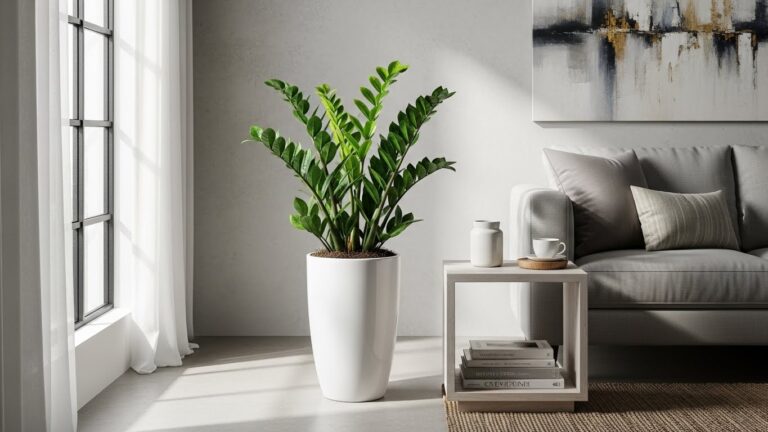
The ZZ plant, or Zamioculcas zamiifolia, is perfect for beginners who want stylish, low-maintenance greenery. It thrives in low light, needs minimal watering, and can survive with little care. Make sure you check the soil moisture before watering and use a well-draining pot. Dust its leaves monthly to keep them shiny, and don’t stress if you need to prune or propagate. This resilient plant adds beauty and air-purifying benefits to your space. Keep exploring to uncover even more tips!
Key Takeaways
- ZZ plants thrive in low light, making them perfect for beginners with limited sunlight in their homes.
- Water only when the top inch of soil is dry, preventing overwatering and root rot.
- Use a well-draining potting mix, preferably for succulents, to support healthy growth.
- Minimal fertilization is needed; once or twice a year is sufficient for optimal health.
- Regularly dust the leaves to enhance photosynthesis and maintain the plant’s glossy appearance.
What Is a ZZ Plant?
The ZZ plant, scientifically known as Zamioculcas zamiifolia, is a fascinating houseplant that’s gained popularity for its unique appearance and low-maintenance needs. This hardy plant features glossy, dark green leaves that add a touch of elegance to your space. When it comes to ZZ plant care, you’ll love how forgiving it is; it thrives in low light and requires minimal watering. Just let the soil dry out between waterings, and you’re good to go!
One of the best ZZ plant benefits is its ability to purify the air, making your home healthier. Plus, its resilience means it can adapt to various environments, so you can enjoy this beauty without the stress of constant upkeep. The ZZ Plant boasts its unique water reservoir system, allowing it to survive long periods without water. Isn’t that delightful?
Ideal Growing Conditions
When you want your ZZ plant to thrive, it’s important to create the right environment for it. Start with ZZ plant placement; these beauties love bright, indirect light but can tolerate low light, too. Just make sure you keep them away from harsh, direct sun, as that can scorch their lovely leaves. As for temperature preferences, ZZ plants enjoy a cozy range between 65°F and 75°F. They can handle cooler conditions down to 45°F, but they won’t be too happy about it. If your space meets these light and temperature needs, you’ll help your ZZ plant flourish. So go ahead, find that perfect spot, and watch your green companion thrive with minimal fuss!
Watering Guidelines
When it comes to watering your ZZ plant, getting the right balance is key! You’ll want to keep an eye on the soil moisture, ensuring it’s not too wet or too dry, while also being aware of the signs of overwatering that could harm your plant. Let’s explore some handy tips for how often to water, so your ZZ plant can thrive!
Watering Frequency Tips
To keep your ZZ plant thriving, understanding its watering needs is crucial, especially since overwatering can lead to root rot, a common issue for these hardy plants. Establishing a consistent watering schedule is important in ZZ plant care. Here are some tips to help you out:
- Check the soil: Always feel the top inch of soil; if it’s dry, it’s time to water.
- Water deeply: When you do water, soak the soil thoroughly until it drains from the bottom.
- Use room temperature water: Cold water can shock the roots, so let it warm up a bit.
- Adjust for seasons: In winter, reduce watering frequency as the plant’s growth slows down.
Signs of Overwatering
Understanding the signs of overwatering is essential for keeping your ZZ plant healthy and happy. If you notice yellow leaves, that’s a big red flag! This means your plant’s roots might be drowning. When the soil stays too wet, it can lead to root rot, which is a serious issue. You may also see mushy roots if you take the plant out of its pot. Another clue is a foul smell coming from the soil, hinting at decay. To keep your ZZ thriving, always check the soil moisture before watering. If it feels soggy, it’s time to hold off. Remember, a little caution goes a long way in nurturing your plant companion!
Ideal Soil Moisture
Finding the right soil moisture for your ZZ plant is crucial for its health and growth. This hardy plant thrives in various soil types, but you must keep an eye on that moisture level. Here are some simple guidelines for ZZ plant care:
- Watering Frequency: Water every 2-3 weeks, allowing the soil to dry out completely between watering.
- Soil Check: Stick your finger about an inch into the soil; if it feels dry, it’s time to water.
- Drainage: Make certain your pot has drainage holes to prevent waterlogging.
- Humidity: ZZ plants prefer average home humidity, so don’t stress too much about it.
With these tips, you’ll keep your ZZ plant happy and thriving!
Light Requirements
When it comes to light requirements, the ZZ plant is quite flexible, making it a fantastic choice for beginners. It can thrive in low-light conditions, but it really loves bright, indirect light, which helps it grow even stronger. So, whether your space is sunny or shaded, you can enjoy this resilient plant with ease!
Low Light Tolerance
Even if your home doesn’t get a lot of natural light, the ZZ plant can thrive and bring a touch of greenery to your space. This resilient plant’s low light tolerance makes it perfect for beginners. Here’s why you’ll love it:
- Air Purification: The ZZ plant helps filter indoor air, improving your environment.
- Low Maintenance: With minimal ZZ plant care, you won’t stress about constant attention.
- Drought Resistant: It stores water in its thick roots, so you won’t need to water often.
- Stylish Look: Its glossy leaves add a chic vibe to any room.
With these ZZ plant benefits, you can enjoy a beautiful, easy-to-care-for plant, even in dim spaces!
Bright Indirect Light
If you want your ZZ plant to flourish, providing bright indirect light is key. This plant loves to soak up light without being in direct sun, which can scorch its leaves. For the best light placement, think about where you’ll put it. A spot near a window with sheer curtains is perfect.
Here’s a helpful guide for light placements:
Light Type | Ideal Duration | Best Locations |
|---|---|---|
Bright Indirect | 6-8 hours | Near east/west-facing windows |
Low Light | 4-6 hours | Shaded corners |
Direct Light | 1-2 hours | Not recommended |
Soil and Potting Recommendations
To guarantee your ZZ plant thrives, choosing the right soil and potting setup is essential. A good potting mix will help your plant flourish while meeting its drainage requirements. Here’s how to set it up:
- Use a well-draining potting mix: Look for a blend designed for succulents or cacti.
- Add perlite or sand: This improves drainage, preventing excess moisture around the roots.
- Select the right pot: Choose a container with drainage holes to let water escape.
- Consider pot size: Opt for a pot that’s slightly larger than the root ball, allowing room for growth.
With these simple steps, you’ll create a cozy home for your ZZ plant, ensuring it stays healthy and happy!
Fertilizing Your ZZ Plant
Once you’ve settled your ZZ plant in the perfect potting mix, it’s time to think about how to give it a little extra boost through fertilization. You’ll want to choose the right fertilizer types—liquid or slow-release works wonders. For beginners, a balanced, water-soluble fertilizer diluted to half strength every couple of months can make a big difference. Stick to a simple feeding schedule: fertilize during the growing season, from spring to early fall, and skip it in winter when your plant’s growth slows down. Don’t worry too much; ZZ plants are forgiving. Just remember, a little care goes a long way, ensuring your leafy friend thrives and adds that lush touch to your space!
Common Pests and Diseases
While ZZ plants are known for their resilience, they can still fall prey to a few pesky pests and diseases that every plant owner should watch out for. Effective pest management and disease prevention are key to keeping your ZZ plant healthy. Here are some common issues to be aware of:
- Spider Mites – Tiny pests that cause yellowing leaves.
- Mealybugs – White, cottony insects that suck sap and weaken the plant.
- Root Rot – Overwatering can lead to this disease, causing mushy roots.
- Leaf Spot – Fungal infections that create dark spots on leaves.
Pruning and Maintenance Tips
Keeping your ZZ plant healthy goes beyond just watching for pests and diseases; regular pruning and maintenance play a significant role in its overall well-being. You’ll want to incorporate some simple pruning techniques into your maintenance routine. Start by removing any yellowing leaves, as they can drain your plant’s energy. Trim back any leggy stems to encourage bushier growth.
Here’s a quick reference table to help you with your pruning and maintenance:
Task | Frequency | Purpose |
|---|---|---|
Remove yellow leaves | As needed | Energy conservation |
Trim leggy stems | Every few months | Encourage bushiness |
Dust leaves | Monthly | Improve photosynthesis |
Rotate pot | Every month | Even growth |
With these tips, your ZZ plant will thrive!
Propagating Your ZZ Plant
Propagating your ZZ plant can be a fun and rewarding way to expand your indoor garden! You can use either the leaf cuttings or the division method to create new plants. Here’s how to get started:
- Leaf Cuttings: Cut a healthy leaf and let it dry for a day. Then, place it in a pot with well-draining soil and water lightly.
- Division Method: Remove the plant from its pot and gently separate the rhizomes. Each section should have roots and leaves.
- Watering: Keep the soil moist but not soggy for both methods.
- Light: Place your new plant in bright, indirect light to encourage growth.
With a little patience, you’ll soon have new ZZ plants to enjoy!
Signs of a Healthy ZZ Plant
When you take a closer look at your ZZ plant, you’ll notice several signs that indicate it’s thriving and healthy. First, check those glossy, dark green leaves; they should be vibrant and free from any browning edges. A well-hydrated ZZ plant has firm stems and upright growth, showing it’s enjoying its space. You might also see new growth sprouting; this is a fantastic sign of robustness! Remember, ZZ plant benefits include air purification and low maintenance, giving you more reasons to keep it happy. Additionally, the ZZ plant symbolizes resilience and prosperity, making it a perfect companion for your home. So, embrace its beauty and energy, and enjoy watching it flourish!
Troubleshooting Common Issues
Even if your ZZ plant seems to be thriving, it can still encounter a few common issues that might leave you scratching your head. Don’t worry! With a bit of understanding, you can easily tackle them. Here’s a quick rundown of what to look for in your ZZ plant care routine:
- Yellowing Leaves: This often means you’re overwatering. Cut back a bit!
- Droopy Stems: This could signal underwatering. Give it a drink.
- Pests: Check for tiny bugs on leaves. A gentle wash can help.
- Stunted Growth: If it’s not growing, consider repotting or adding nutrients.
Conclusion
In your journey with the ZZ plant, think of yourself as a gardener steering a ship, maneuvering calm waters. This delightful green companion thrives on your minimal care, rewarding you with its glossy leaves as a sign of a job well done. By following the guidelines for watering, light, and soil, you’ll create a thriving oasis in your space. So, set sail on this green adventure, and let your ZZ plant flourish with ease and joy!