
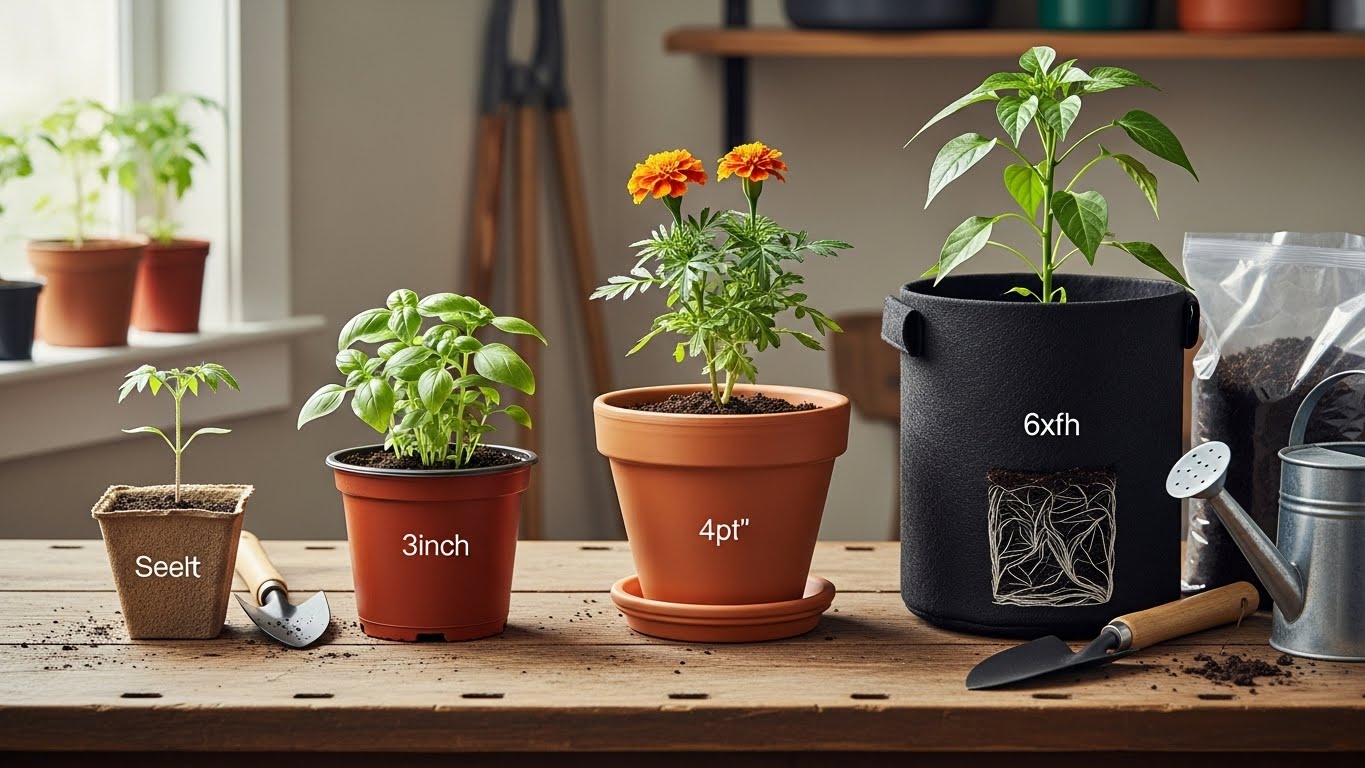
Choosing the right pot size for your starter plant is important for its growth. For herbs, a 6-12 inch pot works best, while vegetables like tomatoes need 12-14 inches for deeper roots. Flowering plants vary, with smaller ones in 6-12 inch pots. Succulents thrive in smaller pots, ranging from 4-12 inches. Always make certain pots have drainage holes. Picking the right size helps prevent issues like overcrowding and overwatering. Curious about pot materials and signs of plant distress?
Understanding Plant Growth Stages
💡 Choosing the right pot is crucial for your plant’s growth. This guide will help you make the best choice for your starter plant.
➜ Master the art of pot selection
When you plunge into the world of gardening, it’s essential to understand the different stages of plant growth, since each stage comes with its own needs and challenges. The journey begins with the germination process, where seeds soak up moisture and begin to sprout. You’ll notice tiny roots forming, anchoring your plant to the soil. As your seedlings emerge, they enter seedling development, a vital stage where they need light, water, and nutrients to thrive. You’ll want to keep an eye on their growth, ensuring they’re not overcrowded or lacking resources. Understanding these stages helps you nurture your plants effectively, creating a beautiful garden that flourishes with care and attention. Embrace the excitement of watching your plants grow!
Importance of Pot Size
Choosing the right pot size is crucial for your plant’s health, especially during its early growth stages. A pot that’s too small can restrict root development, while one that’s too large may hold excess moisture, leading to root rot. You want to verify the pot depth allows roots to grow comfortably without becoming cramped. Look for pots with drainage holes, as these help excess water escape, keeping the soil from becoming soggy. This balance of space and drainage is critical; it encourages strong, healthy growth. Plus, a properly sized pot makes it easier for you to care for your plant, giving it the best chance to thrive. Remember, your plant’s happiness starts with the right pot!
Signs of Overwatering and Root-Bound Plants
Recognizing the signs of overwatering and root-bound plants can save your green friend from unnecessary stress. If you notice any of these symptoms, it’s time to take action!
- Yellowing leaves: This can indicate overwatering, as roots struggle to absorb nutrients.
- Wilting: Surprisingly, overwatered plants can also droop due to root suffocation.
- Root-bound signs: If you see roots circling the pot or growing out of the drainage holes, it’s a clear sign your plant needs repotting.
- Mold or algae: A soggy surface may lead to mold growth, hinting at excessive moisture.
- Stunted growth: If your plant isn’t thriving despite care, it could be suffering from overwatering or being root-bound.
Keep an eye out, and your plant will thrive!
Recommended Pot Sizes for Common Starter Plants
When you’re starting out with plants, knowing the right pot size can make all the difference in assisting them thrive. Whether you’re growing herbs and vegetables, flowering plants, or even succulents and cacti, each type has its own ideal pot size to support healthy growth. Let’s explore what works best for your favorite starter plants to guarantee they get off to a great start!
Herbs and Vegetables
Growing herbs and vegetables in your garden can be incredibly rewarding, and picking the right pot size is an essential step to guarantee your plants thrive. Whether you’re diving into herb gardening or making your vegetable selection, the pot size matters. Here’s a quick guide to help you choose:
- Basil: 6-8 inches pot for strong growth.
- Cilantro: 10-12 inches pot to accommodate roots.
- Tomatoes: 12-14 inches pot for deeper roots.
- Lettuce: 8-10 inches pot for spreading leaves.
- Peppers: 10-12 inches pot for robust plants.
Selecting the right size not only makes your plants healthier but also makes your gardening experience enjoyable. So, let’s get those pots ready and watch your garden flourish!
Flowering Plants
💡 Repotting is an essential skill for any plant parent. Learn how to do it without harming your plant’s roots.
➜ Get the step-by-step guide to repotting
After getting your herbs and veggies settled, it’s time to think about adding some colorful flowering plants to your garden. When picking pot sizes for these beauties, consider their flowering types and blooming seasons. For smaller varieties like pansies or marigolds, a pot size of 6-8 inches works well, allowing room for roots while still showcasing those vibrant blooms. If you’re going for larger plants like hibiscus or geraniums, aim for pots of 10-12 inches to give them the space they need to flourish. Remember, proper drainage is key to keeping them happy! With the right pot size, you’ll create a stunning display that brightens your garden and brings joy throughout the seasons. Happy planting!
Succulents and Cacti
💡 Proper watering is crucial for your plant’s health. Learn the common mistakes to avoid and how often to water your starter plant.
➜ See how to implement effective watering techniques
Succulents and cacti are fantastic starter plants that can bring unique beauty to your home or garden, and choosing the right pot size is crucial for their health and growth. When it comes to succulent care, you’ll want to take into account the following pot sizes for different cactus types:
- Small succulents: 4-6 inches in diameter
- Medium succulents: 6-8 inches in diameter
- Large succulents: 10-12 inches in diameter
- Small cacti: 4-5 inches in diameter
- Large cacti: 8-10 inches in diameter
These sizes guarantee proper drainage and space for roots to grow. Remember, a snug fit keeps your plants happy and healthy, so don’t go too big. Happy planting!
Material Matters: Choosing the Right Pot
When it comes to choosing the right pot for your starter plant, the material it’s made from plays an essential role in your plant’s health and growth. Different pot materials affect moisture retention and drainage, which are vital for your plant’s roots. Here’s a quick guide to help you decide:
Material | Pros | Cons |
|---|---|---|
Plastic | Lightweight, retains moisture | Less breathable |
Terracotta | Breathable, good drainage | Heavy, can dry out quickly |
Ceramic | Attractive, retains moisture | Can crack, heavy |
Make sure your pot has drainage holes, regardless of the material you choose. This simple feature helps prevent root rot, keeping your starter plant happy and thriving.
Tips for Transitioning to Larger Pots
Shifting to a larger pot can feel like a big step for your starter plant, but it’s an exciting opportunity for growth! To guarantee a smooth changeover that supports your plant’s health, keep these potting techniques in mind:
Transferring your starter plant to a larger pot opens the door to new growth and thriving health!
- Choose the right size: Select a pot that’s 2-4 inches wider in diameter.
- Use fresh soil: Fresh potting mix provides nutrients and helps with drainage.
- Water before repotting: Moist soil makes it easier to remove the plant from its old pot.
- Gently loosen roots: This encourages them to spread out in the new pot.
- Place in indirect sunlight: Give your plant time to adjust without overwhelming it.
These tips will help your plant thrive as it settles into its new home!
Conclusion
So, you’ve learned that choosing the right pot size can make or break your starter plant’s journey. It’s ironic, isn’t it? You might think a bigger pot means a happier plant, but that’s not always true! Keep an eye on your plant’s growth and watch for signs of stress. With the right size, material, and a little patience, you’ll set your plant up for success. Happy planting, and remember, size really does matter—just not in the way you might think!
💡 Preventing root rot is key to keeping your plants healthy. This article outlines the symptoms and recovery methods.
➜ Discover proven techniques to prevent root rot


