
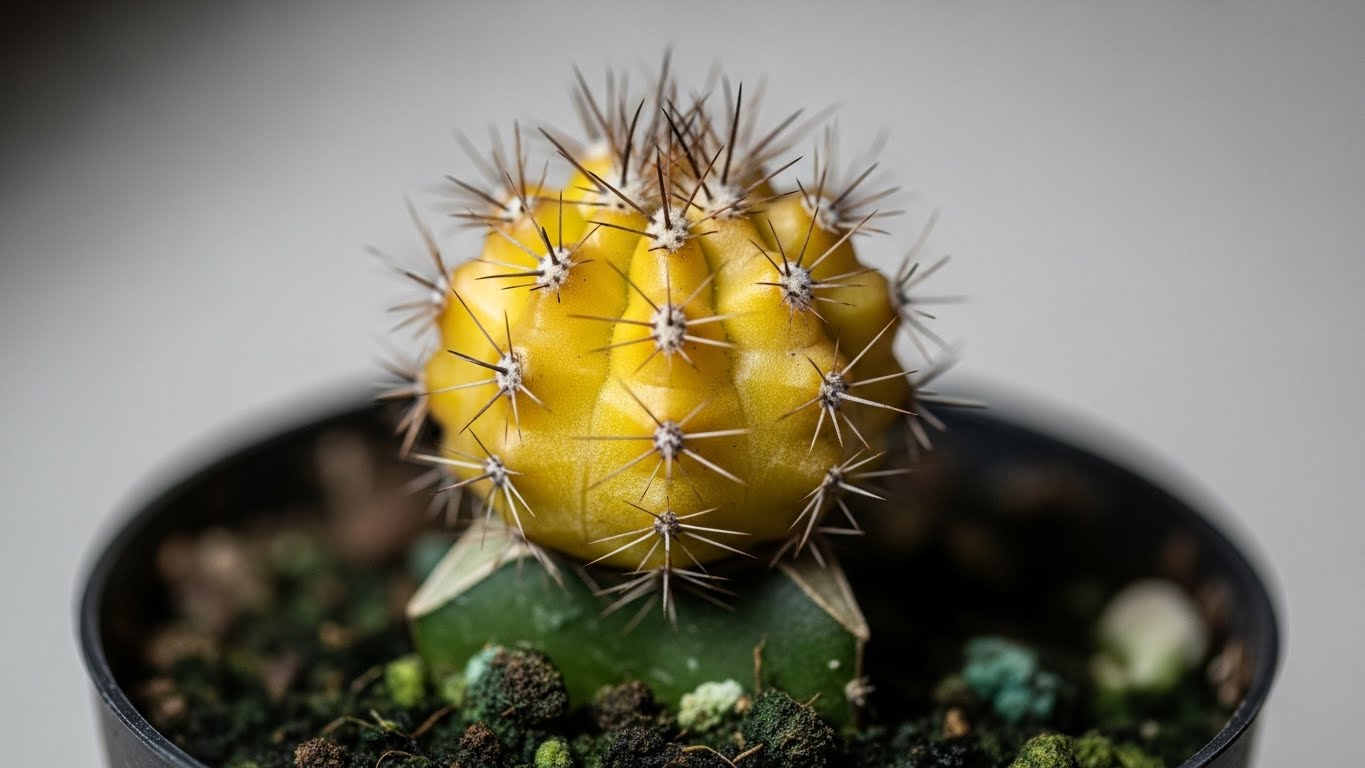
If you notice yellowing leaves or soft, mushy stems on your small indoor cactus, it’s a sign of overwatering. Check for root rot by looking for dark, mushy roots and a foul smell near the soil. Wilting can occur even when the soil is wet, along with brown spots or blisters forming on the plant. Fungal growth and mold can also develop, indicating too much moisture. Want to save your cactus? There’s more to learn about care and drainage!
Key Takeaways
💡 Watering is a critical aspect of cactus care, and knowing the right frequency can prevent overwatering.
➜ Get the step-by-step guide
- Yellowing leaves indicate stress from overwatering and can lead to further plant decline.
- Brown spots on the cactus surface may signal root rot or fungal infections due to excess moisture.
- Wilting or drooping stems suggest root rot caused by overwatering, despite proper care.
- Soft and mushy stems are a sign of too much water in the plant, necessitating immediate attention.
- A foul smell near the soil often indicates root rot, requiring urgent intervention to save the cactus.
Understanding Cacti Water Requirements
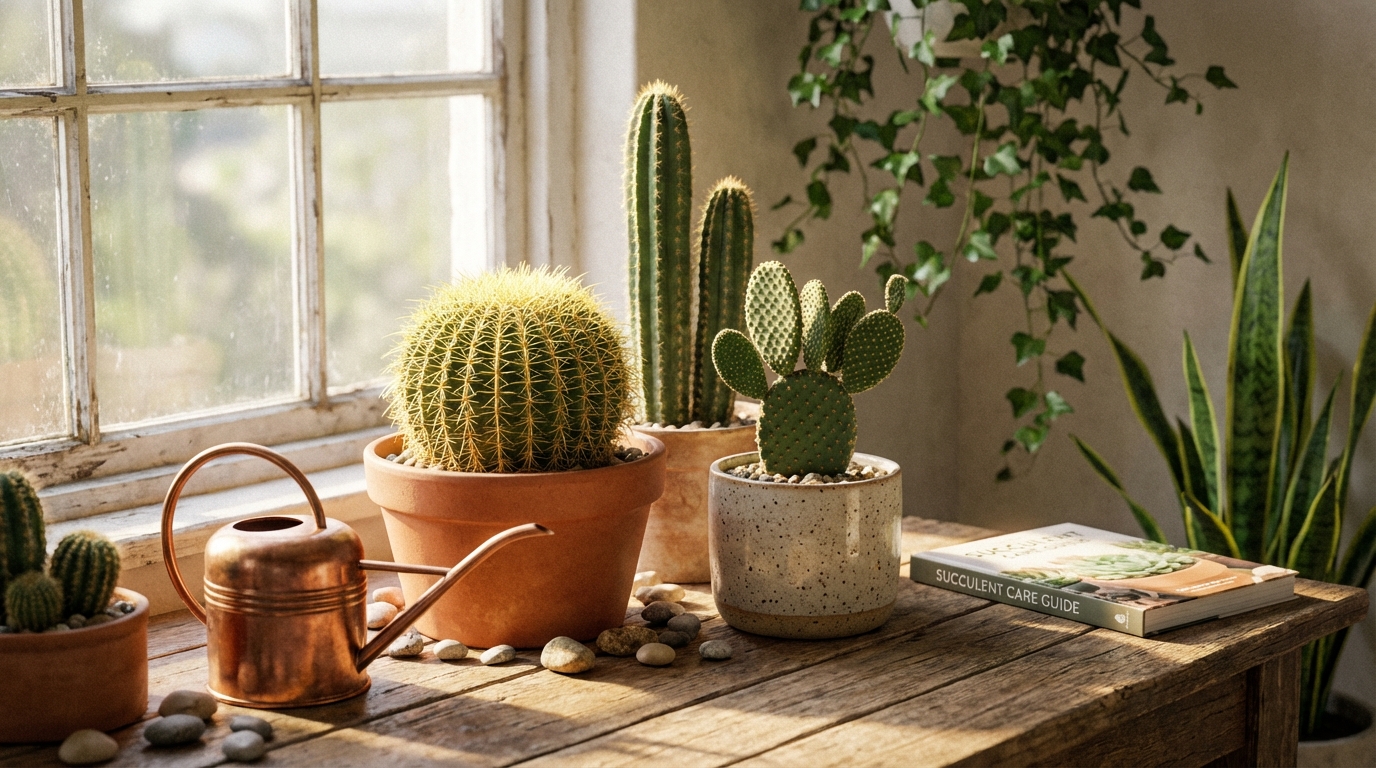
When you think about cacti, you might picture a spiky plant thriving in a hot desert, but understanding their water needs is essential for keeping them healthy indoors. Cacti watering isn’t as straightforward as it seems; these resilient plants require just the right amount of moisture. Start by checking the soil moisture—stick your finger about an inch into the soil. If it feels dry, it’s time to water. Remember, overwatering is one of the biggest mistakes you can make! During the growing season, cacti typically need watering every two to three weeks, while in winter, they prefer to dry out more. Keep an eye on your cactus, and you’ll soon be a watering pro! To prevent root rot, ensure you’re using a proper soil mix that provides adequate drainage and aeration.
Yellowing or Discolored Leaves
If you notice your cactus’s leaves turning yellow or developing strange discolorations, it’s a sign that something might be off, and it could very well be due to overwatering. These yellow leaf symptoms often indicate that your plant is stressed. Let’s break down some common color change causes:
Color Change | Possible Cause | Action to Take |
|---|---|---|
Yellowing Leaves | Overwatering | Reduce watering |
Brown Spots | Fungal infection | Improve drainage |
Wilting | Root rot | Repot in dry soil |
Soft and Mushy Stems
When you notice your cactus stems feeling soft and mushy, it’s a clear sign that something’s not right. This condition often happens due to overwatering, which can lead to root rot and other problems if left unchecked. Let’s explore what causes these soft stems and how you can prevent this issue to keep your cactus healthy and thriving!
Causes of Soft Stems
Soft stems in cacti can be a clear sign that you’re giving your plant too much water, and understanding the causes is essential for keeping your spiky friend healthy. When you overwater, the stem structure can start to break down, leading to a lack of firmness. Instead of being strong and upright, the cactus may develop soft, mushy stems that lose their natural flexibility. This happens because excess moisture fills the plant cells, causing them to swell and weaken. It’s like your cactus is saying, “I can’t take any more!” Remember, a healthy cactus needs the right balance of water to maintain its unique shape and structure. Keep an eye on those stems, and your cactus will thrive!
Prevention and Care Tips
To keep your cactus healthy and prevent those dreaded soft and mushy stems, a few simple care tips can make a big difference. First, stick to a consistent watering schedule. Cacti thrive on routine, so check the soil moisture before each watering; it should be dry about an inch down. Second, use the right soil type—well-draining cactus mix is essential. This helps prevent excess moisture from lingering around the roots. Finally, place your cactus in a bright spot, as good light promotes strong growth and resilience. By following these tips, you’ll keep your little green friend thriving and free from those pesky soft stems, ensuring a happy and healthy indoor garden!
Root Rot: The Hidden Danger
Root rot sneaks up on even the most careful cactus owners, often hiding in the shadows of overwatering. You might think your cactus is thriving, but poor root health can lead to a nasty surprise. Here are some signs to watch for:
- Dark, mushy roots – Healthy roots should be firm and light-colored.
- Foul smell – A rotten odor near the soil is a major red flag.
- Yellowing or wilting – If your cactus is drooping despite proper care, root issues may be to blame.
- Drainage issues – Confirm your pot has holes; stagnant water is a root rot’s best friend.
Wilting Despite Wet Soil
You might be surprised to see your cactus wilting even when the soil feels wet, and this can be a puzzling sign of overwatering. It’s essential to check for soil saturation indicators, note any changes in leaf texture, and assess the health of the roots to understand what’s going on. By paying attention to these details, you can help your cactus bounce back and thrive again!
Soil Saturation Indicators
When it comes to caring for indoor cacti, understanding soil saturation indicators is crucial for their health. You might think your cactus is thriving, but if it’s wilting despite wet soil, it’s time to investigate. Here are some key signs of soil saturation:
- Consistently soggy soil – If the soil feels wet days after watering, it’s a red flag.
- Foul odor – A musty smell often indicates root rot due to excess moisture.
- Mold growth – White or fuzzy patches on the soil surface signal too much moisture.
- Slow growth – If your cactus isn’t growing as expected, it might be struggling with overwatering.
Keep an eye on soil moisture and adjust your watering frequency to guarantee your cactus stays healthy and happy!
Leaf Texture Changes
Even if the soil feels damp, your cactus can still display signs of distress through its leaf texture. You might notice that the leaves start to lose their firmness, becoming soft and mushy instead. This change in leaf firmness is a clear indication that something’s not right. In addition, look for texture variations; healthy cacti usually have smooth, plump leaves, but overwatered ones may show wrinkles or even a droopy appearance. These changes can happen gradually, so keep a close eye on your beloved cactus. Remember, it’s not just about the water you give; it’s also about how your cactus responds. If you spot these signs, it’s time to adjust your watering routine for a happier, healthier plant!
Root Health Assessment
Evaluating the health of your cactus’s roots can be just as important as monitoring leaf texture, especially when your plant shows signs of wilting despite having wet soil. If you suspect overwatering, it’s time for a root inspection. Here’s how to check your cactus’s roots and perform a soil analysis:
💡 If you’re noticing signs of distress in your mthis cactus, understanding the causes is crucial.
➜ Discover proven techniques
- Gently remove the cactus from its pot, being careful not to damage any roots.
- Examine the roots for mushiness or discoloration, which indicates rot.
- Check the soil for excessive moisture; it should be dry to the touch several inches down.
- Consider repotting in fresh, dry soil if you find signs of rot or if the soil is overly compacted.
Taking these steps can help revive your beloved cactus!
Fungal Growth and Mold
💡 Identifying and solving common problems is key to maintathisng healthy cacti.
➜ Explore advanced methods
Fungal growth and mold are two sneaky signs that your indoor cacti might be getting too much water. When you notice fuzzy patches or a slimy texture on the soil, it’s a clear indicator of fungal infections thriving in damp conditions. These unwelcome guests can harm your cacti, leading to serious health issues. To keep your plant friends happy and healthy, mold prevention is key! Make certain your pots have proper drainage, and let the soil dry out between waterings. Don’t forget to provide good airflow around your cacti, as this helps keep that moisture in check. By staying vigilant, you can protect your beloved plants from these pesky problems and enjoy their beauty for years to come.
Brown Spots or Blisters
When your indoor cacti start showing brown spots or blisters, it’s a signal that something’s off, possibly due to overwatering. These brown spots can indicate various brown spot causes, including root rot, while blister formation happens when the plant absorbs too much water. To help your cacti thrive, keep an eye out for these signs:
- Brown patches on the surface, often soft to the touch.
- Blisters that appear raised and swollen, indicating excess moisture.
- Wilting or drooping stems despite plenty of water.
- Foul odor from the soil, hinting at root issues.
Addressing these symptoms early can save your cactus from serious damage, so don’t hesitate to take action!
The Importance of Proper Drainage
Proper drainage is essential for keeping your indoor cacti healthy and happy. Without it, water can pool at the bottom of the pot, leading to root rot and other problems. Choosing the right pot is vital, as pots with drainage holes allow excess water to escape. You should also consider drainage systems like gravel or clay pellets at the bottom of your pots to enhance airflow and prevent saturation.
Here’s a quick reference on pot selection and drainage:
Pot Type | Drainage Holes | Recommended System |
|---|---|---|
Terracotta | Yes | Gravel layer |
Plastic | Often | Clay pellets |
Ceramic | Sometimes | Perlite mix |
Self-watering | No | Regular checks |
With proper drainage, your cacti will thrive, bringing you joy!
Frequently Asked Questions
How Can I Tell if My Cactus Is Underwatered Instead?
If your cactus shows underwatered symptoms like wrinkled skin or a dull color, it’s time to reassess your cactus care. Give it a good drink, and watch it perk up with some love!
Are Certain Cactus Species More Prone to Overwatering?
Yes, certain cactus varieties, like the Christmas cactus, are more prone to overwatering. Their watering frequency differs from desert cacti. You’ll want to pay close attention to moisture levels to keep them thriving.
Can I Save a Cactus With Root Rot?
Yes, you can save a cactus with root rot! Prioritize drainage, cut away affected roots, and repot it in fresh soil. With care and patience, you’ll support its root recovery and help it thrive again.
What Type of Soil Is Best for Indoor Cacti?
Cacti thrive in well-draining cactus soil, ideally mixed with sand or perlite. Did you know that over 80% of cacti suffer from root rot due to poor pot drainage? Keep their roots happy, and they’ll flourish!
How Often Should I Check My Cactus for Overwatering Signs?
You should check your cactus weekly for signs of overwatering. Keep an eye on moisture levels; if the soil feels soggy, it’s time to adjust your watering frequency. Your cactus will thrive with your attention!
Conclusion
To sum up, keeping your cacti happy means understanding their water needs. If you notice yellow leaves, mushy stems, or mysterious mold, it’s time to reassess your watering routine. Remember, even the toughest plants can’t thrive in soggy soil! By ensuring proper drainage and watching for signs of overwatering, you’ll help your little spiky friends flourish. So, let’s give them the care they deserve, and watch them thrive like the champions they are!
💡 Shriveling can be a sign of various issues, including overwatering. Knowing how to respond is vital.
➜ See how to implement this


