
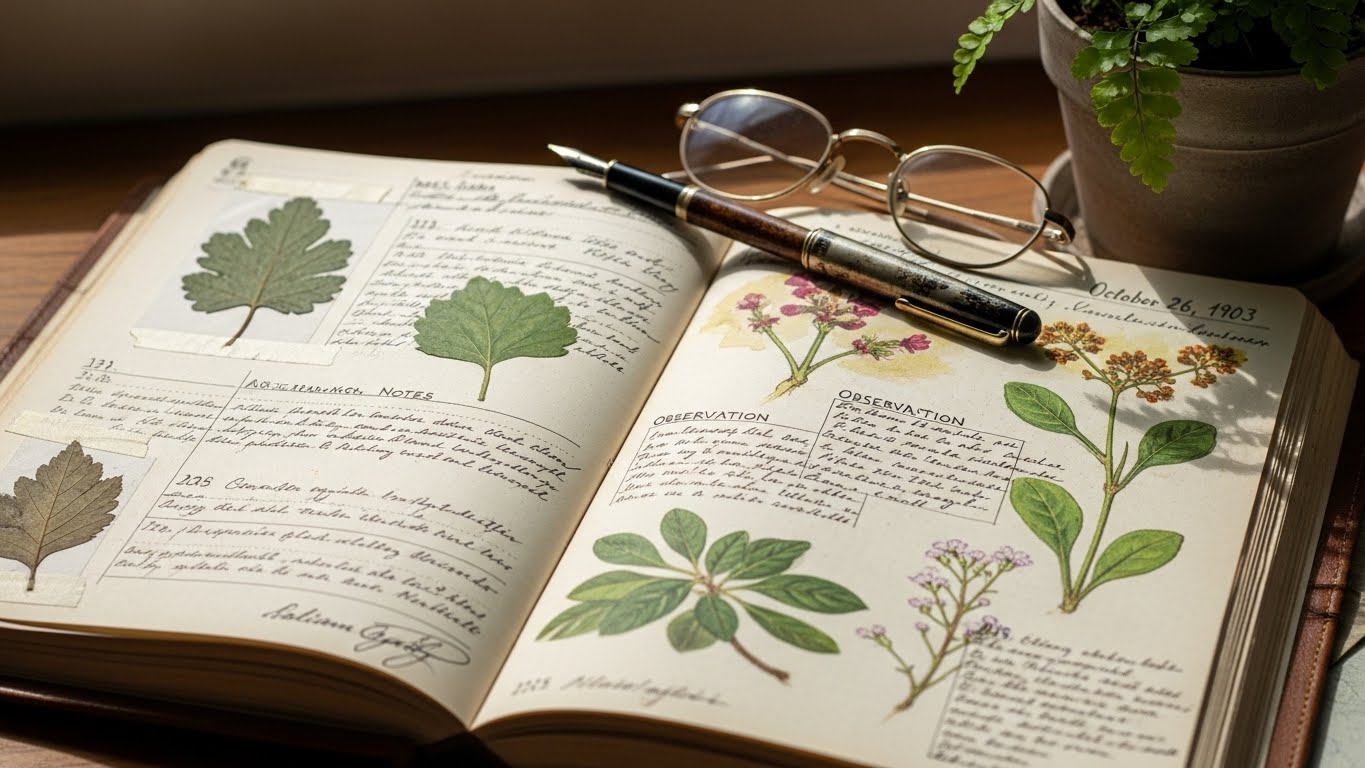
To track your plants’ growth progress, start by choosing a journal that inspires you, whether it’s digital or bullet-based. Record essential information like height, leaf changes, and environmental conditions regularly. Aim for weekly updates to capture all the small surprises, while monthly summaries help track broader trends. Incorporate photos and create growth charts for visual flair. Finally, reflect on growth patterns to fine-tune your care routine. Curious about celebrating milestones? You’ll uncover more tips ahead!
Choosing the Right Journal for Your Plant Tracking
💡 Repotting is crucial for your plants’ growth. Master the repotting process to ensure your plants thrive.
➜ Master the repotting process
When it comes to tracking your plant’s growth, you might wonder, “What’s the best way to document all this exciting progress?” Choosing the right journal can make a huge difference in how effectively you record and reflect on your plant’s journey. You might consider digital journals for their convenience—just think of how easy it is to update your entries on the go! Alternatively, if you enjoy a hands-on approach, bullet journaling could be your perfect match. With bullet journaling, you can design personalized layouts, capturing your plant’s milestones in a creative way. Whichever option you choose, make sure it resonates with you, as this will keep you motivated and engaged in your plant-tracking adventure!
What Information to Record
When you track your plant’s growth, it’s super important to record specific details. You’ll want to measure how tall your plant gets and note any changes in its leaves or flowers over time. Plus, keeping an eye on environmental conditions, like temperature and sunlight, helps you understand what makes your plant thrive!
Growth Measurements
To understand how plants grow, it’s essential to keep track of specific measurements that reveal their progress over time. Start by recording the height of your plants regularly; measuring from the soil to the highest point helps you calculate their growth rate. Use a ruler or measuring tape for accuracy, and jot down your findings in a dedicated journal. Don’t forget to note the date of each measurement, so you can spot trends over weeks or months. Additionally, consider measuring the width of the leaves, as this can indicate overall health. By using these measurement techniques, you’ll gain valuable insights into your plants’ growth patterns, making your gardening journey even more rewarding!
Environmental Conditions
Understanding how environmental conditions affect plant growth is just as important as tracking their measurements. To keep your plants thriving, record details like light exposure, ensuring they get the right amount of sunshine or shade. Pay attention to soil quality; is it rich and well-draining? Monitor humidity levels to keep the air around your plants just right. Don’t forget about temperature fluctuations; drastic changes can stress your plants. Regularly check for pests and maintain an effective pest control routine. Finally, stick to a consistent watering schedule, letting the soil dry out between waterings. By logging these factors, you’ll create a nurturing environment that helps your plants flourish, turning your gardening journey into a successful adventure!
Frequency of Updates
Regularly tracking plant growth can be an exciting journey, helping you witness the amazing transformations that occur over time. To keep your observations meaningful, consider setting a frequency for updates. Weekly check-ins can be a great way to connect with your plants, noting small changes and daily surprises. These little moments can spark joy and deepen your appreciation for their growth. On the other hand, monthly summaries allow you to step back and see the larger picture, highlighting significant developments and changes. This combination of frequent updates and reflective summaries will help you stay engaged and invested in your plants’ progress, making the experience even more rewarding. So, grab your journal and start tracking!
Utilizing Visual Aids
When you’re tracking plant growth, using visual aids can make a big difference. Photos taken over time help you see changes in your plants, while growth charts let you visualize their progress and understand patterns better. By combining these tools, you’ll not only enjoy the process but also gain insights into how your plants thrive!
💡 Watering is essential for tracking your plants’ growth. Discover watering best practices to keep your plants healthy.
➜ Discover watering best practices
Photos Over Time
Capturing plant growth through photos can be an exciting way to witness the wonders of nature unfold right before your eyes. By engaging in plant photography, you can document those charming seasonal changes, creating a visual story that highlights your plant’s journey. To help organize your photos, consider using a table like this:
💡 Tracking your plants’ progress is all about recognizing new growth. Learn to spot new growth to celebrate your gardening success.
➜ Learn to spot new growth
Date | Growth Stage | Notes |
|---|---|---|
March 1 | Seedling | Sprouted after a week |
June 1 | Young Plant | First set of leaves |
September 1 | Mature Plant | Blooms appear |
Each image tells its own story, allowing you to appreciate the beauty of your plant’s evolution. So grab your camera, and start capturing those special moments!
Growth Charts Creation
Creating growth charts is a fantastic way to visualize your plant’s progress alongside the photos you’ve taken. By using different chart types, like line graphs or bar charts, you can create visual representations that make your plant’s journey come alive. Start by plotting key measurements, such as height or leaf count, over time. This way, you can easily spot trends and changes.
Don’t forget to add notes about conditions like light, water, and nutrients to give context to your data. These insights can help you understand what works best for your plant. Plus, it’s fun to look back and see how far your green friend has come! So grab your materials and let the charting begin!
Reflecting on Growth Patterns
Reflecting on growth patterns in plants can reveal fascinating insights into their development and health, which helps you understand how to care for them better. By observing these patterns, you’ll start recognizing trends that make a difference in your plant care routine. Here are three key aspects to examine:
- Growth Rates: Notice how quickly your plants grow during different seasons.
- Leaf Health: Pay attention to changes in leaf color and size, as these can indicate nutrient needs.
- Flowering Cycles: Observe when your plants bloom, helping you predict future flowering.
Celebrating Milestones and Achievements
Celebrating the milestones and achievements of your plants can be just as rewarding as nurturing them. Each time your plant grows a new leaf or blooms a flower, it’s a moment worth acknowledging. You might create a special section in your journal dedicated to these plant milestones, noting the date and what made it special.
Consider hosting mini achievement celebrations for your green friends! You could take a photo, share it with fellow plant lovers, or even treat yourself to a small reward, like a new pot or gardening tool. These moments not only deepen your connection to your plants but also make the journey of growth even more enjoyable. So, cherish those milestones, and let every little achievement spark joy!
Conclusion
Tracking your plants’ growth can be a rewarding adventure. Imagine flipping through your journal, pages filled with vibrant sketches, notes, and photos, revealing the journey of your leafy companions. By recording their progress, you’ll not only witness their transformation but also deepen your connection with nature. So grab that journal, let your creativity flow, and celebrate every little milestone along the way. Before you know it, you’ll be the proud gardener of a thriving green oasis!
💡 Tracking growth also means recognizing when something is wrong. See how to address leaf issues to maintain plant health.
➜ See how to address leaf issues


