
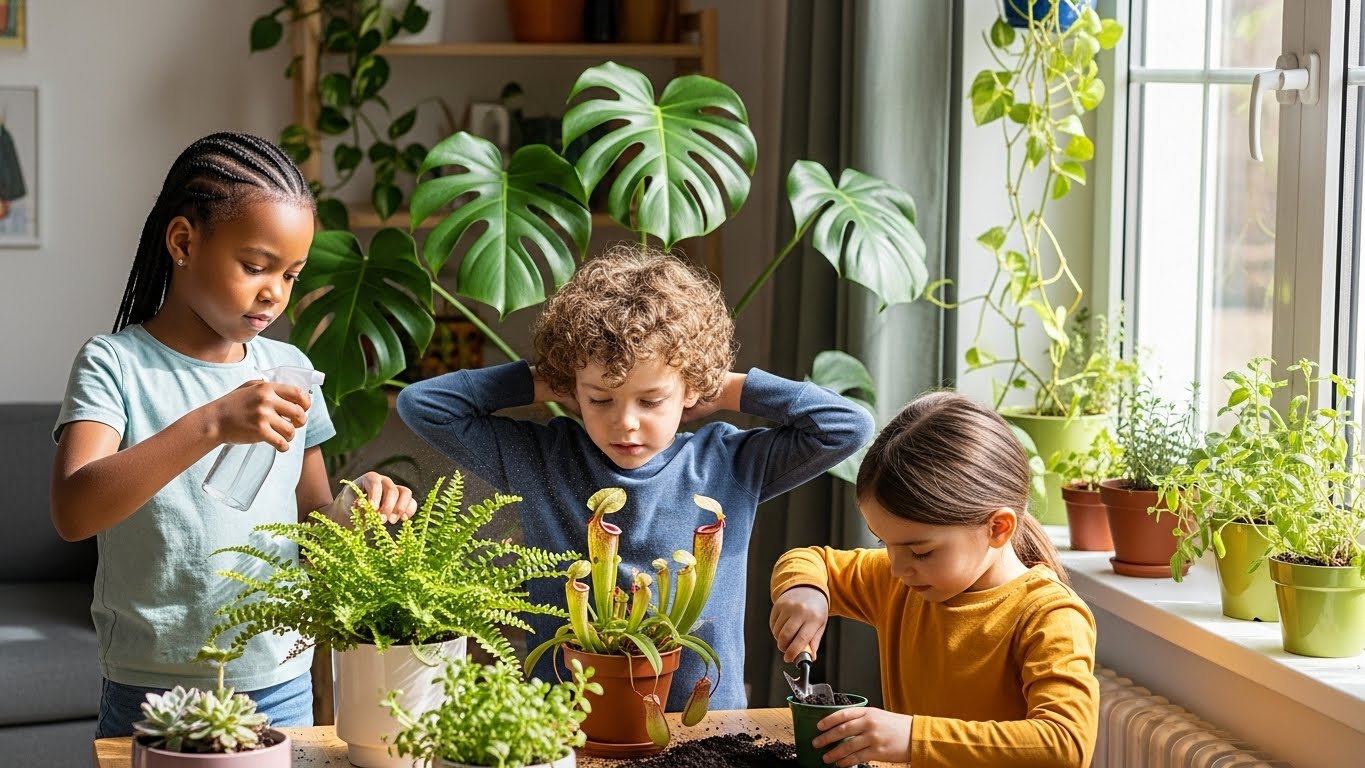
Indoor plants are fantastic for kids! They teach responsibility and spark creativity. By caring for easy-to-manage plants like pothos or snake plants, children learn about growth, including cool concepts like photosynthesis. You can create a fun plant care routine together, making it a family project. As they observe plant changes, conversations about nature unfold. Plus, you’ll bond while exploring how plants help our environment. Keep going to discover more exciting ways to engage your kids with plants!
The Importance of Indoor Plants for Children
💡 Understanding how to keep your indoor plants safe for children is crucial. This guide provides essential tips.
➜ Master indoor plant safety
Indoor plants can be more than just pretty decorations; they play an essential role in a child’s development and well-being. By introducing your child to indoor gardening, you’re giving them a chance to connect with nature right at home. The plant benefits are numerous; they can improve air quality and create a calming atmosphere, perfect for studying or relaxing. Caring for plants also teaches responsibility, as kids learn to water, prune, and nurture their green friends. Plus, watching a seed sprout into a thriving plant can ignite a sense of wonder and curiosity. So, consider adding a few indoor plants to your space, and witness how they enrich your child’s life, fostering both creativity and a love for the environment.
Benefits of Plant Care for Kids
Taking care of plants can teach you a lot about responsibility and routine, as you’ll need to water, prune, and nurture them regularly. It also helps you connect with nature, giving you a hands-on way to appreciate the environment around you. Plus, caring for plants can spark your creativity and imagination, as you think about how to design your space and choose the best plants to fit your style!
Responsibility and Routine
Caring for plants can be a fantastic way for kids to learn about responsibility and establish a routine. When you involve your children in plant care, they begin to understand the importance of consistency. By creating simple plant routines, like watering and checking for pests, kids develop nurturing habits that promote accountability. These tasks can be fun and engaging, turning plant care into a cherished daily activity. Plus, they’ll feel a sense of accomplishment as they watch their plants thrive under their attention. This hands-on experience helps them grasp the concept of commitment, teaching that nurturing living things requires time and effort. Ultimately, it’s a valuable lesson in responsibility that can extend to other areas of their lives.
Connection to Nature
When kids engage with plants, they not only learn about responsibility but also forge a deeper connection to nature that can be incredibly rewarding. Caring for indoor plants invites children into a world of nature exploration, where they discover the magic of growth and the intricate details of life. As they water, prune, and observe their plants, they develop sensory experiences that stimulate their curiosity. They’ll notice the vibrant greens, feel the textures of leaves, and even experience the earthy scent of soil. These hands-on activities help children appreciate the beauty around them, fostering a love for the environment. By nurturing plants, they learn that nature isn’t just outside; it’s a part of their everyday lives, waiting to be cherished.
Boosting Creativity and Imagination
Engaging with indoor plants can spark a child’s creativity in ways you might not expect. When kids care for plants, they tap into their imaginations, creating stories about their green companions. You might find them crafting plant art, using leaves and flowers to make vibrant collages or paintings. These activities not only enhance their artistic skills but also encourage them to think outside the box.
As they nurture their plants, they’ll invent nature stories, weaving tales about how their plants grow and thrive. This blend of hands-on experience and storytelling fosters a deep connection to their environment, igniting a passion for creativity that can flourish in all areas of life. So, let your kids explore the magical world of plants!
Choosing the Right Kid-Friendly Plants
Choosing the right kid-friendly plants can turn your home into a vibrant, green oasis while keeping safety in mind. Look for non-toxic varieties that spark joy and curiosity in your little ones. These plants offer colorful foliage, fun shapes, and even edible options to enhance sensory experiences.
Plant Name | Colorful Foliage | Low Maintenance |
|---|---|---|
Spider Plant | Yes | Yes |
Bamboo Palm | Yes | Yes |
Christmas Cactus | Yes | No |
Consider air-purifying options that come in various plant textures and vibrant colors. With these kid-safe plants, you’ll create an engaging environment that nurtures creativity while ensuring everyone’s safety.
Easy-to-Care-For Indoor Plants
Creating a lush indoor space doesn’t have to mean spending hours on plant care. When it comes to easy-to-care-for indoor plants, your selection can make all the difference. Consider starting with pothos, snake plants, or peace lilies. These beauties thrive with minimal effort, requiring only occasional watering and light. Their easy maintenance makes them perfect for busy families and curious kids alike.
You can teach your children how to care for these plants by involving them in the process. Let them water the plants and observe their growth. This way, you’re not just beautifying your home; you’re also creating lasting memories. With the right plant selection, you’ll enjoy a vibrant indoor garden without the stress of complicated care routines.
Teaching Kids About Plant Growth
Understanding how plants grow can be a fun adventure for you and your kids. By exploring basic plant biology, the stages of the growth cycle, and the importance of care, you’ll help them see just how amazing nature is. Plus, watching their plants thrive will ignite their curiosity and appreciation for the environment!
Basic Plant Biology
When you immerse yourself in the fascinating world of plants, you’ll discover that each green sprout has its own story of growth and survival. Understanding basic plant biology is essential for kids, as it opens their eyes to the wonders around them. Start with plant anatomy: teach them about roots, stems, and leaves. Explain how roots absorb water and nutrients, while stems support the plant, and leaves are crucial for photosynthesis basics. This process converts sunlight into energy, allowing plants to thrive. Encourage your kids to observe plants closely, asking them to notice the different parts and how they work together. By grasping these concepts, they’ll appreciate the amazing life cycle of plants and their role in our ecosystem.
Growth Cycle Stages
Every plant’s journey begins with a tiny seed, and understanding the growth cycle stages can be a thrilling adventure for kids. First, let’s talk about seed germination, where seeds absorb water and swell, signaling the start of life. As they sprout, kids can marvel at the tiny roots and shoots emerging. Next, plants enter the vegetative stage, focusing on growth and developing leaves that play an essential role in photosynthesis stages, converting sunlight into energy. Finally, they reach maturity, blooming and producing seeds for the next generation. By observing these stages, kids not only learn about plants but also discover the magic of nature’s cycles, making it an exciting journey they can explore together.
Importance of Care
Taking care of plants is just as important as understanding their growth cycle. When you engage in plant maintenance, you’re not just watering; you’re forming nurturing habits that create a bond with nature. Kids can learn how a little love and attention can help a plant thrive, observing how each leaf grows stronger under their care. Encourage them to check soil moisture, monitor light levels, and even talk to their plants—yes, it works! This hands-on approach teaches responsibility and patience, as they witness the fruits of their labor. Plus, seeing their plants flourish will fill them with pride, reinforcing the idea that caring for life, no matter how small, is a fulfilling journey.
The Basics of Watering and Feeding Plants
Watering and feeding your indoor plants might seem simple, but getting it just right can make a big difference in how they thrive. Start by exploring effective watering techniques. Always check the soil moisture before watering; if it’s dry an inch down, it’s time to hydrate. Remember, overwatering is just as harmful as underwatering!
When it comes to plant nutrition, use a balanced fertilizer every few weeks during the growing season. This helps provide essential nutrients, ensuring your plants grow strong and vibrant. Mix the fertilizer with water according to the instructions, allowing your plants to soak in the goodness. By mastering these basics, you’ll create a lush, happy environment for both your plants and your family to enjoy together!
Understanding Light Requirements for Plants
When it comes to indoor plants, understanding their light requirements is key to keeping them healthy and thriving. Different plants need different types of light, so figuring out where to place them in your home can make a big difference. Let’s explore how you can match plants with the right light conditions and discover some clever placement strategies!
Types of Light
Understanding the types of light your indoor plants need is essential for their growth and health, especially since not all plants thrive under the same conditions. Here’s a quick breakdown of light intensity and natural light types:
💡 Teaching kids about plant care includes understanding common issues like root rot. Learn how to identify and recover from this problem.
➜ Discover recovery techniques for root rot
- Bright Direct Light: Perfect for sun-loving plants like succulents and cacti.
- Indirect Light: Ideal for plants like pothos, which flourish without harsh rays.
- Low Light: Great for hardy plants such as snake plants, needing minimal brightness.
- Filtered Light: Works well for ferns, softening intense sunlight.
- Artificial Light: A lifesaver for darker corners, using grow lights to meet your plant’s needs.
Placement Strategies
Finding the right spot for your indoor plants can make all the difference in their growth and overall health. Start by observing how much light each plant needs—some thrive in bright light, while others prefer a cozy corner with indirect sunlight. Remember, plant safety is key; keep toxic plants out of reach and explain to your kids which ones are safe to touch. Also, practice child supervision when watering or rearranging plants, as accidents can happen! Encourage your children to help find the best spots, making it a fun learning experience. Together, you’ll create a beautiful indoor garden that flourishes with love, care, and attention to each plant’s unique light requirements. Happy planting!
💡 Involving kids in plant care can be fun, especially when they learn how to fertilize for growth. This guide offers practical tips.
➜ Get the step-by-step guide to fertilizing
Creating a Plant Care Schedule
Creating a plant care schedule is a fun and effective way to guarantee your indoor plants thrive while teaching kids about responsibility. By involving your children in the schedule creation, you’ll help them learn essential plant care responsibilities. Here’s a simple guide to get started:
Involve your kids in creating a plant care schedule to teach responsibility and help your indoor plants thrive.
- Watering: Decide how often each plant needs water.
- Fertilizing: Set reminders for adding nutrients.
- Pruning: Schedule time for removing dead leaves.
- Cleaning: Plan regular dusting for better sunlight absorption.
- Observation: Encourage daily check-ins for signs of growth or distress.
With this schedule, your kids will feel proud of their contributions, nurturing a sense of ownership and connection with their green companions.
Engaging Kids in Plant Decorating
When it comes to plant decorating, you can make it a fun project by choosing the right plants that spark your creativity. Think about how you can personalize pots with paint, stickers, or even natural materials like twine and leaves. Plus, incorporating fun activities like designing plant labels or creating a mini indoor garden can turn plant care into an exciting adventure for everyone!
Choosing the Right Plants
Choosing the right plants for your home can be a fun adventure, especially when you involve your kids in the decorating process. To make this experience enjoyable and safe, consider these plant selection tips while keeping kid safety in mind:
- Spider Plant: Hardy and forgiving, perfect for little hands.
- Ponytail Palm: Unique shape that sparks curiosity.
- Boston Fern: Lush and vibrant, ideal for a cozy corner.
- Areca Palm: Adds a tropical vibe and is non-toxic.
- Prayer Plant: Its beautiful leaves can fascinate any child.
Encourage your kids to explore these options together, discussing their favorites, and teaching them about plant care. By choosing safe plants, you’ll not only beautify your home but also create lasting memories with your family.
Creative Pot Decoration Ideas
Once you’ve picked out some kid-friendly plants, the fun doesn’t stop there; you can also get creative by decorating their pots! Try painting pots with vibrant colors or creating nature-inspired designs that reflect your favorite outdoor memories. You can use upcycled materials, like old newspapers or fabric scraps, to craft themed pots that tell a story. Don’t forget about texture play—add pebbles or shells for an extra touch! Decorating stones with personalized messages can make the pots feel truly special. Consider seasonal themes, like bright flowers for spring or cozy colors for fall. Mix colors to create unique patterns, and enjoy making this a fun family art project that brings everyone together!
Fun Plant Care Activities
Getting kids involved in plant care can transform a simple task into an exciting adventure! You can create memorable moments by engaging them in fun activities that spark their creativity and curiosity. Here are some ideas to get started:
- Plant scavenger hunt: Challenge them to find different plant species or leaf shapes around your home.
- Indoor gardening games: Play games like “Plant Bingo” to learn about plant types while having fun.
- Decorate pots together: Use paints, stickers, or natural materials to personalize plant containers.
- Create a watering schedule: Turn it into a colorful chart, making it a fun responsibility.
- Start a plant journal: Encourage them to draw or write about their plant care experiences.
These activities foster a love for plants and nurture responsibility.
Fun Plant-Related Activities for Children
Have you ever wondered how you can turn your living space into a mini jungle while having fun with your kids? Engaging in plant-themed crafts and nature scavenger hunts can spark creativity and curiosity. Try creating fun terrariums or painting pots together. You’ll bond over the process, and your kids will love showcasing their masterpieces.
Here’s a simple table of activities to inspire you:
Activity | Materials Needed | Benefits |
|---|---|---|
Pot Painting | Clay pots, paints | Enhances creativity |
Terrarium Creation | Glass container, soil | Teaches responsibility |
Nature Scavenger Hunt | List, bags | Connects kids with nature |
These activities not only nurture your plants but also foster lasting memories with your little ones!
Exploring the Science of Photosynthesis
Exploring the vibrant world of plants opens up a fascinating topic: photosynthesis, the process that allows them to create their food. This magical transformation not only fuels plants but also enriches our environment. Here’s how it works:
- Sunlight: The energy source that kickstarts the photosynthesis process.
- Chlorophyll: The green pigment that captures sunlight, found in plant leaves.
- Carbon Dioxide: The invisible gas that plants absorb from the air.
- Water: Essential for the chemical reactions, drawn up from the soil.
- Glucose: The sweet sugar that provides plant energy, allowing them to grow and thrive.
Understanding photosynthesis helps you appreciate the miracle of life in every leaf, making your indoor plants not just decorations but crucial players in our ecosystem.
Discussing the Role of Plants in the Ecosystem
Plants play an essential role in our ecosystem, serving as the backbone of life on Earth and offering countless benefits that support both nature and humans alike. In various plant ecosystems, plants interact with each other and their environment in fascinating ways. They provide food, shelter, and oxygen, creating a balanced habitat for countless animals and insects. You might not realize it, but when plants release oxygen through photosynthesis, they also absorb carbon dioxide, helping to regulate our atmosphere. By understanding these plant interactions, you can appreciate how interconnected everything is. Every time you see a plant, remember it’s part of a much larger story, contributing to the health of our planet and reminding us of our responsibility to care for nature.
Encouraging Responsibility Through Gardening
Gardening isn’t just about digging in the dirt; it’s a fantastic way to teach kids responsibility while having fun. By involving your children in gardening teamwork, they’ll learn valuable lessons about plant responsibility that extend beyond the garden. Here are some ways to encourage responsibility through gardening:
Gardening teaches kids responsibility and teamwork, creating lasting lessons that extend beyond the garden.
- Watering: Remind them to check moisture levels regularly.
- Weeding: Teach them to recognize and remove unwanted plants.
- Harvesting: Let them enjoy the fruits of their labor.
- Plant Care: Show them how to observe for pests or disease.
- Documentation: Encourage them to keep a garden journal, tracking growth.
These activities not only foster a sense of ownership but also strengthen your bond as you work together in nurturing life.
Building a Family Indoor Garden Together
Creating a family indoor garden can be a rewarding adventure, especially when everyone pitches in to make it happen. Start by picking out plants that excite you all; maybe some colorful flowers or easy-to-care-for herbs. As you plant together, you’re not just filling pots with soil, but also building family bonding and creating lasting gardening traditions. Each member can take on a specific role, like watering or decorating the pots, making everyone feel involved. Encourage discussions about growth and care while you work side by side. Watch how your plants thrive and, in turn, how your connection deepens. With love and laughter, your indoor garden becomes a shared space, blooming with memories that you’ll cherish for years to come.
Conclusion
Involving kids in indoor gardening is a fantastic way to spark their curiosity and cultivate responsibility. Did you know that studies show kids who engage with plants tend to have better focus and improved emotional well-being? By choosing kid-friendly plants and teaching them about growth and ecosystems, you’re not just creating a green space but also nurturing their minds. So, roll up your sleeves, dig in, and watch your family flourish together in this leafy adventure!
💡 Teaching kids how to repot plants can be a hands-on learning experience. Discover methods that ensure plant health.
➜ Explore advanced repotting methods


